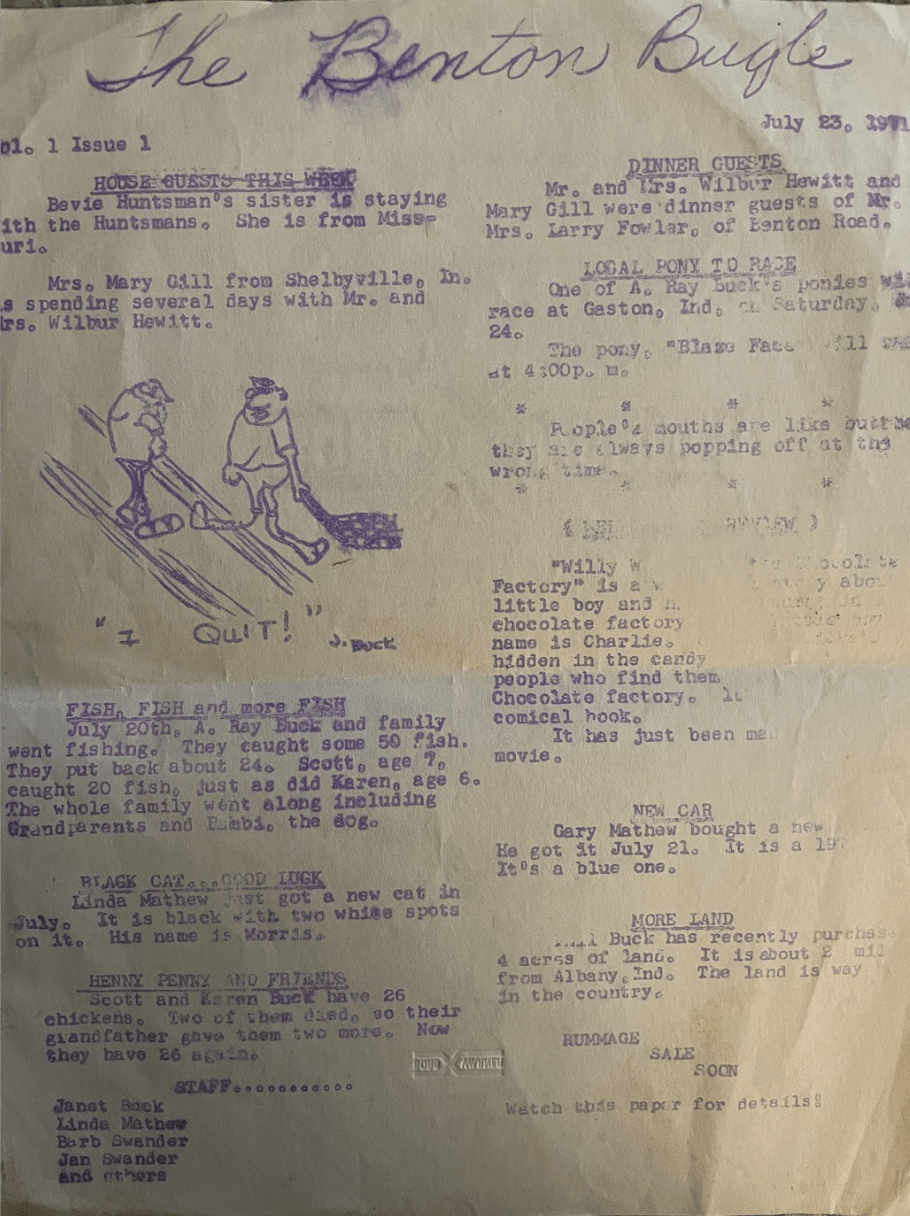
Last night we had quite a shower of rain, and this morning the weather is cool again and remained so all day. I had fifty scholars at school today, suffered with the headache considerably yesterday and last night… –Mary Jane Edwards, writing in Jackson, Mississippi
Fifty students in one classroom! No wonder Mary Jane had a headache!
That’s close to the number my dear friend Rugmini Menon and her colleagues at Kendriya Vidyalya Kanjikode taught every single period when I visited them in 2010. A veteran teacher at this government school in Palakkad, India, Rugmini hosted me for two weeks as part of a US Department of State teacher exchange program.
Unlike Mary Jane’s class, Rugmini Ma’am’s students were dressed in neatly pressed blue and white uniforms, the girls at tables on one side and boys on the other, and completely silent during our writing workshop. I was so excited to introduce memoir writing to them using the “River of Life” activity recommended by Lisa Dale Norton in her book Shimmering Images: A Handy Little Guide to Writing Memoir.
Memoir is an excellent way to engage students in writing. We all have a story to tell!
We think we have it bad this weekend with the snowfall and frigid temperatures. But a massive winter storm – idyllic though Currier & Ives make it appear in their 1868 “American Homestead Winter” – would have been a huge challenge for my ancestors, Mary Jane and Lizzie Edwards and anyone who lived on a Hoosier farm in the mid 1800’s.
No Walmart to elbow through while snatching up toilet paper and chips and pop. No Door Dash to bring pizza when they were too timid to venture outside. No snowblowers for the driveway and sidewalks, or even snowplows for the roads!
Since the start of December, I’ve been at two extremes: flitting around like a nervous flea or making dents in the family room sofa cushions.
It’s been a weird couple of months.
During the typical prep weeks before Christmas, we unexpectedly raced to California and back. We pressed hard, making the 4,000-plus-mile trip in seven days. Most of it was pleasant, even inspirational, as we wound up into the tree-covered mountains and down to the windswept deserts with strange, prehistoric rock formations, cacti, and Joshua trees. True, the tire blowout in flat, scrubby Oklahoma as the sun was setting was scary. And my low vision from quickly worsening cataracts made night driving nerve-wracking, but those were only two nights.
We’d left our large paper master calendar covered with events for when we returned: cataract surgery the day after we returned; picking up our granddaughter in Michigan; a ninetieth birthday party– woo-hoo!–for my mom. We checked them all off without a hitch.
Then we got sick. Headaches, fever, cough, body aches–the whole flu thing. The one that lasts for weeks. At least for me.
Mostly, I slept. When my bones began to ache, I propped pillows behind myself and read. But that was it. During the first week, I didn’t venture out of my bedroom for three days straight! Thankfully, my husband was well enough to stock the mini fridge in the bedroom with water bottles and bring me broth. For three weeks, I wistfully scheduled events with family and friends…and then cancelled them. I didn’t have the energy, and who wants to spread something so tenacious to their besties? We never did have our larger family Christmas gathering.
But I suffered in more than one way. My mind wouldn’t turn off. I had lists and lists of things I wanted to get accomplished.
See, I’m a seven. Or so I’ve learned in the last couple of years.
Historically, I’ve been an enthusiastic supporter of personality types, particularly as they apply to writing and student behavior. I’m an INTJ through and through. But after taking an Enneagram personality test, my enthusiasm for such labels has waned.
My Enneagram results stated that I’m a flitter. That’s my synonym. The formal name is “The Enthusiast.” It means I like to try all things, bouncing from one hobby or interest to another. In fact, when I first read the titles, it’s the one I predicted my sister was, filled with so much energy and enthusiasm and fun. Not me. I’m a quiet, sensible plodder type.
Sevens have a sense of adventure and curiosity. They look for enjoyment and excitement, often spontaneously and with flexibility. Sevens lean toward pleasure and thrills, avoiding pain or emotional depth. They have high energy and are creative, motivated by pleasure, and love conversation. So say the experts.
At first read, I was insulted by the description. After all, flitting about seeking fun times seems superficial, shallow, fickle, hedonistic. As if I didn’t have the capacity to write a complete sentence, much less stick with a pastime or schedule. I took umbrage at that!
Why, I’d gotten up at 5 AM to complete a novel manuscript every morning for at least a year while holding down a teaching job. I’d stuck with the fifteen-week Master Gardeners’course that my sister dragged me into during the pandemic! I’d planned and taught a school-year-long monthly professional development course for teachers. Heck, I’d been a closet fan of Trixie Belden books for fifty years! Call that fickle!
Compared to my husband, I’m as spontaneous as the sunrise, and I can lie inert in bed for days once a year, wallowing in some kind of pain. Hadn’t I proven that with the flu?
All that downtime, coughing and aching, gave me time to ponder my seven-ness more. I’ll admit, I started to reconsider.
I do jump at any chance I get to travel. My garden loses its appeal in July. I have a newly filled bag of embroidery transfers for dishtowels and printed cross-stitch bookmarks beside the couch, awaiting my return. Whenever I’m in my office, my oil painting and intaglio printing supplies call to me, begging for some attention. I’ve been browsing the RV trader website again, and I’ve been talking a lot about getting out of this winter deepfreeze.
Thankfully, my energy is coming back: the whiteboard with my weekly goals and events is messy again. I confess that I’m making up now for missing the holiday goodies, and I haven’t had a good cry or pout in several months.
If I can ignore the pain of the rude descriptors, maybe I am a 7 after all!
Bunkhouse. U-shaped dinette. Under 4,000 pounds. Murphy bed.
Sadly, my website filter settings have yielded few local results this week as I’ve been combing through RV sales websites.
We’re ready to escape the Indiana winter and replace it with balmy temperatures. A low of 50 degrees would be perfect. We’d even take 40 degrees, now that the winds are howling and sleet has created roads that the school buses aren’t willing to navigate.
What happened to the winter of my youth? I must’ve been heartier back then. And had a higher baseline internal temperature.
Bundling up in layers of long underwear and sweaters, thick winter coats with scarves wound twice around our necks, and a hood pulled tight and tied in a bow, along with two or three pairs of socks and moon boots, was the standard process when it snowed back in those days.
Out the back door and through the enclosed porch, my siblings and I gradually ventured into Mother Nature’s walk-in freezer to make snow forts in the ditches after the plows had scraped past our house. With any luck, the snow skittering across our icy, north-south county road would drift it closed again. Then we’d be rewarded with a snow day announced the next morning on WLBC.
I’d swear the snow was deeper back then…and not just because we were shorter.
We’d scuddle through the heavy, wet stuff searching for the random, waist-high drifts to dig into, hide behind as snowballs came whizzing past, or use as mini sledding slopes. We didn’t seem to care when our boots filled with snow or our wrists–or noses–turned red and crusted over with ice.
Sometimes, when a coldsnap came early, the cornfield beside our farmhouse flooded and then froze. We could lace up our old skates on the porch and then wobble our way to the field to “skate.” We’d take a few tentative steps and be rewarded with a short glide before hitting the remnants of a cornstalk and landing on our knees and mittened hands. It provided a few minutes of fun before the short walk back to the porch to sweep ourselves off and start the warm-up process.
One year, I had the notion that I’d be a much better skater if only I had a smooth surface, not one filled with frozen furrows and harvest debris. It may have been the winter after I’d earned my roller skating badge in Girl Scouts. Roller skating was almost like ice skating, right? My sister and I bundled up and decided to follow our older brothers to a pond in the woods, a half mile or so north of our house. Skates tied and hung around our necks, we soon lagged behind the boys, who really wanted nothing to do with us, but we trudged onward.
Once we arrived at the path that led to the pond, the woods blocked some of the wind from the open fields. That was encouraging. It was warmer than the field, and someone had started a small fire. Maybe this would be a better place to show off my skills! We sat on a nearby log, removed our boots, and laced up our skates. Oddly, though, my ankles still wobbled a bit as I made my way through the underbrush to the ice. But that didn’t matter. I was ready to join the other kids and show my true skills!
Herking and jerking with my arms flailing around the frozen surface once or twice was enough for me. I quickly realized that it didn’t matter whether I skated on a frozen field or a smooth pond or what my Girl Scout badge suggested. My ankles ached, and my toes were freezing. Ice skating was not my sport. I convinced my sister, who was skating just fine, to leave with me. We changed back into our boots, tied our skates together, and bundled up for the windy walk back home, edging along our grandparents’ snowy fields.
Papaw was a part-time farmer of 100 acres adjacent to our house, and like many farmers during heavy snowfalls, he spent his non-working hours plowing out the driveways of his two kids living nearby and his neighbors. When they were reasonably clear, he monitored the nearby county roads for overly confident drivers who’d found themselves in the ditch with no way out. Bundled up tightly, he would chug along the roads on his big green Oliver or 4-wheel drive Jeep truck, ready with a chain to hook onto the errant vehicle and set it back on its way. Sometimes, he’d stop at our house for a few minutes to get warm. He’d shake his head in disbelief as he told us about the most recent foolhardy person who thought driving on a country road in such weather was a good idea.
One winter day when I was in elementary school, we heard the chugging of his tractor coming down the road and expected to hear about his latest rescue. We gathered at the kitchen picture window to watch him come down our long drive but gaped at what we saw. The tractor pulled a long row of sleds, all roped together. Sitting on the middle one was our grandmother! She waved at us to join her.
We’d never dressed in our winter clothes so quickly! Packed tightly onto the sleds and hanging on for dear life, all of us bounced across the flat, snowy fields. We made a giant loop around the farm and then whizzed back home on the icy roads, our faces red with cold and excitement. We didn’t mind the freezing temperature or the wind. When we got back into the house, Mom had made hot cocoa to help us warm up after we’d peeled off our wet clothes to throw in the dryer and hung our scarves and mittens on the wooden clothes rack to dry.
As a teenager, I discovered downhill sledding, a treat that only happened at the hilly parks in our nearby city, and only when we had transportation that included space for kids and sleds. Steering was always a challenge on the newer plastic sleds that were replacing the old-style wooden ones with metal runners, but the new ones were faster, especially if the snow hadn’t packed yet. So we usually left Dad’s old sled at home.
When I was a freshman in high school, my youth group went sledding at Westside Park. The hill there wasn’t as high as the Soap Box Derby hill at McCullough, but Westside was closer to home and less crowded. During Sunday School, we debated our options for an outing later that afternoon. Someone mentioned the abundance of trees at Westside, but because the hill wasn’t steep, we figured we could manage.
My mind was racing when we arrived. Flying down the hill flat on my stomach seemed much more exciting than sitting on a sled, so I eagerly grabbed an orange, molded plastic sled, and positioned myself for the steepest path.
I’d just gotten a pair of new glasses, so in a rare moment of early adolescent responsibility, I took them off and handed them to someone without a sled. I took a few hop-skips and threw myself onto the plastic sled, heading down the hill.
Wow! It was fast! Faster than I thought. And I was headed toward the trees! I looked over my right shoulder to check for an oncoming sled. Nothing was coming, so I leaned to my right. Then, just as I looked up, I hit the tree.
Well, my face hit the tree. I rolled off the sled and moaned.
Someone cried out and rushed down the hill to help me.
My face was numb. I didn’t know if it was from the cold snow or the collision. Probably both, I learned later, when I realized my face was covered in scuffed-up abrasions. By the time Monday morning arrived, the scabs made a design that looked an awful lot like the bark of a tree. Luckily, though, my new glasses were safe, even though I couldn’t wear them without pain.
I gave up sledding for a while. Years later, though, we took the kids to the refrigerated toboggan run at Pokagon State Park and returned a few times with exchange students. What a thrill to fly down the quarter-mile, dual sled track at 30-40 miles per hour! Our down-filled coats and Sorel boots kept us so warm that we never even went inside the warming house. After one trip, we’d learned the secret of making the most of our sled rental time: designate a driver to load the toboggan into our vehicle at the bottom of the track and drive it back to the top while the sledders climbed the hill to the launching tower. Now that was a blast!
Pokagon State Park
Overall, I’ve had my share of midwestern winter fun. Enough to tell a few good stories and look back fondly.
But something’s happened. Now, I shiver just looking at my weather app and seeing temperatures below 20 degrees. I tiptoe across the ice, thinking of my knee replacements and the time I slipped on the ice in the supermarket parking lot when I was pregnant thirty-five years ago. If I forget to wear my fuzziest mittens, my fingers turn white and freeze.
My winter fun has practically frozen.
I’m thinking winter in warmer climes might give me the chance to reclaim some of my youthful winter constitution. After all, there’s more than one way to spend January and February!
The click of her leash. The squeak of the garage door. Brutal wind whips past.
Years ago, when I wrote my own curriculum for AP Literature, I included Japanese verse in the poetry unit. I’d been studying Asian literature through the National Consortium for Teaching about Asia and was working to incorporate Japanese, Chinese, and Korean literature in all my classes.
Most of my high school seniors had played with writing the three-line, five-seven-five syllable patterned Japanese haiku at some time during their elementary years. It, along with diamante and limericks, tended to be staples of the mandatory poetry unit featuring Shel Silverstein and Jack Prelutksky that they all had participated in during third or fourth grade. Along with the nursery rhymes some of them knew, it was a semi-firm foundation in the world of verse.
Because of their limited poetic prowess, there was more to learn. Most students didn’t know about the tendency for haiku to focus on imagery in nature. Instead, they had concentrated on the syllable count requirements. Likewise, they’d never heard of a “snapshot in time,” a concept that haiku often captured and an excellent introduction to the Imagist poems we went on to study. And imagery itself- words that evoke the five senses- was a new concept for some students, as most still hung onto that tired and inaccurate definition of imagery they’d been taught: “painting a picture with words.” Writing their own haiku offered them an opportunity to create imagery and learn about turns- shifts or surprises- in the last third or so of a poem.
Tiny rock pellets promise to keep me stable. I pause taking the first step.
After students had enjoyed writing haiku, we moved on to an earlier, lesser-known form of Japanese poetry, renku, a collaboratively written poem with a specific form. In general, renku is an imaginative, often narrative type poem about a particular topic. Often, renku was written to honor a person or an event. The renku begins with a haiku-like verse to establish the setting and is followed by each subsequent verse composed by another writer who links it to its predecessor before moving to a new topic or event. The simplicity and directness of haiku provide the guiding style throughout the verses before the renku concludes after 12 to 36 stanzas. Today, it is a revived form of collectively written verse, written in a gathering or using the Internet, according to Haiku Spirit.
When our school held an Asian Fair to celebrate cultures most of the students and faculty knew little about, the AP Lit kids hosted a renku writing booth. Surrounded by room dividers my husband had built from two-by-fours and I’d backed with Vellum from JoAnn Fabrics, the students sat on Dollar Tree beach mats with chalk and a black foam board, ready to create renku verses with their peers. When younger students finished eating fried rice made by the Home Ec class and dared to poke their heads into the AP Lit booth in the school gym, they were greeted by yukata-clad kids with a jar full of slips of poetry topics to fuel their stanzas.
Maybe the collaborative nature of renku was what made the booth a success. The writers laughed and sipped green tea as they worked together, counting syllables and parsing ideas.
Or maybe it was the enthusiasm of my students. It wasn’t every day that they were able to dress in vintage Japanese costumes, kneel on “tatami” mats, and share their newfound knowledge.
Either way, they all came away with stronger analytical skills to apply to their reading and writing, as well as an appreciation of a new form of literature from a different culture. All wins, in my book.
During this winter, why not write a haiku or two? Push yourself to capture a bracing moment that the cold air inspires. Evoke your senses and surprise your readers at the end. Remember to count syllables, too. Like my students, you may be surprised at your own poetic prowess!
Hands clasp my shoulders; ankles crossed, my knees hitch up. I share my warm sheets.
Sniffly noses and raspy coughs interrupt the peaceful night. With pillows stuffed into the corner of the couch, a knitted blanket insulates my fuzzy bathrobe and creates a cozy nest. Snuggling into the slippery leather is better than fighting the noise upstairs.
Hurried changes of plans disappoint us all. No gifts to share, no festive paper to tear. No cranberry pumpkin muffins to nibble, no old-fashioned cream pie to savor, its ingredients read from a lined and stained page, carefully measured and poured, sprinkled with nutmeg, tradition, and love.
Another year, we’ve dozed and grazed, each of us alone, grasping for meaning and healing on this quietly glorious day. Is this how she felt, finding warm shelter and rest in her time of need on that first Christmas Day?
How blessed we are despite our discomfort, without our festivities. The food, the family, the friends are missing, but we have our home and recline in the arms of our Lord, born this magnificent day, who makes each moment unique and holy.
Help me discern
the tools I need
to pull apart this
tangled mess:
The watchmaker’s loupe
to closely examine
the damage to such
intricate workings.
The dressmaker's pin
that gently teases apart
threads so delicately, but
firmly knotted.
The nurse’s tweezers
that pinch and tug at
mere filaments that
have frayed and irritate.
And help me recognize
when to wield the
blacksmith's sledge,
to bust apart the
fine, but entangled chain,
melt the gold,
and begin anew.
Text within this block will maintain its original spacing when published
Holy Mother,
help me know when
to pick up each tool
and how to use it.
Guide me to offer
others just the right one
or to smile and nod in
healthy encouragement.
Nudge me when I
should step back
and allow them to
discover the sweetness
of your wisdom as you
undo the knots in
our lives.
Splintering sections of plywood
painted a graying white
lean against my
living room bookcase.
They await my next move.
Covering the 2x4-foot
raggedly sawn pieces
and written in a tapestry
of red, black, yellow,
blue and green
the signatures slightly
fade each day.
Some block printed, some in
neat script, others shakily
penned,a few with
lines connecting first
with last.
All from the hands
of visitors to
my grandparents’ homes,
they testify to a legacy.
Created by a saucy
boy who threatened
to sign the newly
painted blank kitchen
peninsula wall,
the name board
evolved
into more than
a curiosity. It became
a memento of
the kids who gathered
early to celebrate
the fourteenth birthday of my
mother, a Christmas Eve baby.
Years passed. Marriages,
children, grandchildren.
A new house designed
and built, surprisingly
incorporated
the name board.
One day, the paint pens
squeezed nearly dry
called my name,
urging me to
join the plumbers,
Friends, pastors, relatives,
missionaries,
friends, neighbors, and scholars
who visited my
grandparents’ home.
But I had to learn
cursive first.
Would enough
space be left for my
full name, or would I
have to join first and last
with a squiggly line?
I planned and
practiced writing.
Time went on. More birthdays, deaths, births. A random, careless carpenter pulled down the name board, cracking into fragments the single sheet of impromptu Modern Art and creating random groupings of individuals from all over the world, still united by my grandparents who still quietly claimed, “These are the people we encountered, those we loved, those we honored.”
Now, I’m the keeper of these disparate names, separated by time and generations and a jagged saw. These people, many of whose voices I can hear and smiles I can see in my memory. I recognize the name board's legacy: honor the people, the shared journeys. But now I wonder: what icomes next? What is mine to do with their signatures?