In today’s classrooms
My heart was warmed today.
And it had nothing to do with the near-record heat and humidity in the Midwest.
No, it was a group of teachers who warmed it: eleven elementary, secondary, and post graduate teachers gathered for this year’s Invitational Summer Institute (ISI), conducted by the Indiana Writing Project Teacher consultants. I assisted the leader who organized a field trip today to our local teacher “store.”
Our field trip reflected a shift in mentality that has been tapping at my brain for some time now: it’s time for another shift.
It’s no secret that I bemoan the overuse of technology in classrooms today. I rant about it to anyone who will listen.
Yes, fifteen years ago, I leaped onto the technology bandwagon when 1:1 devices became a feasible possibility. Yes, my house echoed with a deafening whoop when I realized that I would never need to grade a multiple-choice quiz again. Yes, I was at the head of the line to tap the new apps for my iPad and integrate them into my high school classroom.
But as textbook budgets melded into tech ones, some teachers were reduced to using materials that were not properly vetted, often plugging low quality lessons into modules that were being created on the fly. Following instructions from their administrators, teachers were asked to create and share modules for instruction that involved less interactive learning and more clicking.
Maybe that wasn’t the teacher’s fault. Many younger teachers have never learned how to create a unit or write assessments. Many also haven’t learned to teach from a textbook. So who could blame them for just buying lessons when they were so readily available? As a result, many of those “pay-for-lessons” sites have done incredible business on– of all times!– Monday mornings.

The bloom quickly faded on my hi-tech rose as I saw students getting sucked into their screens each day in class. Learning from home during the pandemic exacerbated the problem. Many teachers were required to create online modules to keep at least some education happening. Bored, many students often skipped the instructional segments in the modules and went straight for the quiz or assignment. And that only if they cared about their grades. Others simply ignored their online work.
When we returned to school, getting students to participate in face-to-face discussions was a challenge. I’ll always remember when a student asked me if we’d “actually be doing anything in this class, or just using the modules.”
Really?
“Bring back the textbooks!” I mentally chanted, as I reminded my students to tip down the lid of their devices during the interpersonal segments of class. Again and again, I had to keep students off clandestine chat sites and new shoe alerts where they bought and sold footwear, making more money than I did as a veteran teacher.
Now, it turns out, there may be hope.
A movement is gaining steam to bring back textbooks to teach basic information. Then if needed, teachers can supplement textbooks with other, more timely online resources. The bulk of the information and activities, however, comes from a textbook that all teachers share.

But for me, it doesn’t end there. While we’re hanging onto the educational swinging pendulum, I say, let’s bring back the hands-on activities to supplement the textbooks!
We probably all can admit it: sitting in a classroom reading a textbook or even clicking through screens is boring. Kids learn when they’re having fun and moving around the classroom, working together and solving problems. Whatever happened to understanding the modality of our learners? Auditory? Kinesthetic? Visual? Tactile? How do teachers address these, when students are completing their online modules?
Today— the day my heart warmed so splendidly— the IWP institute fellows were well into their second week of being together to learn about instructional practices in writing. Several weeks ago, my co-leader proposed a way to connect us to our community, to model Project-Based Learning, and to create hands-on ELA products all at the same time.
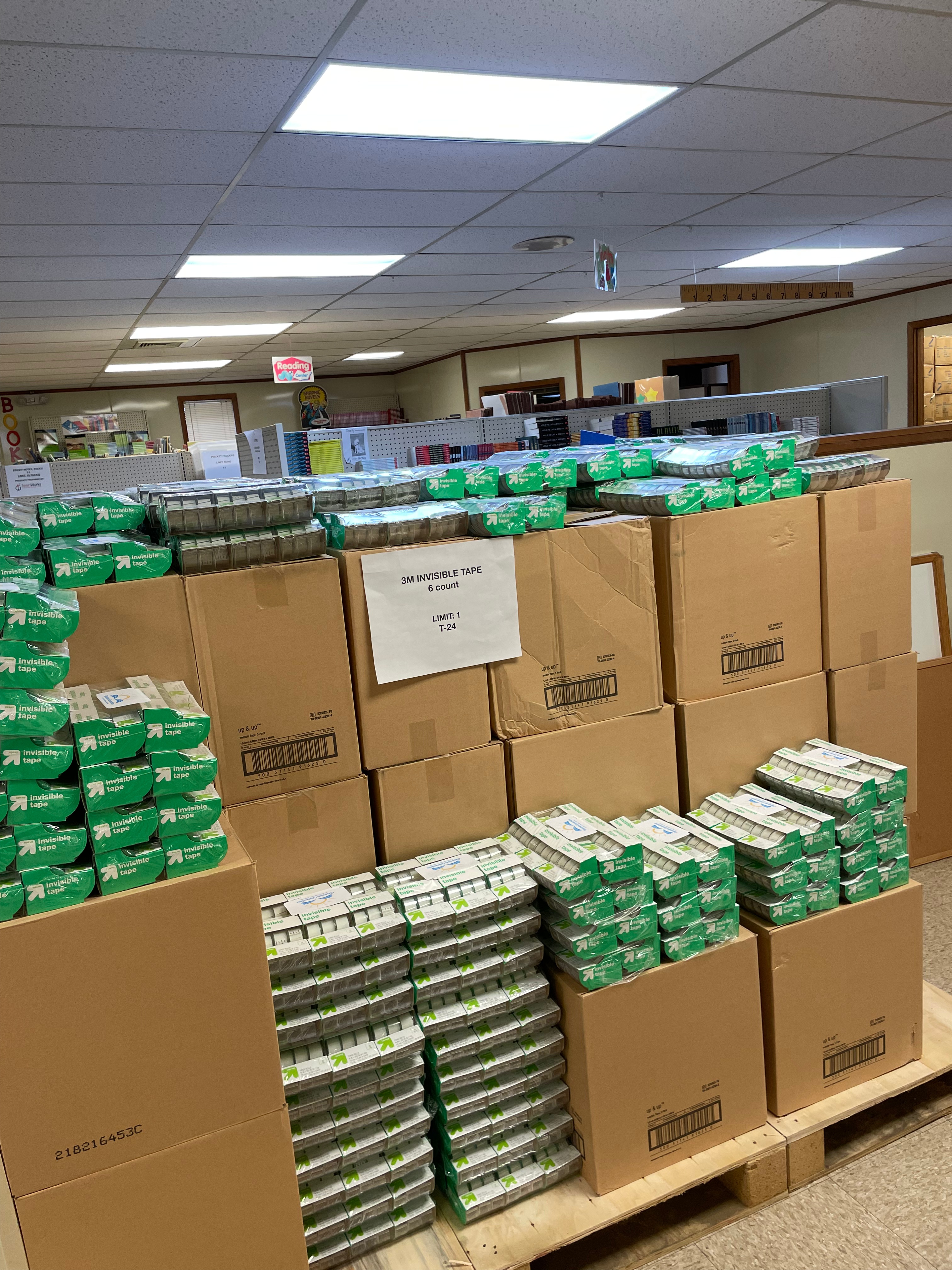
My brilliant colleague set up a visit to a local nonprofit, Classroom Connections of ECI. A nonprofit, the organization has been an area teacher destination for many years. For a nominal annual fee, it serves teachers in schools that report a population of at least 49.5% free and reduced lunch students. These teachers choose from hundreds of no-cost, donated educational materials, like paper, books, office and craft supplies, and teaching materials of all types. The average value of each shopping trip is $1200!
And the best part is exciting: teacher shoppers never know what will be in stock!
Today, our goal was to model specific ELA projects that other “teacher-shoppers” could create for their own classrooms, using supplies from the teacher store.
To begin, our teachers learned from the executive director how this impressive organization annually serves tens of thousands of children in underserved classrooms in East Central Indiana. Its local business and national corporate partners provide critical school supplies for qualifying schools in seven counties.
My colleague was eager to share her personal experiences creating many writing products and activities for her elementary students using materials from the store.
Now it was our fellows’ turn. Their task was a challenging one. The teachers started with the Indiana Academic Standards to brainstorm possibilities. Then they made a quick one-pager to take notes as they combed the aisles looking for materials to create their own hands-on, ELA products.
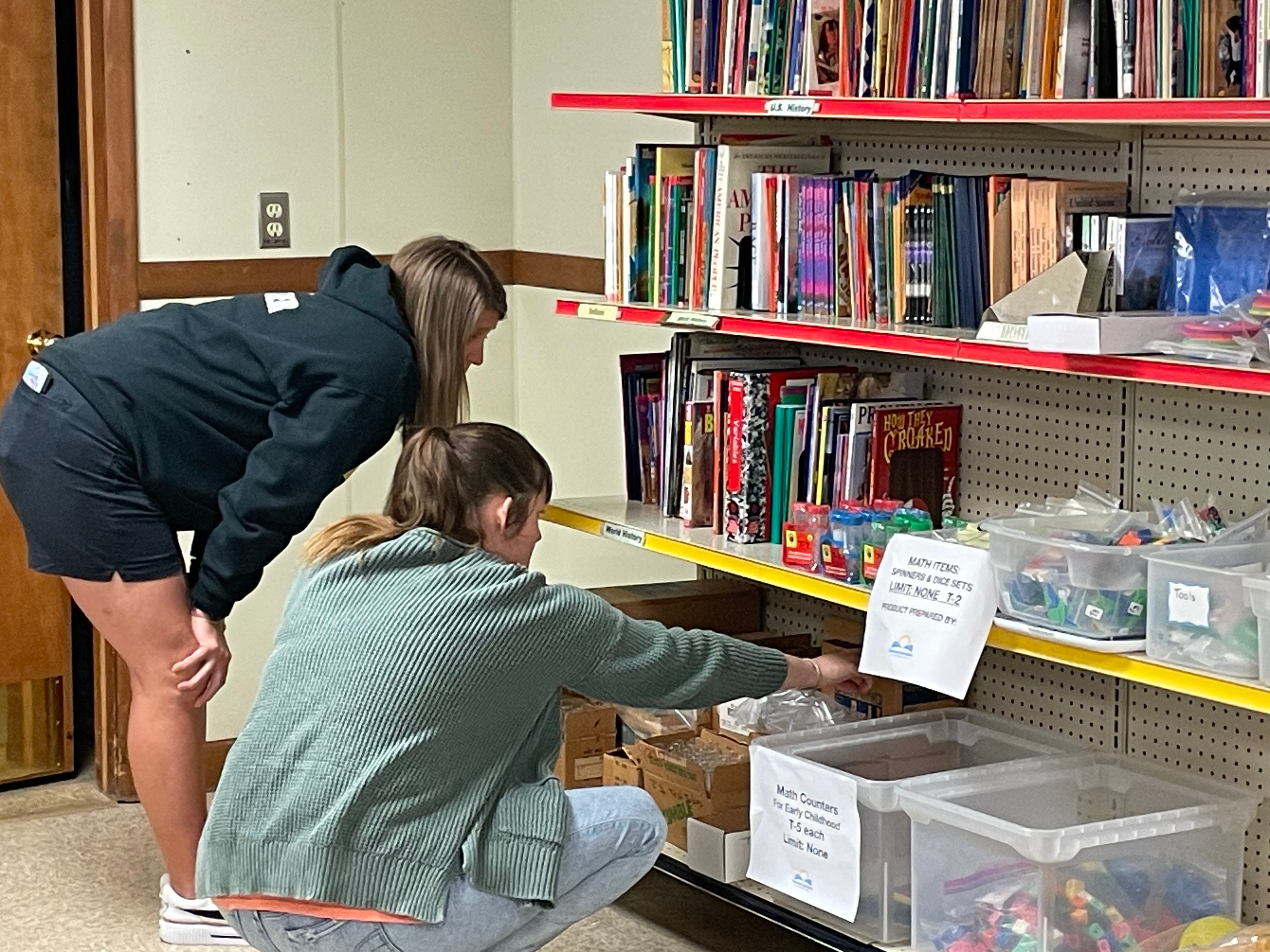
Their work together to write and craft their product was exciting to watch. These teachers were on task! Intensely!
With limited time, the grade-level groups collaborated to create an activity prototype, an advertisement to entice other teachers to create a similar activity and linked by QR code to an instructional document. All three would be used by Classroom Connections, so the pressure to create something impressive was real.
They impressed us with their creations: an adaptable test tube sorting game, a labeling activity pairing ELA concepts and artwork, a symbols bag, and a picture frame literary analysis.
Our teachers’ work was authentic and had an important purpose. It was hands-on, and challenging. It engaged the teachers in depths they would not have experienced if we had simply told them about project-based learning and Classroom Connections of ECI.
After spending a day using their brains, hands, and materials supplied by Classroom Connections, these IWP teachers created a lasting memory for themselves and an interactive learning opportunity for students all across seven counties.
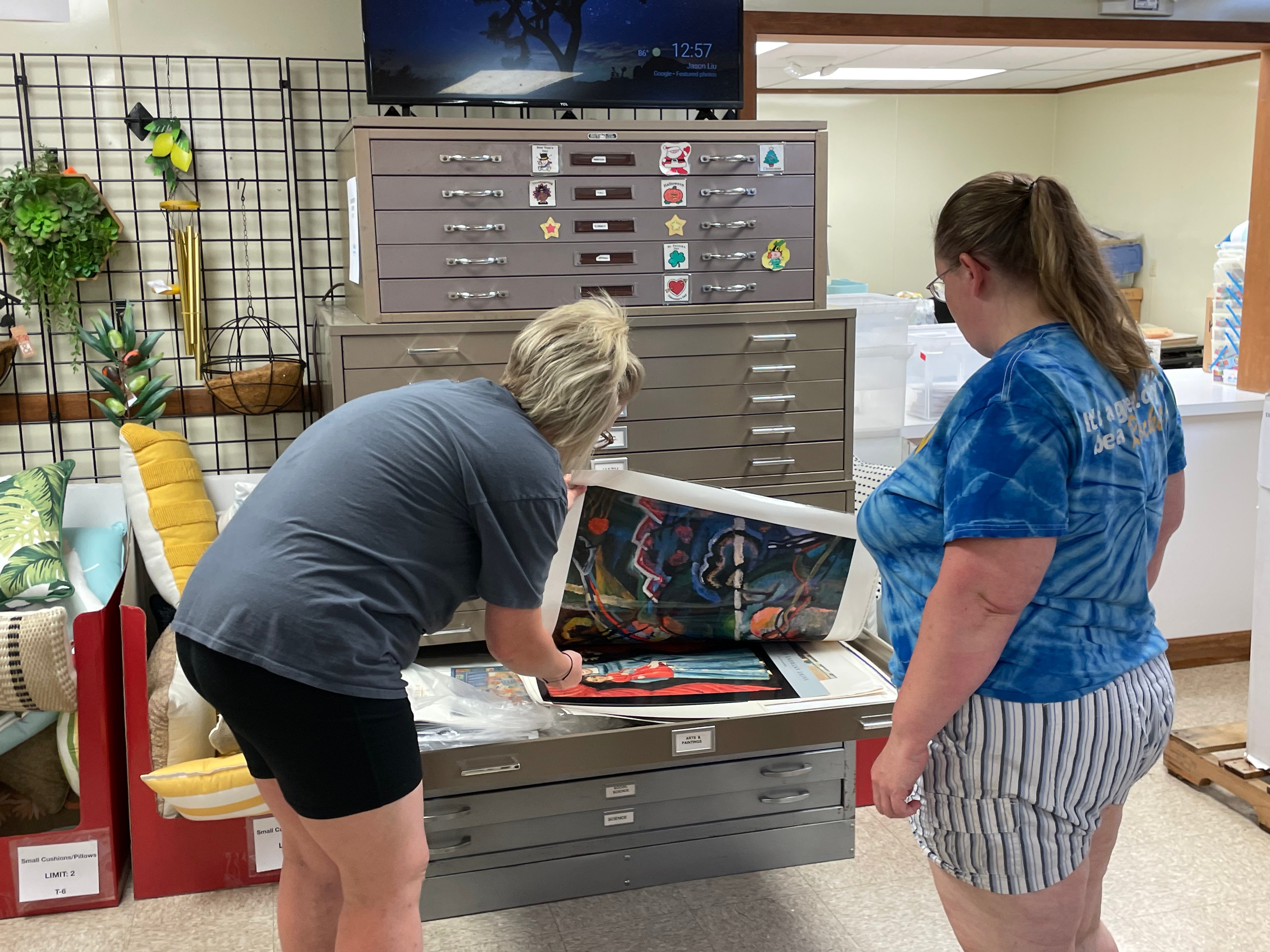
That’s authentic, hands-on learning.
And that is precisely what students need more opportunities to experience in classrooms today.
