What do whiskey and cigarettes have in common in my life?
No, they’re not my coping mechanisms at the end of a stressful day.
What about Kellogg’s cereal, Hershey’s chocolate, and the US Bureau of Engraving and Printing?
Still stumped?
As a child of the 1960’s, I toured these manufacturing facilities with my family during our summer vacations. My dad worked in warehouse management for a regional supermarket chain, and his penchant for efficient processes meant touring “plants” was a common activity for us. Didn’t everyone do it?
While whiskey and cigarette manufacturing plants might not have been exactly age-appropriate for the preteen set, our walk-throughs didn’t seem to harm me. Most of these places didn’t give out samples, after all, except for the Froot Loop Sundae in Battle Creek, a classic!
These experiences did, however, give me indelible images of production processes and a wider vision of how the world works.
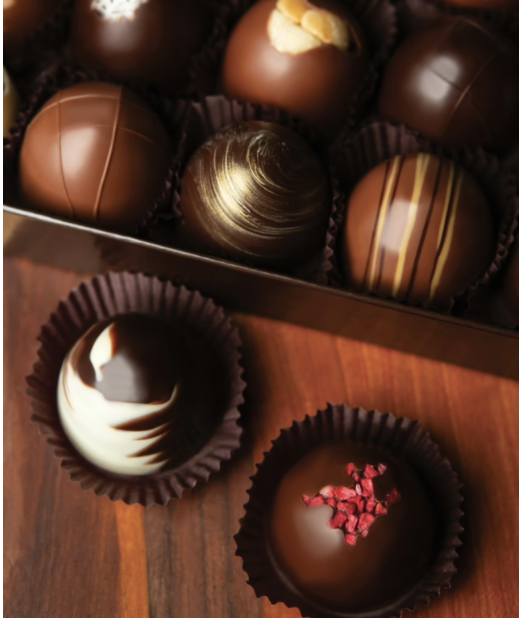
My dad’s interest in manufacturing was contagious. Although today it’s not as easy to score a facility walk-through due to liability issues, when we travel, I’m always looking for the behind-the-scenes tour. Whether it’s Barcadi Rum, or Louisville Sluggers, or Persian rugs, I want to learn how it’s made if I have the chance. I’ve toured food production facilities in China and Taiwan, printmaking studios at several universities, and a Toyota auto manufacturing plant in Japan. It’s intriguing to watch people and machines at work creating. Last winter, my family found a surprising and delicious production tour closer to home: DeBrand’s Fine Chocolates in Fort Wayne.
As an educator, every time I walk through a production-type facility, I think about how many different occupations and people are required to make various products and businesses possible. And I’m reminded how important good communication skills are to ensure their success.
In this age where STEM wrestles with the Science of Reading for instructional time and funding, releasing students from their seats for real-world experiences in a variety of venues is crucial. The chance to experience a sampling of careers and opportunities through field trips and authentic experiences benefits students, schools, and families.
Focused career direction can make classwork relevant– or more tolerable– for many students and ultimately result in higher test scores that benefit students and schools. In addition, students having a clear career goal can save their families thousands of dollars in errant post-secondary tuition fees.
Those beliefs prompted me to create two yearly job shadow opportunities for my high school juniors at the first school where I taught. After they contacted potential hosts, my students spent a day with area professionals in a wide range of fields. They researched and wrote questions, spoke to adults, took notes about what they observed, and asked questions about their chosen job. Afterward, they wrote follow-up reports and thank-you letters.
Some students came away with confirmations about their chosen fields, while others fairly shouted that there was NO WAY they could do the job they shadowed. It was a powerful experience that guided many students in their post-secondary futures.
After those positive experiences, at my second school, I jumped on the chance to give a small group of students, who all happened to be female, a STEAM experience in the real world.
Released from our classrooms for a day of enrichment, my colleague Beth Roop and I drove white mini buses up State Road 9 and then headed west for about an hour to Kokomo Opalescent Glass, the world-renowned historical stained glass factory. The girls chattered the entire way.
Once inside the hundred-something-year-old building with its dusty, uneven cement floor and cobwebbed ceilings, the girls stopped talking and shrank back. Their disapproving looks around the factory screamed that they were out of their comfort zones.
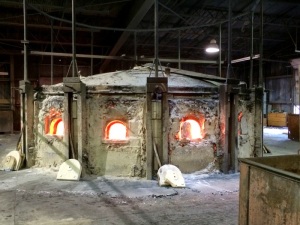
But their attention was immediately snagged by the intense heat and blinding glow from the 2600-degree furnace that melted the sand and ingredients. Nervous for the highly skilled workers, they whispered to each other about the danger of carrying huge ladles filled with molten glass from the furnace to the rolling machine. Even so, they edged closer to get a better look. Starting to engage, they were shocked when our guide told us of the $65,000 monthly gas bill during the factory’s peak season.
Inside the blowing room, the students smiled as they watched the artisan exhaling into the long tube to shape the blobs of hot glass into flat round plates of glass used as centerpieces for stained glass windows. By the time they saw the artisans making glass beads and laying out pieces of glass for stunning custom windows, they were pointing out the designs they would create if they were standing behind the work tables.
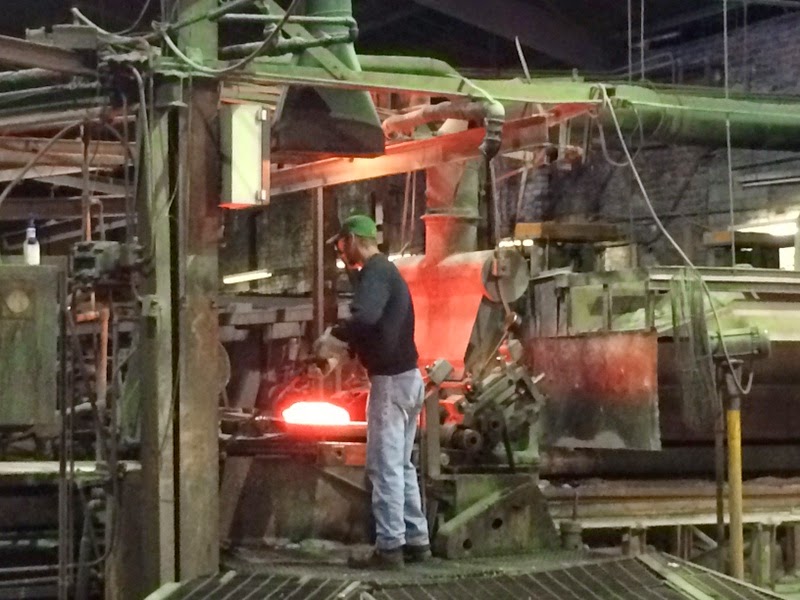
As we headed to our next stop, we debriefed about the surprisingly different career options available in this historic factory. They could be a chemist who creates recipes for various types of glass; an engineer who designs the machinery that creates the glass; a social media expert who markets goods across the world; an artist who designs stained glass windows for churches or famous singers like customer Elton John; or even a retail store manager who sells delicate works of art, instead of burgers and fries or clothing.
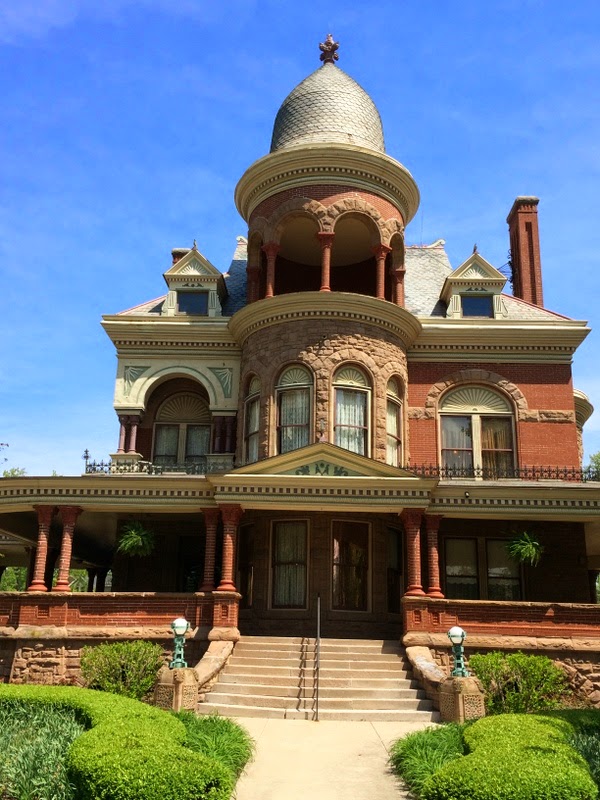
Across town after lunch, we toured the Neo-Jacobean Seiberling Mansion which houses the Howard County Historical Society. The girls traipsed up and down the ornate stairs, admiring the decor, and asking numerous questions. After an hour of exploring, the girls came away with more career possibilities: historical preservation and museum curatorship, public history, interior design, and folklore. Each of these career options became a real possibility to these girls, more than just a major listed on a college website.
Even though our day ostensibly was career-oriented, the field experience was more than about jobs; the girls learned about production and manufacturing. They learned that goods and museums don’t just appear. They learned about the processes people use in all fields with the support of math and science and language and trial and error. They learned that the past can guide us toward a better future if we take the time to learn from it.
Above all, they learned about living your passion. Our guides’ enthusiasm for their careers was contagious. These girls had a chance to see how people can take their passions in life and turn them into pleasure for others…while also earning a living.
In Indiana, my home state, the class of 2029 will have the opportunity to earn their diplomas in part from career-based experiences and/or internships that will count toward academic credit.
Let’s hope this new option is not simply a box that gets checked by placing kids in fast-food restaurants that are short of workers.
Let’s hope that students will be able to see their academic skills in action and observe how their strong communication skills will pave the way for their successful careers in a myriad of fields.
Let’s hope that the school administrators coordinating these experiences can offer a bevy of robust career experiences in unusual fields and venues for these young people’s benefit with the vigorous support of local communities.
