A tooth from the Buddha, taken from his funeral pyre and reputedly still growing?
The crown of thorns worn by Jesus during his crucifixion, housed in the cathedral of Notre Dame and miraculously saved from engulfing flames by a human chain of first responders?

The head of John the Baptist, retrieved by a French crusader in Constantinople and on display at a cathedral constructed solely to house it? Or displayed with a cache of religious relics gathered by Bavarian royalty in Munich? Or covered and displayed in a basilica-turned-mosque in Damascus, Syria? Anyway, somewhere well-protected?
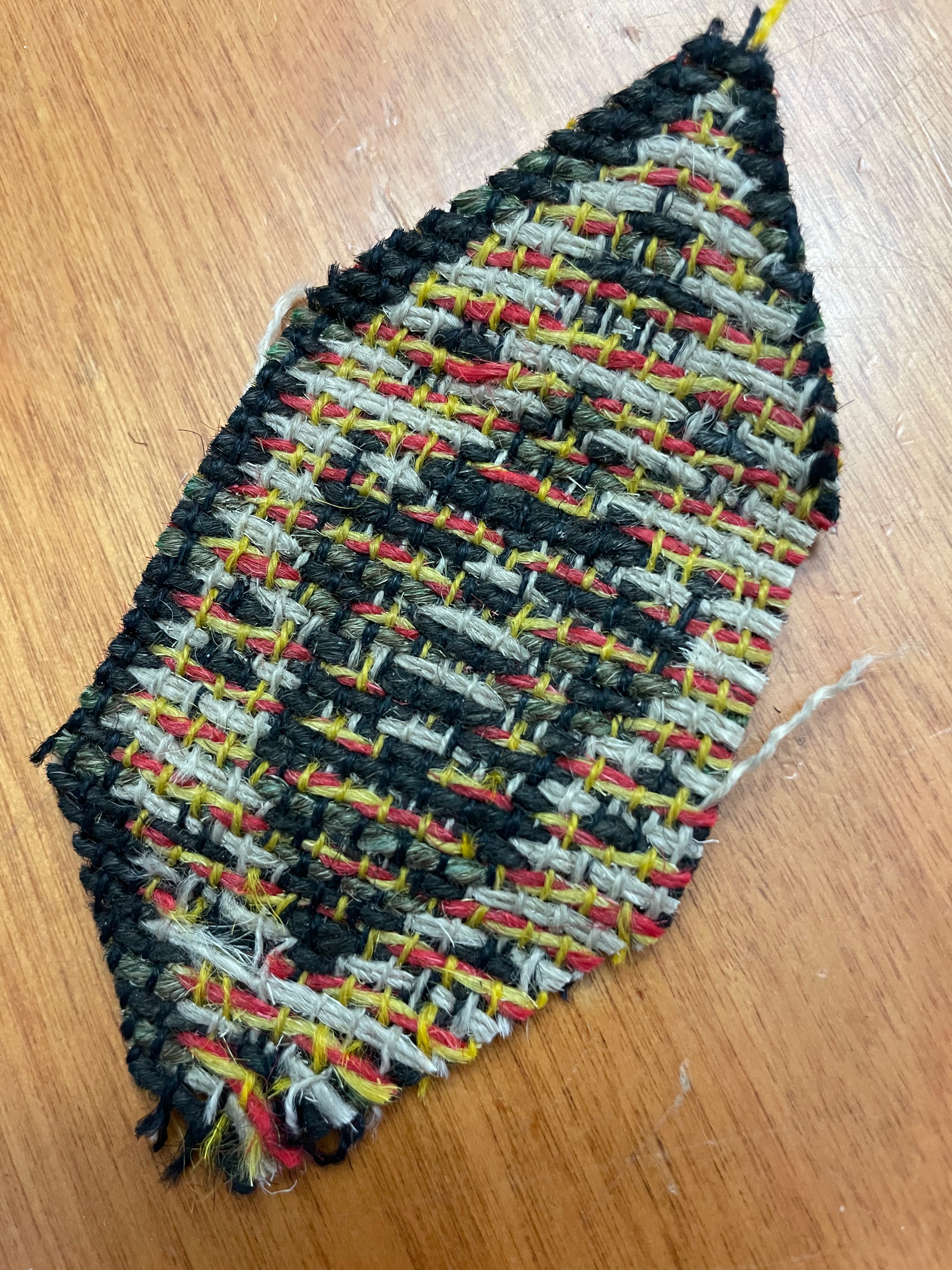
A diamond-shaped scrap of carpet from an 1857 Quaker meetinghouse?
Wait a minute. What?
There are some pretty odd religious relics still around today: belts, cloaks, hands, blood, and even some unmentionable body parts. So, if a religious relic is something old that holds religious importance, as Wikipedia suggests, then yes, I’ll claim that the carpet swatch I now own is a religious relic— albeit one only 160 years old, and connected to a religious place, not an individual.
A few weeks ago I received the olive green, black, and tan-colored scrap enclosed in a letter. It asked for an end-of-the-year donation to the unprogrammed Quaker Meeting I’d attended a few times this past fall. “Unprogrammed” is a Society of Friends term that means the members of the meeting (or church) gather in silence waiting for the Holy Spirit to move them to share a message with the others during worship services and without the leadership of a pastor. It’s a practice not for the faint of heart or spirit… or those inclined to nod off during church services. It’s not my husband– the Methodist’s- cuppa, but it is mine.
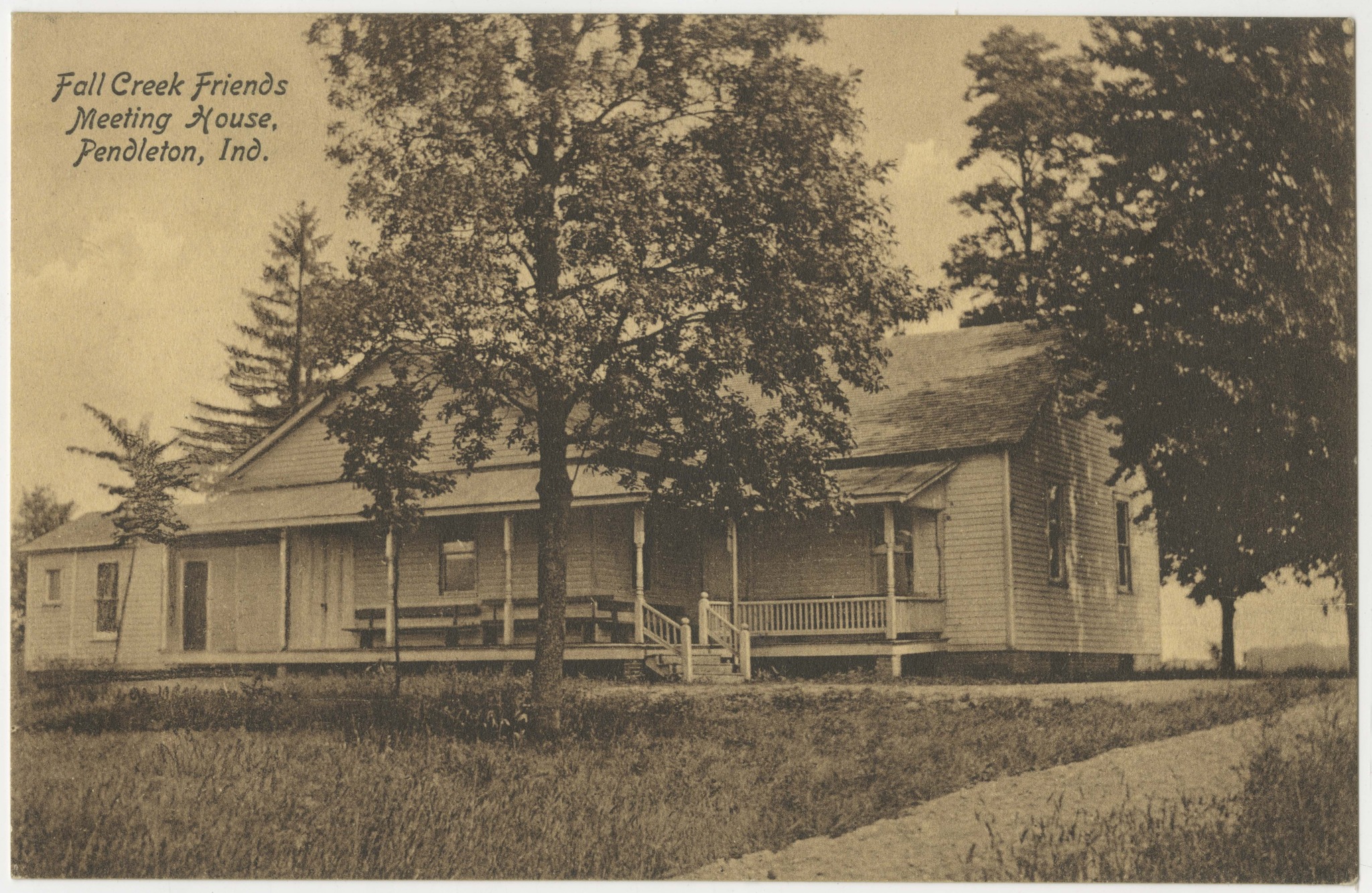
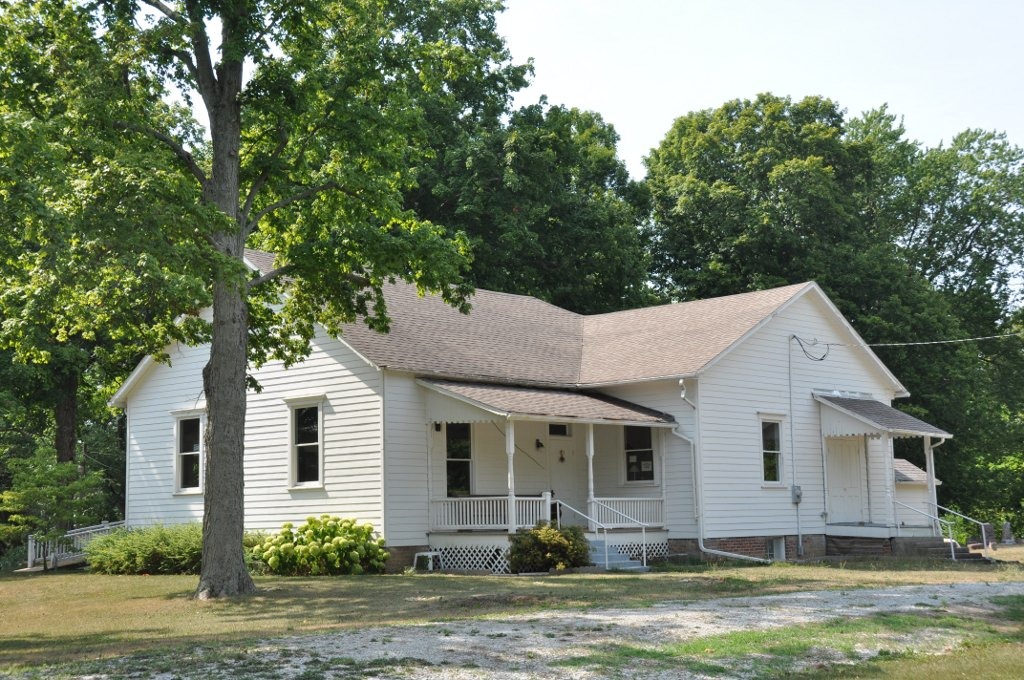
I’ve visited Fall Creek Meeting for two reasons: I miss being a part of an unprogrammed Quaker meeting (they’re rare in these parts), and I wanted to experience the Holy Spirit in a way that my ancestor Mary Jane Edwards had: sitting in the silence, waiting expectantly on the Lord. She’s the author of the 1866 family diary I’ve used to inspire my novel writing.
As a retired teacher of rhetoric, I can’t help evaluating the success of arguments, it seems. So when I received the donation letter, I was impressed. Including a 4-inch scrap of antique carpet was a clever marketing strategy, a tactile connection to the meetinghouse for everyone who opened the envelope.
The author of the letter, Fall Creek Monthly Meeting Treasurer Emmanuel Greene, wrote about the hours he’d spent staring at the carpet, “… listening and waiting for the movement of the Spirit.” He wrote about the carpet being a symbol of the longevity of the meeting and the people who have worshipped there. He mentioned how the carpet is “faded and worn thin” and how it reminds us that care of the meeting’s physical structure is as important as the care of the meeting’s spiritual structure. His words were moving, his request powerful. It had more impact on me than just prompting me to get out my credit card. It’s stayed with me and gotten me thinking.
The more I hold the little woven piece of fabric, the more I continue to appreciate its symbolism, the meetinghouse itself, and the people who have kept worship alive here for the past 168 years.
Symbolism is something I crave.
Perhaps it’s because my spiritual leaning is more akin to the old Hicksite Friends who believed in the continuing revelation of God’s word, versus the Orthodox Friends who believed primarily in biblical authority. I’m always looking for some sign that God is speaking to me. I grew up in a meetinghouse, while Gothic in architecture, devoid of the symbolic adornments in Catholic and many Protestant churches. No crosses, no candles, no Advent candles, no Easter lilies, no draped crosses. When I was a teenager, my mother was aghast when I came home from a youth group retreat wearing a cross necklace I’d purchased at the gift shop. Now I look for symbols everywhere, although the necklace disappeared long ago.
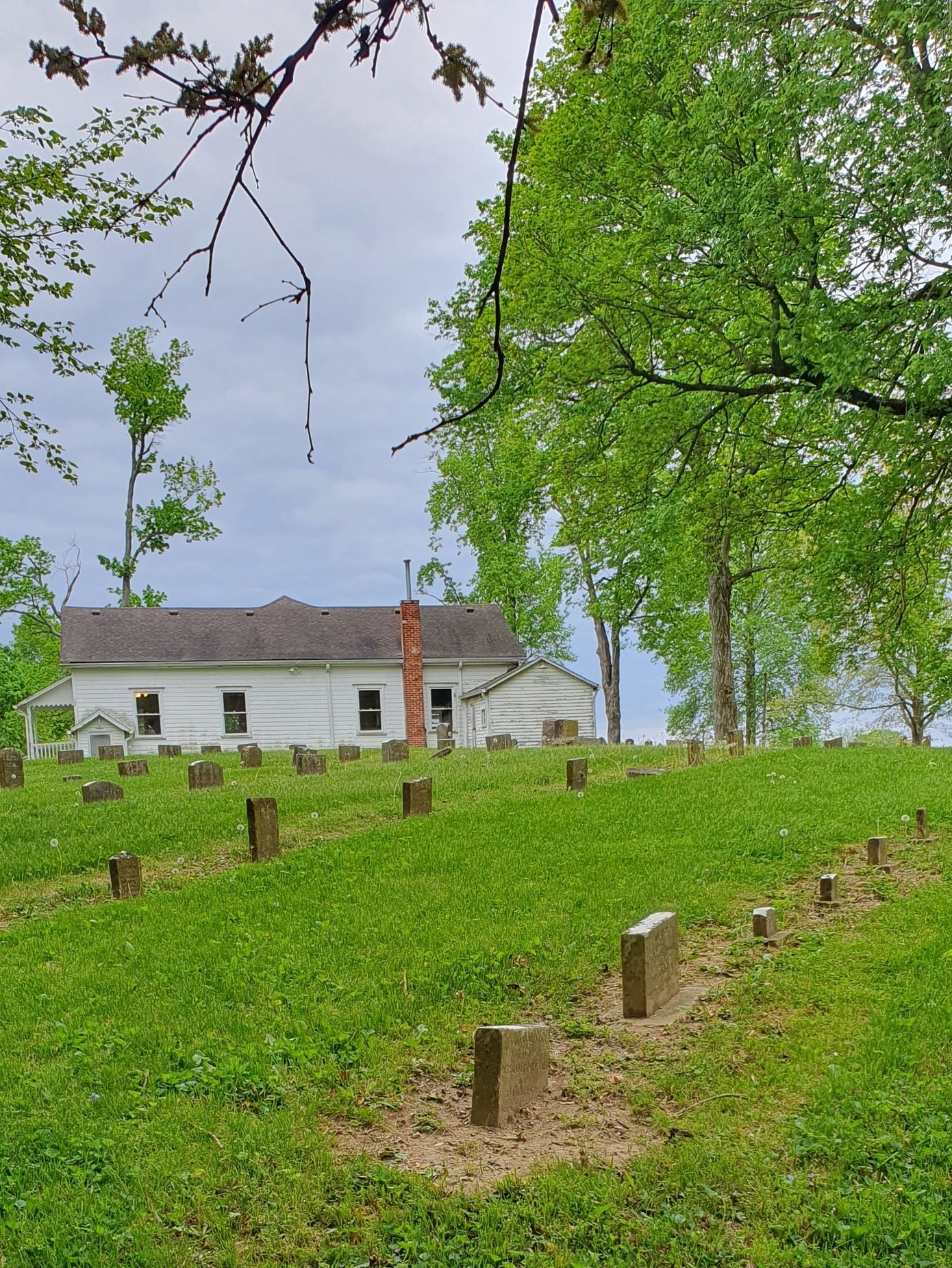
Hicksite Friends founded the Fall Creek Friends Meeting in 1834, and as such, it is also bereft of much adornment. Inside its one open room, smooth hardwood pews—surely original but some now embellished with crocheted cushions— line the t-shaped space and bring to mind the patient Friends who have sat and waited for the Lord long before I ever knew of the meetinghouse’s existence.
The simple space has a simple directness. It’s not trying to impress anyone. There is no question about its purpose, allowing space and time for its inhabitants to connect with the Holy Spirit. Sitting in the well-worn pew reminds me of those Friends who worshipped here fourteen years after they sponsored Frederick Douglass to come to nearby Pendleton to speak about abolition in 1843. These Friends came to Douglass’ aid after local protesters cruelly attacked him, and they harbored Douglass while he recuperated.
Each time I visit, I appreciate something different. The rows of pews are flanked by two aisles that lead to the front of the meeting room. There, meeting elders sit “on the facing bench” whose responsibility it is to close the time of worship with handshakes. They often are members with a recognized gift for speaking and are recorded ministers.
At the top of the T and on each side, double doors harken back to the days when the men and women Friends sat on opposite sides of a divider that could be moved into place to protect the exclusive concerns of their separate business meetings.

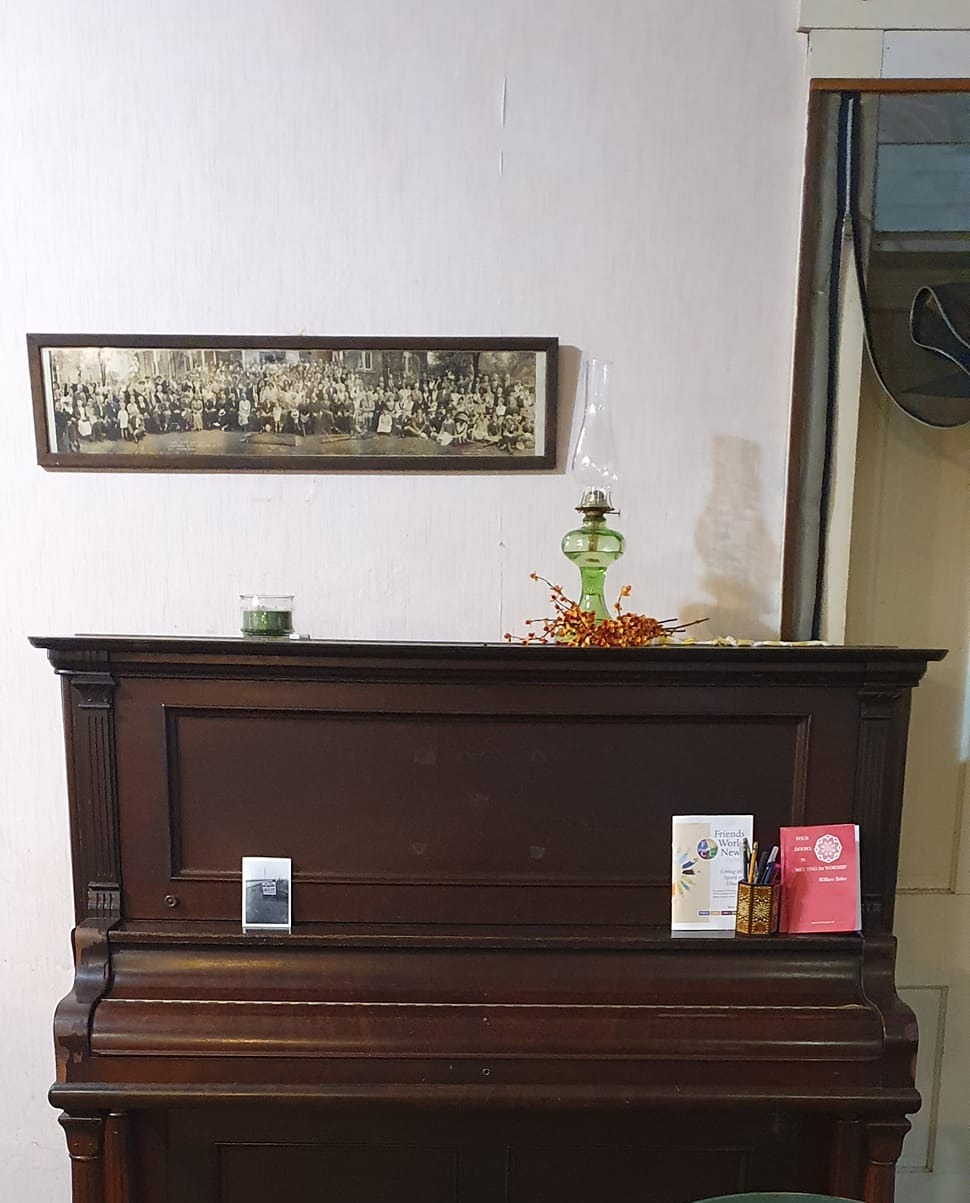
Along the east side, a small desk boasts a visitors’ register, and two bulletin boards offer pamphlets about Quaker beliefs and groups organizing to address current social concerns. A glass-fronted antique bookcase offers religious and secular texts to borrow. Opposite, a dark walnut upright piano is planted below a framed black and white photograph of the membership, probably at its peak. In the back a raised space with books and quiet toys allows children to be near and learn how to listen in the silence, too, as they are increasingly able.
Amidst the quaint layout and simple decor, I sense there is no escaping that this is an old and sacred space. I inhale the musky scent of old plaster and wood, as I squirm to get comfortable on the wooden bench. My mind fills with images of the various lengths and styles of dresses and trousers that have swept past and against the carved wood over the decades and been carefully arranged by worshippers like me before they centered down. It’s a space bursting with gentle memories, history, and meaning. Like the carpet, the entire meetinghouse is a symbol. No wonder it is listed on the National Register of Historic Places as one of the oldest Quaker meetinghouses still in existence in eastern Indiana, a simple reminder of the generations-long influence of the people called Friends
This quiet space is earning a place in my heart and in my spiritual journey, too. Worshipping there has made me wonder what symbols exist in the spaces I inhabit today. What relics from my lifetime reflect my spiritual values?
In this season of reflection and staying close to home and loved ones as the wind whips outside and the snow piles higher, I’m getting the urge to purge, to simplify my life. Like many parents of millennials, I carefully preserved tokens from my kids’ childhood —mostly papers, but some baby clothes and toys- perhaps thinking that someday they might want them for their own children. Now, that doesn’t seem likely.
These items seem to mean more to me than to them.
Which are the most important relics, I wonder. Where are they? Tucked away in a box in the attic behind the Christmas decorations? In a plastic box on the shelf in the extra bedroom? Is that honoring them or our past?
Why did I originally save them? What did they symbolize then? What do they mean now?
And what about the other relics I seem to honor now? What hangs on my walls and sets on my furniture? Why?
These are the questions the little scrap of carpet from Fall Creek Meeting makes me ponder as the days get shorter and I sit waiting expectantly.
More information:
To find unprogrammed Quaker Meetings in your area, check this link.
Unprogrammed meeting for worship at Fall Creek Friends begins at 10:30, lasts about an hour, and is followed by a light snack. The address is 794 W State Road 38, Pendleton, IN, United States, 46064
Here’s a link if you’d like to make a donation to the upkeep of the Fall Creek Meetinghouse.
