
It’s February and my seed catalog browsing has ended. I‘ve decided to create a native perennial flower bed along a neglected side of the house and even have the seed packets in hand. Now it’s time to consider where each plant will spend the summer at my house.
Writing the names of the plants on slips of paper and pushing them around on grid paper is one way I’ve spent dark February days while dreaming of spring planting.
Creating a diagram of various plants in just the right places— and then erasing and moving them again and again— is another way.
But hearing so much about AI lately, I thought maybe I’d get some technological help.
A couple of years ago when I was still teaching and a few savvy students had discovered its burgeoning ability to write their English class assignments for them, I played around with AI to see what it could do and how well, so I felt moderately confident that I could make it work for me.
First, I asked ChaptGPT to create a spreadsheet of all the seeds I picked up at a recent Master Gardener seed swap. I entered the Latin name of each variety and listed the information I wanted the engine to create for me. I clicked Return and POOF! I had a spreadsheet with the name, height, color, date for winter sowing, transplant date, date of maturity, and height for all the packets spread around my desk. The result was perfect for thinking about their placement.
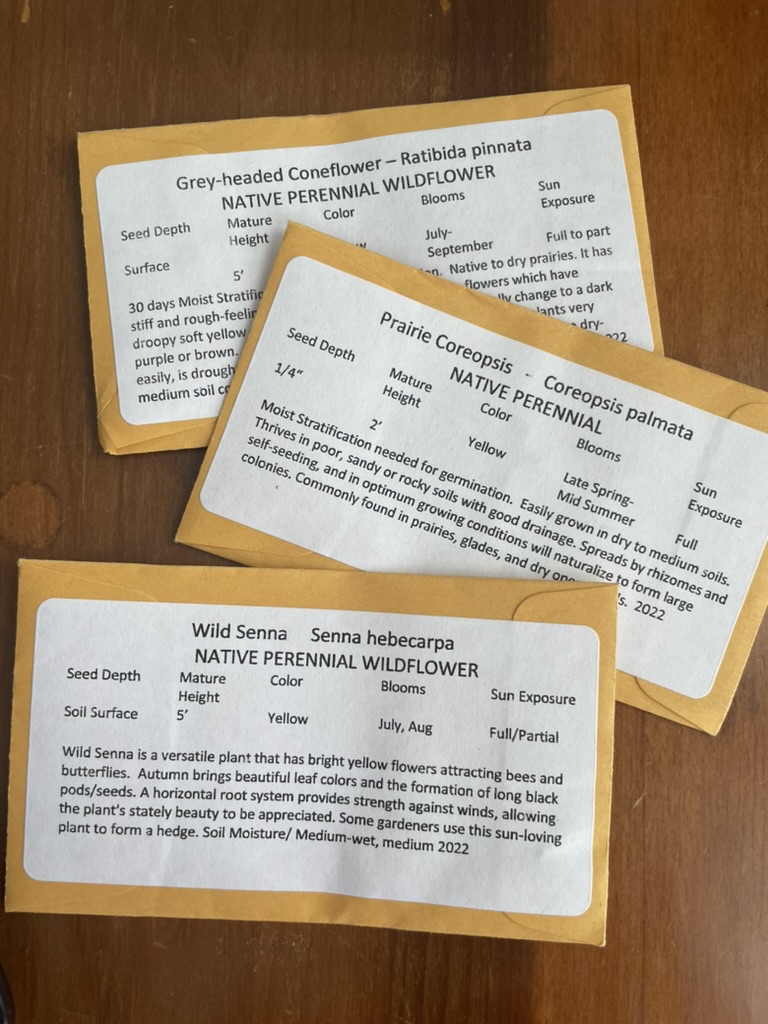
But could AI help more? If I wanted the most visual and olfactory impact and the heaviest bloom production, I’d need a design that factored in all the variables from my abandoned swath of ground and ten cultivars.
Some gardeners find that a rewarding part of gardening. I do, too, sometimes.
But the temptation was too great. Like a student running out of time to write that essay due first period tomorrow, I was lured back to ChatGPT.
I played with my prompt until I had all the conditions covered. Here’s what I wrote:
Design a 3-foot wide perennial flower garden in Zone 6a that runs east to west 30 feet with a two-story house on the north side and a six-foot privacy fence on the west side. Include the following cultivars in a design that will allow appropriate sun and spacing and produce an attractive display of colors with flowers from late spring through fall.
Then I listed all the plant names from my seed packets, adding them to the prompt:
Include the following plants: Aurinia saxatillis- “Basket of Gold;” Eurybiamacrophylla- “Big Leaf Aster”-white; Coreopsis Palmata- “Prairie Coreopsis”- yellow; Rudbeckia Triloba- “Brown-eyed Susan”- yellow; Liatris Aspera- “Rough Blazing Star-purple;” Ratibida pinnata- “Grey-headed coneflower”- yellow; Senna hebecarpa- “Wild Senna”-yellow; Paradiso Mix echinacea- mixed colors; Dahlia Varaibilis- mixed colors; and Tobacco.
Practically before I could take a breath, the program was spitting out its plan:
It began with an overview of “Key Design Considerations,” which is handy but also a dead giveaway when using it for academic writing. Included in this section were general points dealing with sunlight, spacing, height, and structure, as well as bloom timing, all of them related to the prompt I’d given.
The next section was titled “Planting Layout and Design.” It was divided into the “North Side,” “Middle Section” and “South Section,” noting the sunlight exposure for each. Under each category, the appropriate cultivars I’d included were listed along with their height and spacing. In addition, a justification for each placement was included, mentioning bloom color, height, pollinators, and how they contrasted or complemented nearby plants.
The last major section of the design plan was titled “Layout Summary (West to East).” It was broken into “Front Section (near fence),” “Middle Section” and “Back Section (near house).” In effect, it divided the three-foot-wide bed into three long rows. Three plants were listed for the three rows in each section.
Finally, the plan ended with a “Bloom Timing Overview,” with bulleted timing— spring to early summer, mid-summer, and late summer to fall— and each of the cultivars listed in the appropriate category.
Presto! Here it was! A plan with complete information about which plants would thrive best in which places and transform my blank slate into a pleasing and ever-changing tapestry of natural beauty.
Despite my joy, I felt a twinge of concern. I remembered some of the errors Chat GPT made in my students’ submissions. So I cross-referenced the plan with the information on the seed packets. They matched! It appears Chat GPT’s been learning to gather information from better sources.
Sometimes, though, old habits die hard.
Even staring at the comprehensive plan on my screen, I couldn’t resist pulling out a sharpened Ticonderoga and my garden notebook. Transforming the AI plan into a sketch with labels and general measurements helped my brain nudge the native perennial bed plan closer to fruition. Plus, I justified to myself, this AI-informed diagram could be a quick guide when I’d be on my knees in May, finally setting out my winter-sown flowers.
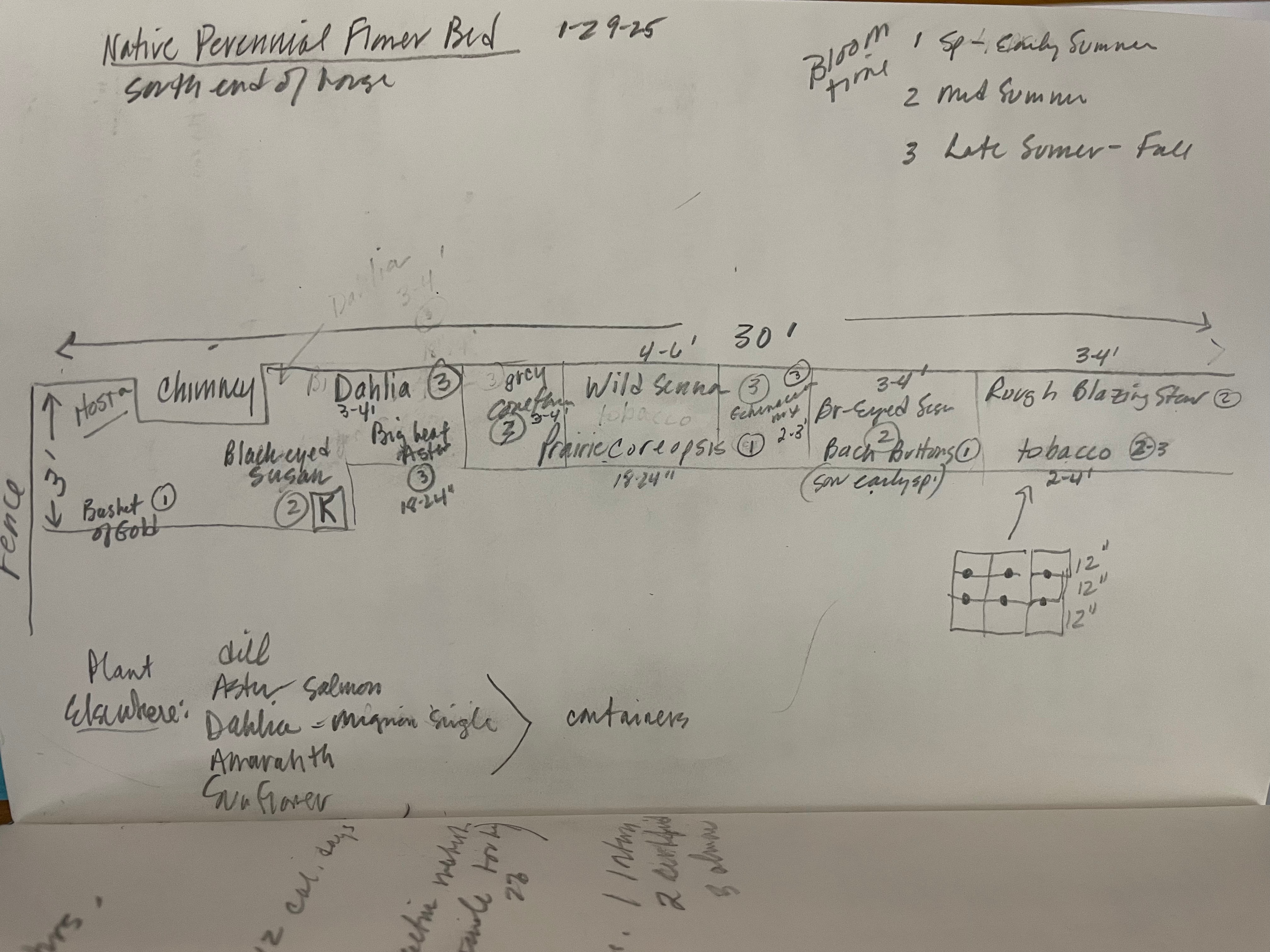
Theme determined, cultivars chosen, seeds in hand, and design created, I’m ready to pull out the milk jugs and get my winter sowing started.
Now, if I could just get a robot to plant, weed, and water, think how much time I’d have to arrange all those fragrant bouquets!
