It might result in a book!
What if instead of just chillin’, your brain kept running possible scenarios? What if it never stopped asking questions? What if it constantly generated ideas to improve your day, or work, or life? Or someone else’s?
My brain is like that.
At night, I often toss and turn until l finally just get up, grab my fuzzy gray robe, and sneak out the bedroom door, cute dog now alert and right behind me, and slip into the upstairs office. There, I pick up one of my current reads, preferably nonfiction but not too politically inflammatory, and submerge myself in a chapter or two of intentionally mind-numbing text. If it’s been an overly full day, I might even pull out one of my journals and try to purge my brain of its overflowing flotsam with some ink.
I often curse my brain’s lack of a shutoff valve. But more and more these days, I’m cutting myself slack. I realize that I come by this trait honestly.
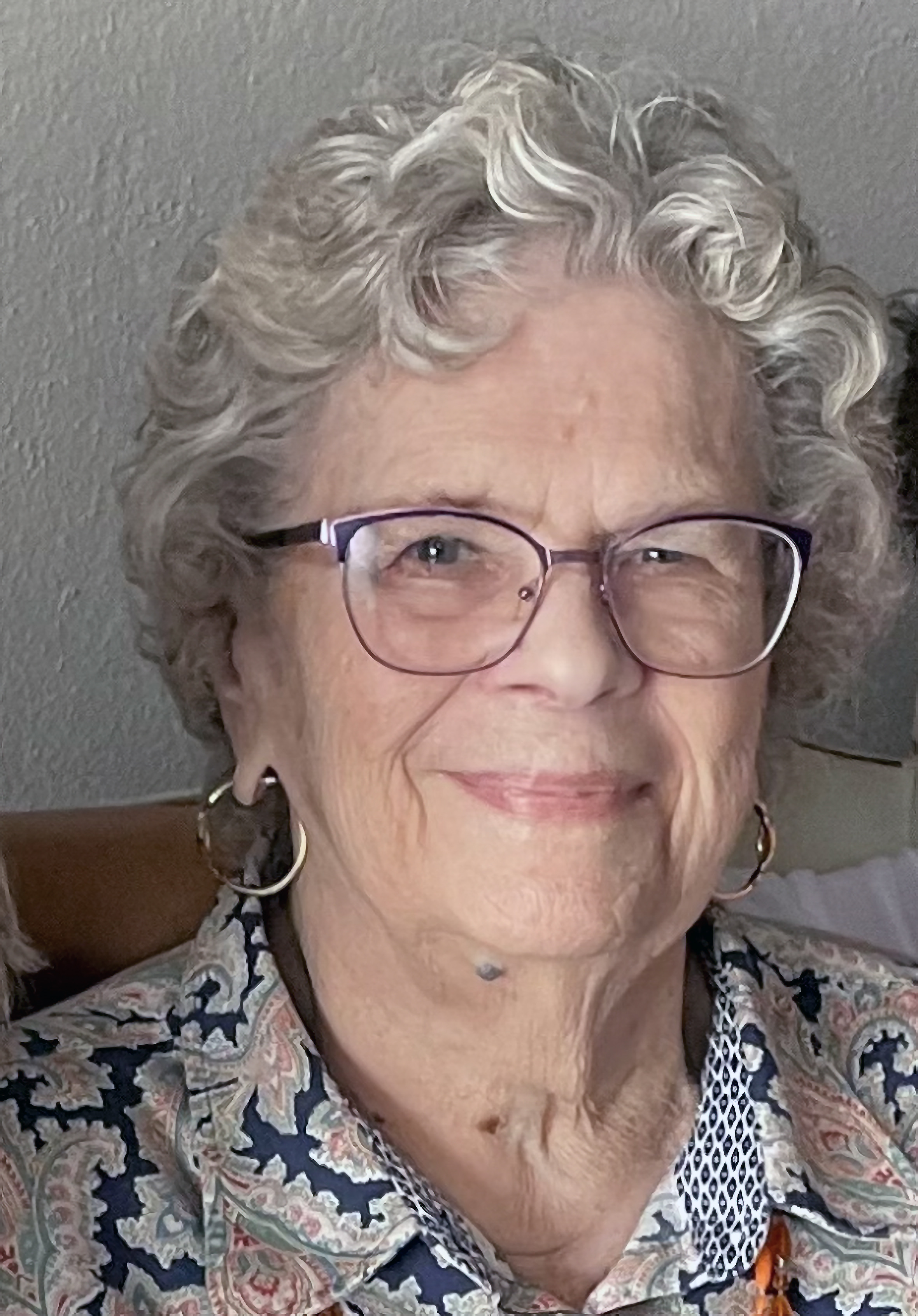
My mom’s brain, even at 89 years old, also never seems to shut down.
A public elementary school teacher for almost a third of her life, my mom was paid to live in the realm of problem-solving, instruction, and creativity. Luckily for her, she had minimal interference from curriculum maps and pacing guides, learning modules, and standardized testing. There were no state-imposed academic standards back then. It was a different era, one where kids could learn to read and do math and problem solve while also moving, exploring, and using their hands as well as their brains. It was a time when they had time to learn phonics, listen to stories, and tell them, too.
How could kids learn best was the question that consumed my mom as she prepared her curriculum each week. And her answer was always through a project already underway or lurking in her mind, and it often connected to storytelling.
That mindset hasn’t stopped. Even as I was writing this, she looked like she was napping in her recliner. Nope! When she woke up, she picked up a pencil and started to jot down some reminders. Then she announced, “I have some questions for you when you’re finished writing.”
One of her favorite ways to keep in touch with her grands was to create rebus letters for the kids to decipher. She pored over old magazines to find simple pictures that could represent words or syllables, painstakingly cutting them out and pasting them into the text in place of actual letters. She bought an accordion file box for sorting, so the perfect image was always just a fingertip away. She’s still doing it!
Mom also enjoyed promoting higher-order thinking skills in her kids. When she came across a particularly complex image in a magazine, she would create a series of related questions for the grandkids to answer. First, the kids had to scour the details of the image to connect to the question. Then they rode the questions’ coattails to think more broadly about the world and life.
It seemed to be satisfying work for a retired schoolteacher and grandmother.
Until she discovered Beanie Babies.
On weekends, my sister started taking Mom to thrift stores to hunt for bargains. Amidst all the random treasures, Mom was taken by the vast numbers of practically new Beanie Babies they found tucked among teddy bears and knock-off Barbie dolls in the toy aisle at Goodwill.
The ones that made it into her cart were invariably cute or unusual. Once home with her menagerie and upon closer inspection, Mom realized that some of the stuffies were downright perplexing. Identifying the exact species of the Beanie Babies required some research, particularly if the saggy little critter’s tag happened to be missing. Her need for exactness often ended in numerous trips to the library. Was the blue bird with black feet and bill a bluebird or a blue jay? Of course, one answer led to another question. What was the habitat of each of those birds? How were they similar and different?
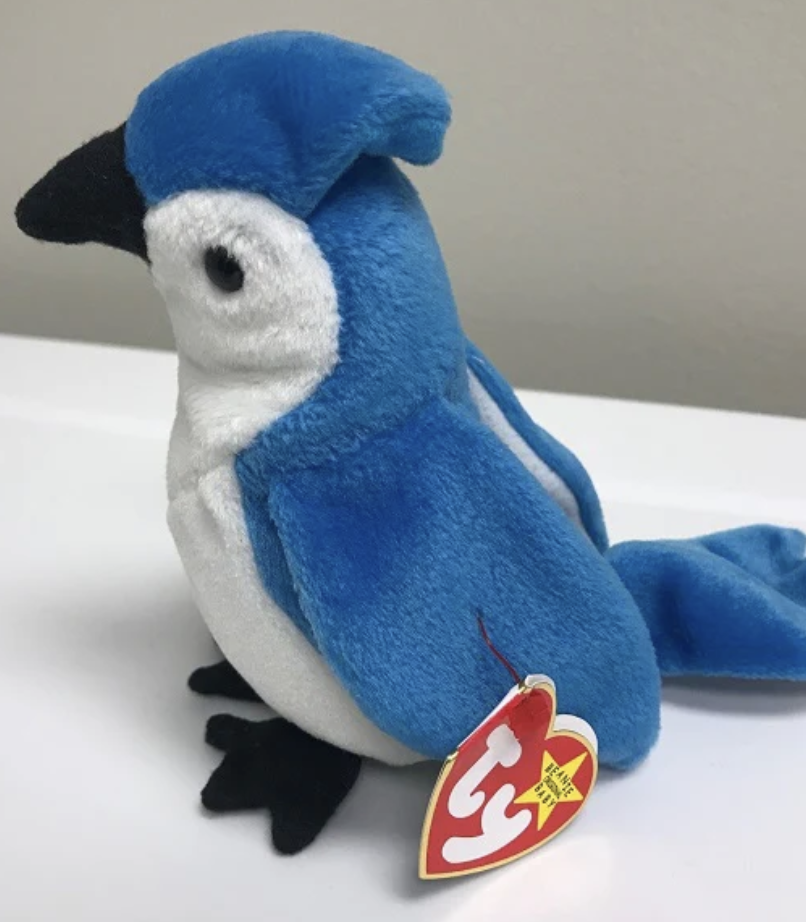
Her new pastime became an obsessive quest to find more unique animals: camels, moose, a Kuku, a platypus, eagles, and dinosaurs- her passion. And eventually she amassed whole families of different species: monkeys, penguins, whales, orangutans, and all kinds of birds. She took delight in categorizing them and storing them in labeled plastic bins.
Owning them wasn’t enough, though.
Always focused on how she could best teach someone something, Mom began writing. Some of her pieces were narratives, others informative, often with an animal narrator. She quickly created a three-ring binder filled with her animal stories. Next, in true teacherly fashion, she began supplementing her texts with word searches and discussion questions. Then, just before the end of each school year, she copied and sent packets with new stories and activities to the great-grandkids. No summer slide in reading for these kids! Eventually, she ended up with twenty-six stories.
Since I retired and started writing about our ancestors’ work teaching freedmen in Mississippi, I’ve been thinking about Mom’s stories. Why not combine them into a book?
The work wasn’t simple. Each of the stories we chose to include was a stand-alone narrative. So Mom and I labored together in discussions about how they could believably connect in a book. Eventually, Mom created a character and storyline to bind them all together: Grammy Mare, a retired police horse who moves back to the farm where she was born and teaches the young animals life lessons.
And now, with the help of my son Ted Shideler, Mom and I have assembled five of her stories into a real book, Grammy Mare Stories: A New Life. My mom- the original Grammy Mare to her grandkids- is a published author through Smoky Row Press! She couldn’t be more excited.
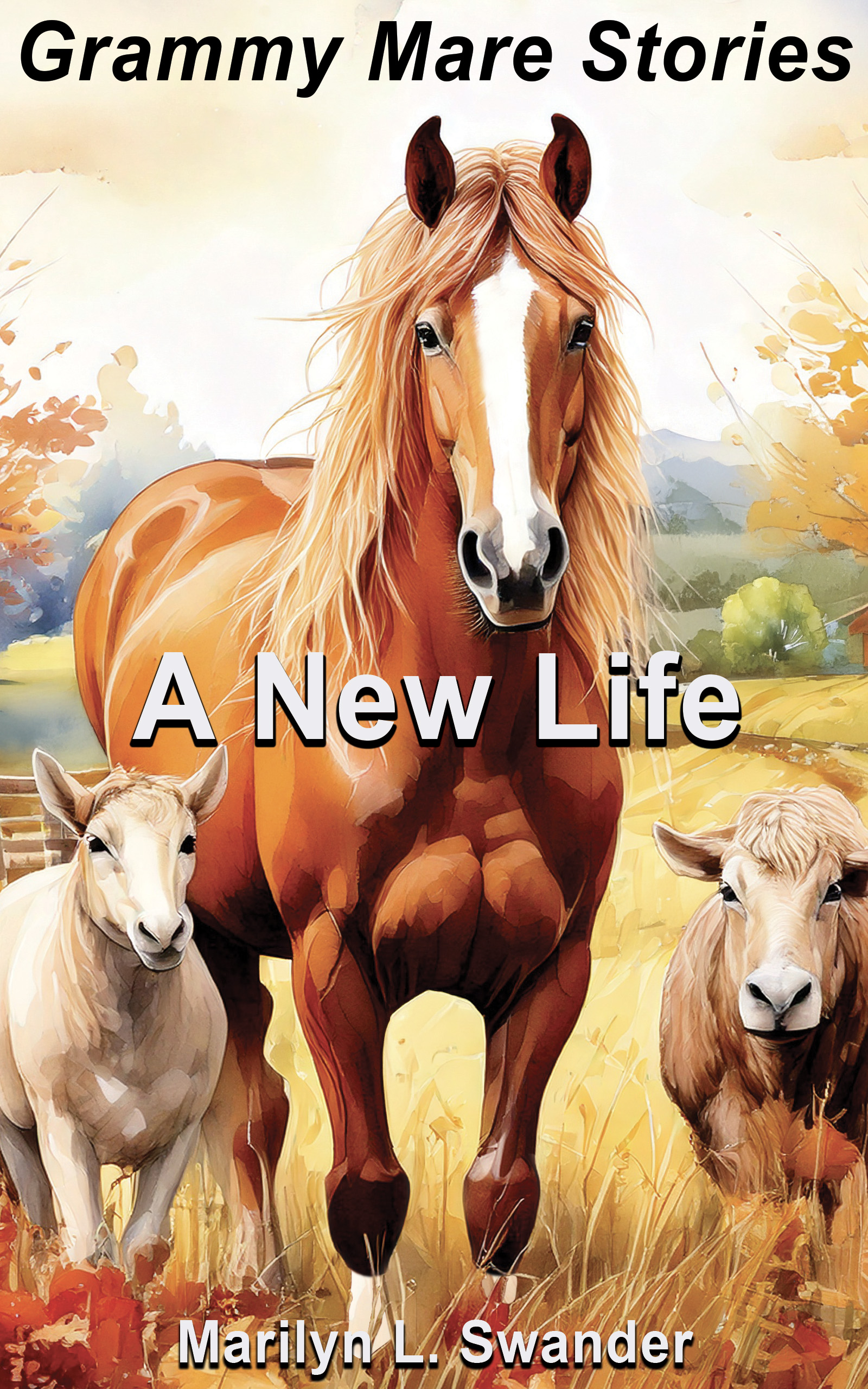
The project has turned out to be a delight! To celebrate her new author status, we’re hosting a book launch party at her retirement facility in a few weeks. It’s a chance to show off her work, honor her, and share a couple of the stories with anyone who’s interested.
No wonder her mind is churning, even when she’s napping! Which stories should she read? How much of each story? Which words or phrases should she emphasize? Her proof copy is filled with pencilled-in notes.
That’s not a surprise. No one reads a story aloud better than Mom! Truly, she could’ve had a laudable career in audiobook production. She loved to read aloud to us when she was a young mom, and that’s probably what made all of her kids critical and voracious readers.
But even with all the questions and elements of the launch party to consider, and in between daubing her eyes in excitement and pride, she’s having a blast rehearsing and thinking, making lists, and scribbling notes.
There are worse ways to enter your nineties than to be constantly thinking!