“Not everyone thinks the way you do,” a friend and coworker once told me. I suppose it was meant to rein in my higher-than-average expectations of myself and others.
But as I think about how doomscrolling, social media, and AI are infiltrating, perhaps hijacking, the lives of young people today, I can’t help but think everyone might be better off if they were at least a bit more like me.
See, I’m rarely bored. Sometimes that’s a problem, but usually it serves me well.
I have too many interests to sit around and complain about having nothing to do. My crowded, but generally well-organized home office is evidence.
On the bookshelves, textbooks related to teaching grammar and writing hover above a shelf of Quaker history texts, which lean next to filled journals and books about journal writing. On the black-slatted bookcase behind my grandmother’s wingback chair are volumes about the healing properties of herbs, essential oil recipes, Myers-Briggs Personality Types, the enneagram, and an oddball book on numerology. My classic books are downstairs, alphabetized above the shelf with travel books and biographies. My collection of Trixie Belden mysteries lives in the guest room with the fantasy classics discarded by my youngest son.
The office closet is stuffed with salve and tincture-making supplies: bottles of all sizes, droppers, beeswax, cheesecloth, extra stainless steel pots and utensils, and even a single-burner hotplate. That equipment shares the double-wide space with sewing paraphernalia, snorkeling gear, luggage, paper cutters and bookmaking supplies, stained glass-making materials, and floral design tools for the annual winter greens workshop.

On Great Aunt Hazel’s dropleaf table, I have just enough space to work on papercraft because the back of the table is covered with oil painting and colored pencil art supplies. An overhead projector–a gem in the world of intaglio printmaking–takes up space on the floor between bags filled with research notebooks, copies of manuscripts, and plat maps. It’s waiting patiently until I decide on purchasing a small intaglio press. I’d love to continue my foray into printmaking, but having enough time to justify the cost is an issue.
Between the table and the louvered closet doors, I’ve wedged an old-fashioned collapsible wooden clothes rack. It works perfectly downstairs on the dining room table when I am drying herbs a few times each year. The pie safe in the family room is filled with Ball jars containing dried herbs.
The drawers of the one-ton walnut credenza in the office overflow with scrapbooks halfway completed from trips to China, Peru, Japan, and India. Someday, I’ll finish pasting in all the receipts and brochures and geegaws I collected…but maybe not. I’m probably the only one who cares about their contents.
Outside the office, downstairs is my digital piano, which gives me hours of frustrating pleasure as I enter my third year of piano lessons. Outside is my fenced-in herb garden, which has now grown to include a few raised beds for vegetables and has prompted my new interest in home canning. With several friends who grew up canning and three kids who worked for the premier company of canning fame, I have ready advice at my fingertips. But my kitchen is small, so my husband and I are working to create a canning kitchen in the garage.

Here’s my point: I always have stuff to do and things to learn.
But I found that’s often not true for young people. That’s especially problematic when it comes to helping kids improve their reading skills. According to NAEP, “The 2024 scores [for reading] at all selected percentiles except the 90th were lower compared to 2022 percentile scores.”
In the classroom, when I monitored reading level gains among my high school students, I counseled students to read more outside of school. As they groaned or glanced away, not wanting to confess that they hated to read (as if I didn’t already know), I told them they could read ANYTHING, it all “counted” and would help them improve their skills if they just took time to think about what they read.
I came to understand that concept when one of my sons began reading by noticing the names on the backs of cars. He loved his Hot Wheels. I also learned it from my husband, who hated reading in school, but as an adult, he discovered Tom Clancy and became a voracious reader.
Here’s generally how the student reading conferences went:
Me: So what are you interested in?
Student: I dunno.
Me: Well, how do you spend your time after school?
Student: I dunno (or don’t want to say).
Me: Hmmm. What does your afternoon and evening look like?
Student: I just hang out.
Me: So what does that mean?
Student: I dunno.
Me: (tugging at my eyebrows) Okaaaay.
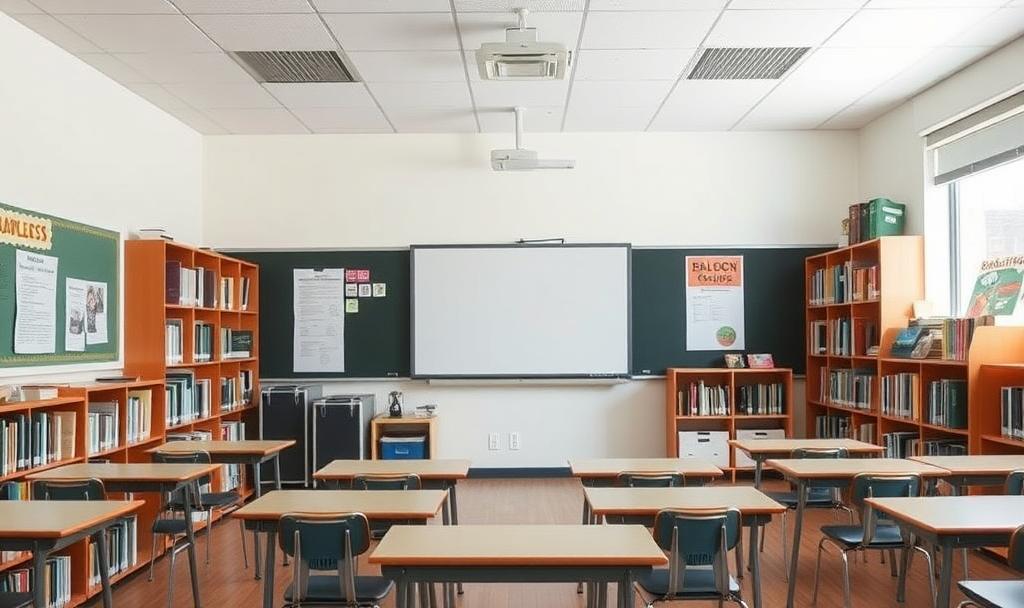
Too many of those conversations encouraged me to keep my classroom flooded with a wide range of reading materials on various topics. My students even organized it by genre to make finding interesting books easier for kids who don’t enjoy reading yet.
But when kids don’t have any interests, that’s a problem.
Especially when social media or chatting with AI is so readily available to fill the gap.
About ten years ago, Passion Projects were a thing in the education world. Students chose a topic related to the subject area they were studying and spent one period or day per week researching and writing about it to create a product to share with the class at the end of the term. With clear goals and skill instruction, these Passion Projects helped students build knowledge and tick off many academic standards while using higher-order thinking skills. But sadly, like many educational strategies, Passion Projects seem to have faded away. Maybe it was too easy to let the time slide into a free period for kids and a time for the teacher to grade or plan. Or maybe the modules swallowed them.
As an English teacher with research standards to address, I always assigned a variety of research projects that connected to our literature. For example, students researched modern-day slavery after reading Civil War novels, they investigated current issues on American Indian reservations, and chose topics about everyday life to present in booths at a Renaissance or Asian or Americas fair. Over the years and courses, I kept hashing and rehashing projects to keep students engaged and learning, often in hands-on ways. “Project Based Learning” is the current buzz term, although it’s not a new concept.
I invested hours creating engaging research projects and topic choices, always eager to entertain student-generated topics to get better buy-in from reluctant students. Sometimes they produced amazing work that was a joy for me to learn from, too. But too often, some students just jumped through the hoop with little interest or curiosity.
Now, almost three years later and out of the classroom, here are my concerns and questions:
Many kids spend too much time on screens. Check out what the toddlers in strollers have in their hands!
If social media is too addictive for adults to pull away from, of course, it must be more difficult for kids who, by nature, are in the throes of seeking peer approval.
Trauma can be overwhelming and make people turn away from what they love; why aren’t there more live counselors in schools who can help kids?
How can parents and grandparents build interests in their children?
Of course, money seems to be the obvious challenge. It takes money for kids to have interests. Sure, it can help, but there are plenty of ways to cultivate interests away from electronics and learn, too. Here’s a list of possibilities, taken from my playlist of interests:
Daydream about your future…or the past.
Draw something you see.
Whistle a tune you made up.
Sing some songs you know.
Silence your mind and listen to the world around you.
Take a walk in your neighborhood and make a map.
Write or tell a story about your life or what you’d like your life to be.
Find images in the clouds and watch them morph into something new.
Inspect some plants, compare their color, size, shape, blooms.
Read a book from the public library, a little free library, on a shelf in a classroom or borrow one from someone you know. Hate to read- Bah! You just haven’t found the right material.
Build something from discarded boxes.
Make a puzzle or word search or number game.
Catch a bug and examine it closely.
Play with a younger person.
Have a conversation with a friend.
Count things, classify them, and make a chart or guide.
Ask someone older about the lessons they learned in life.
Make up jokes or riddles and try them out.
Organize your space, sort and pitch and clean.

Do I ever get caught up in scrolling through the Internet? Sometimes. Usually, it’s at night when I can’t get to sleep, and I don’t want to wake up my husband by getting up to play piano or read or draw or write. That’s when having several interests can be negative: there’s always something I could do. I can also get pulled into doomscrolling when I’m worried about something in the news. Happily, the antidote to being preoccupied with the news is to stay away from it.
Younger folks might dismiss this as unrealistic, an outdated, generational approach to a contemporary problem. They might say I’m out of touch. After all, my peers and I often made our fun as we free-ranged our neighborhoods, farms, and streets, when today, some say, there’s nowhere for kids to do that safely. The malls are gone, the streets aren’t safe, and farms are few. Okay, maybe we need more safe places for kids to hang out today. Places without electronics. That takes effort to organize, and perhaps only some of us have the time and contacts and energy to do that.
But we all can start by limiting our own screentime at home and replacing it with cultivating our own interests. Let kids see adults chasing and enjoying unique hobbies and diversions. Non-electronic ones. Make a jar filled with slips of paper with your own playlist of ideas, and make a show of pulling one out each day or each weekend.
With our passions so evident, it won’t be long before the kids join us.
And I’ll bet that they’ll get healthier, manage their stress better, and find interesting things to read along the way.
