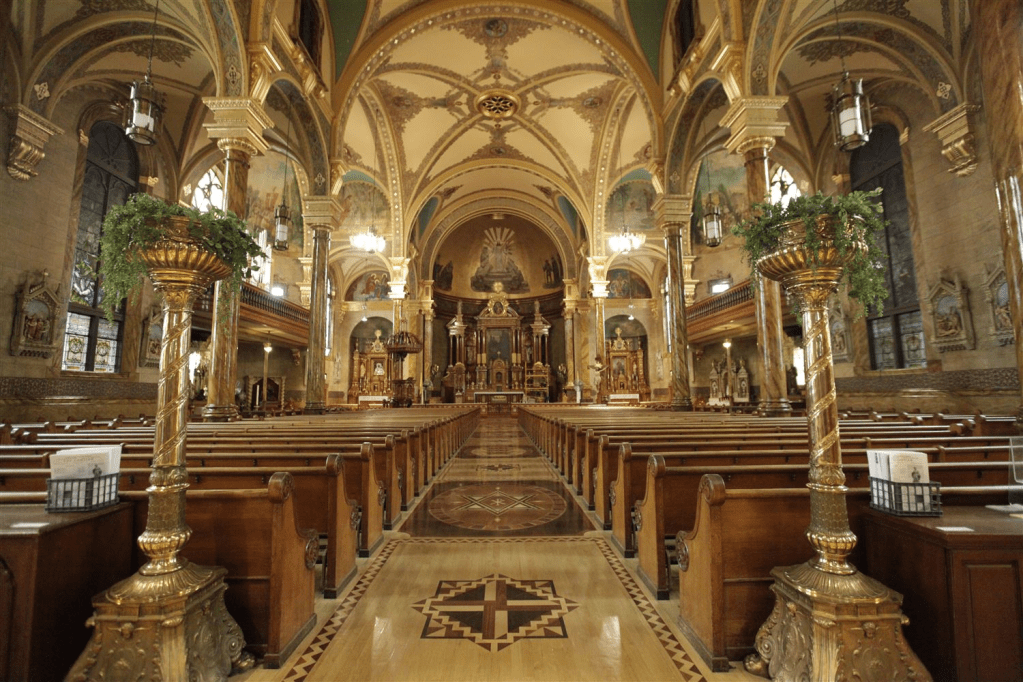
I’m not Catholic. But I’ve come to appreciate several elements of Catholicism.
With the closest unprogrammed–or silent–Quaker meeting about 30 minutes away, sometimes I need a dose of Catholicism, or at least my version.
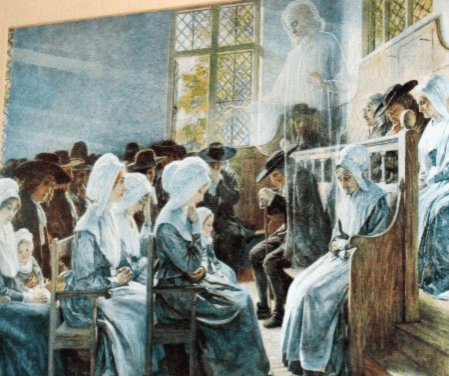
Read more: Finding Silence: A Quaker’s Refuge in a Catholic Adoration ChapelUnprogrammed Friends meetings near me are hard to find these days. I know of only two within an hour’s drive. To reflect Friends’ testimony of simplicity, the meeting rooms—or sanctuaries–are usually plain and unadorned, except perhaps for an old painting of a Quaker meeting for worship and a long cushion on the pew.
No crosses. No stained glass. Often, no hymnals.
The idea is that by sitting in the silence, all worshippers enter into their personal communion with God. Sometimes, those gathered after the manner of Friends are led to share a brief message with the assembled seekers. It’s a very personal, yet powerful community experience.
It’s also not always a good fit for a mainline Protestant. My husband struggles with an hour of silent worship or “dead time,” as he called it, when he first encountered the practice.
Unfortunately, the church we’ve been attending has very little quiet time for prayer or reflection. Instead, the time is filled wth praise songs, communion, and the pastor’s message. It fits my husband’s worship needs, but not mine, even though we both attend.
But I’ve found my quiet place, only five minutes from home.
It’s the adoration chapel of the local Catholic parish.
It’s much more ornate than any Friends’ meetinghouse.
To a layperson like me, the space is gobsmackingly beautiful. The centerpiece of the altar is a tall crucifix framed by an intricately carved, pecan-colored wooden backdrop.
On either side of Jesus’ form, tall niches cradle simple, ivory statues, one of Mary and one of Joseph. Columns of white candles flicker on a table at the front that also holds a spectacular golden sunburst sculpture called a monstrance. I had to look that up, as Friends usually abstain from using religious symbols or icons.
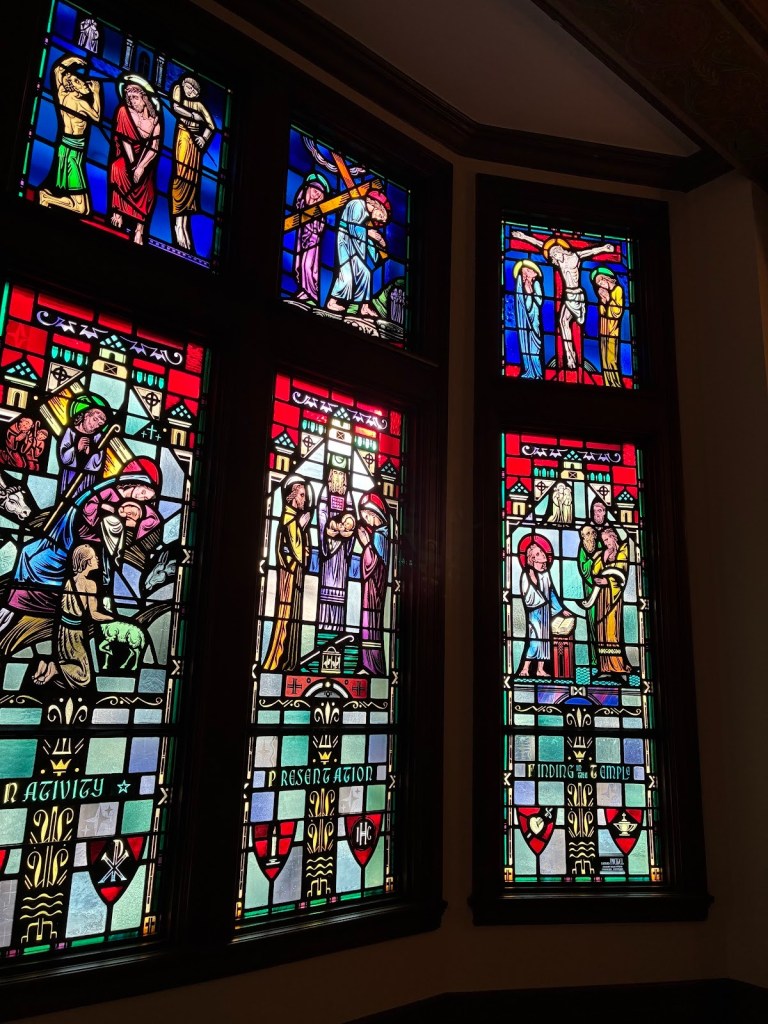
Facing the stately altar, miniature pews are surrounded by colorful stained glass windows depicting Biblical scenes. Small kneeling benches fold out for worshippers to use.
But the best part of the chapel–at least for this Quaker girl–is the silence. Worshippers tiptoeing in, genuflecting, settling into a pew, kneeling to pray, reading, fingering a rosary, and slipping out with another quick kneel again when they finish maintain a comforting silence for everyone gathered.
Sitting in the silence is a personal act in an intimate, gathered environment. Kind of like a Friends meeting for worship!
It’s funny that Mary Jane and Lizzie were aching for something just the opposite to excite their worship. They were eager to integrate sacred music into their meeting for worship at a time when silence was the standard.
Today, I crave the opposite: silence.

Leave a comment