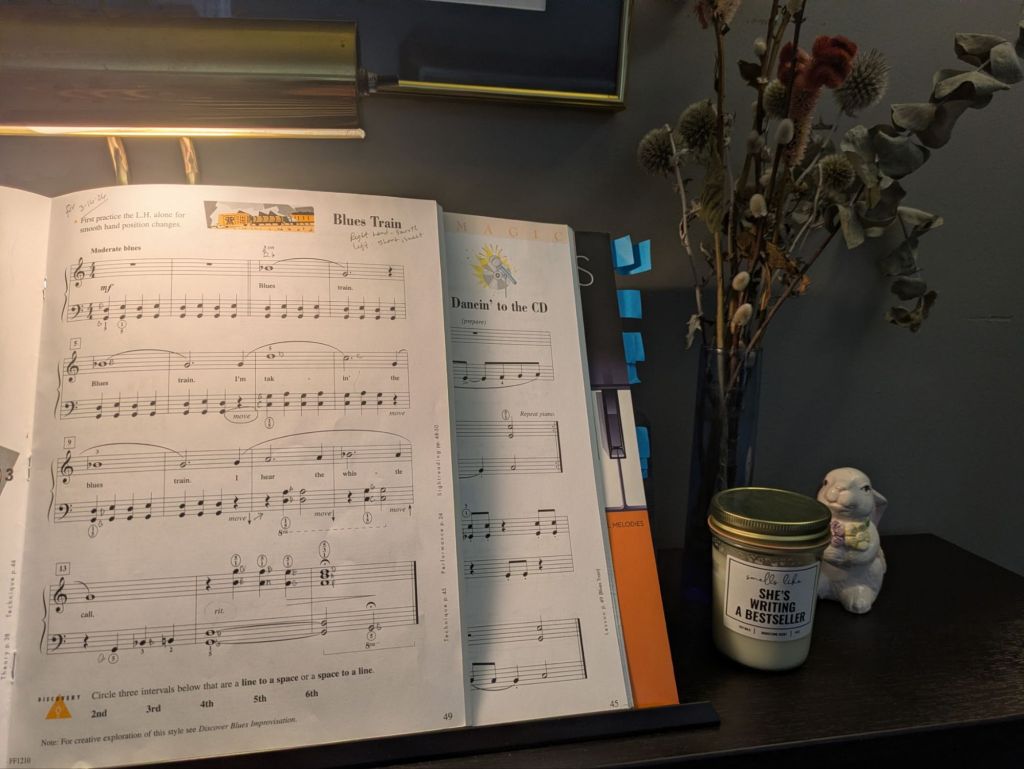
I should’ve known I could do it. I’ve seen others do it.
One of my kids played the drum set for years, and seeing him perform in a couple of bands proved to me that it’s possible.
But I didn’t think I could. No, the chances that I could make my hands do two different things at the same time on the piano were nil.
Kind of like rubbing my stomach and patting my head, two different physical tasks at once are a challenge for me.
Mental tasks I accomplish easily in tandem or in triplicate.
Maybe that’s from the myriad daily tasks teachers execute in the classroom or after hours. Planning a new lesson while grading the previous one? No problem! Reteaching a concept with a new example to one student, while sending classroom management signals to an unruly one? Got it! Submitting attendance online while wandering around the classroom, keeping students on task? A breeze!
Handling those and many more multi-tasking efforts without breaking a sweat were my stock and trade when I was a teacher.
But getting my brain to first send different, complicated instructions to my hands and feet – which were supposed to work at the same time, and in time – and produce pleasing music? That must involve another part of my brain altogether!
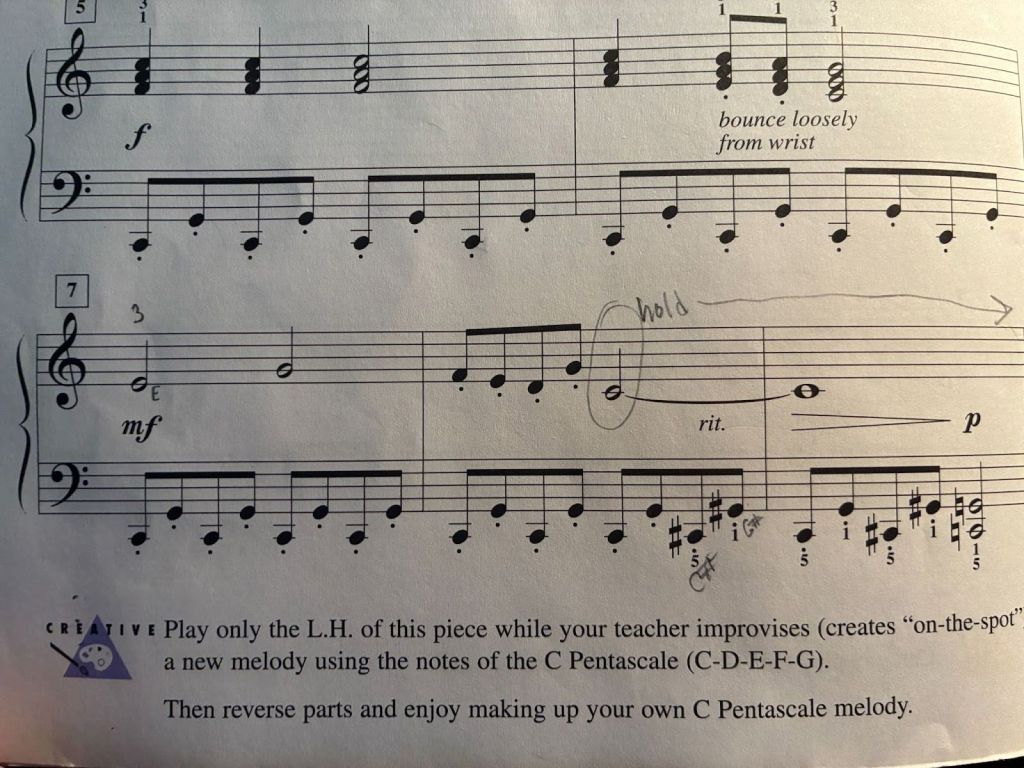
So I’m proud to report that this week marked a watershed moment in my retired life.
I’ve had a stressful time lately. I’ve been worrying about things that I have little influence on and feeling pulled in too many directions. My sleep has been frequently interrupted. I’ve had a testy temper. And I’ve made too many poor food choices. As a result, I needed some reassurance that my brain was still functioning properly, because, well…let’s just say some folks had their doubts.
To my relief, my piano lessons today were the omega-3s, healthy fats, and antioxidants I needed to keep my cognitive function highly functioning.
Something just clicked during practice last week, and somehow my brain took the back seat and let my fingers fly. Today, my former colleague and piano teacher, Lisa, said my performance was “a great improvement” from last week’s sight reading. “Excellent!” she praised me, beaming. High praise from Lisa, someone who excels at so many enterprises!
Generally, I like learning something new and excelling, too. Sometimes I stick with my new interests, usually those I am decent at. But at other times, a taste is enough. Let’s just say homemade sourdough bread and I have parted ways. So, too, have I ended my relationship with watercolor painting. And archery.
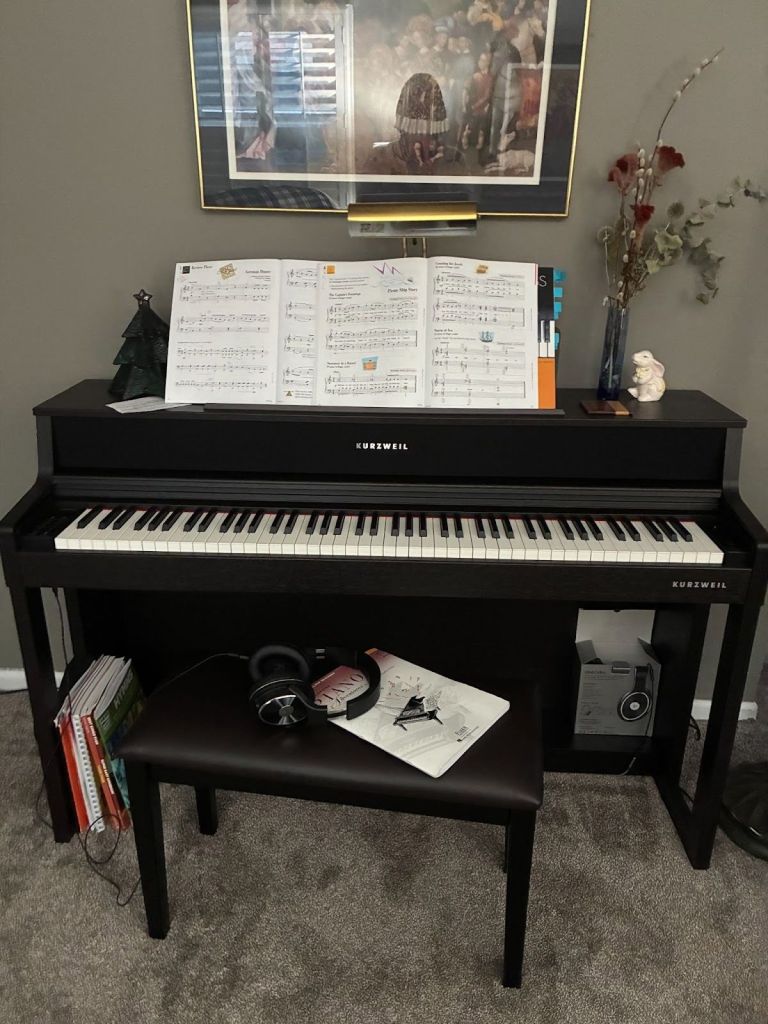
Piano lessons, though, have been an ongoing adventure since I retired and my former colleague took me on as her student. After surviving a recital and two years of lessons, I’m now in the third book of the instructional series. That seems impressive, but frankly, the music looks intimidating every time I turn the page.
But I can’t let myself get spooked.
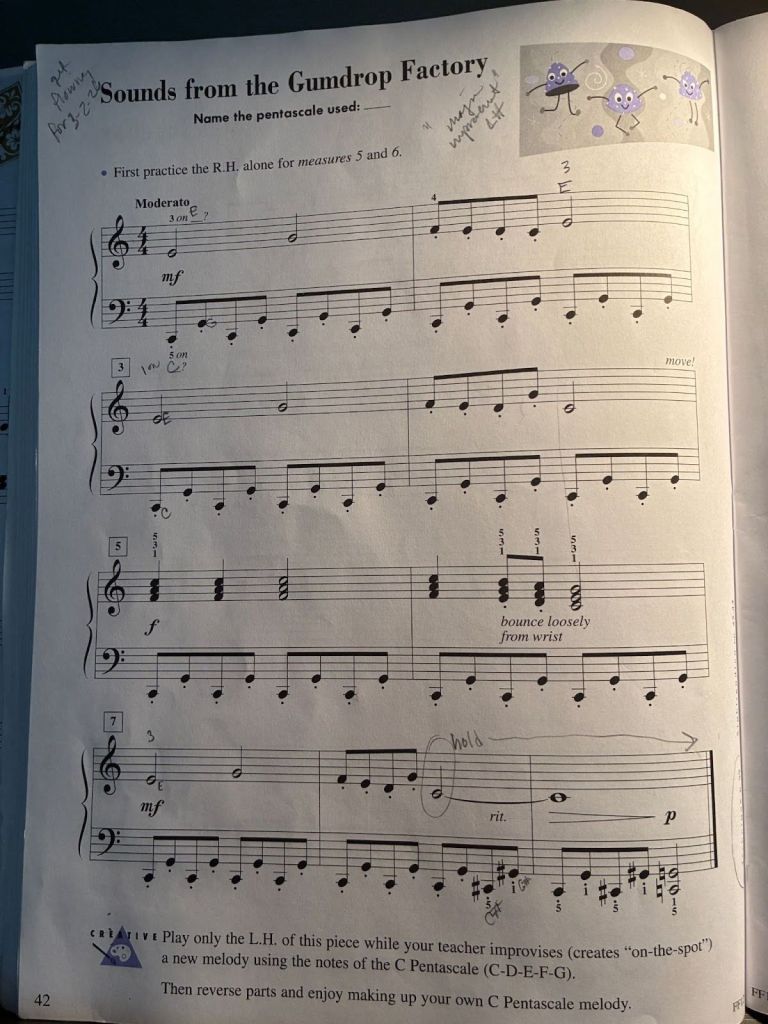
Luckily for me, Lisa is wise. She breaks down the newest challenges for me, reminding me about the skills I have mastered as new ones are presented. Then she builds my success by walking me through each new piece, one step at a time. She’s so savvy!
Here’s Lisa’s method:
1.) Begin with an overview.
2.) Take it staff by staff and measure by measure.
3.) Stay in the measure with just a peek ahead.
4.) Notice what you already know.
5.) Look at the small picture, not the big picture while learning pieces.
6.) Put it all together.
7.) Enjoy the wonderful music I’ve made.
As I drove home from today’s lesson, I realized the steps Lisa uses are more than just for success with piano or music lessons. They’re an excellent framework for any challenge I’m facing.
What if I followed these steps for challenges in my everyday life? Would I be able to shake the stressors? How would my life improve? How would my sleep and temper and diet improve?
1.) Look at the big picture first. How important is it? How big is it? Do I have the skills to attack it? How long might it take to resolve it?
2.) Take it step by step; chunk it. Identify the parts that I can tackle easily to build confidence. Then add more.
3.) Look ahead, but not so far that I get overwhelmed. Anticipate shifts that will have to happen. Plan ahead for them. Rehearse, even!
4.) Connect and build on my previous experiences. Remember the lessons I’ve already mastered. Use what I’ve learned.
5.) Repeat 2-4 until all parts are addressed. Keep focused.
6.) Put together the parts. Combine what I’ve learned to address the situation.
7.) Revel in my accomplishments. Take time to celebrate them. Learning is hard work!
I’m feeling more successful already!

Leave a comment