Hmm: A runaway mule team that nearly mows down two women? A quarrel between two sisters who claim to be pacifists? A public argument between a female Northerner and a male Confederate sympathizer?
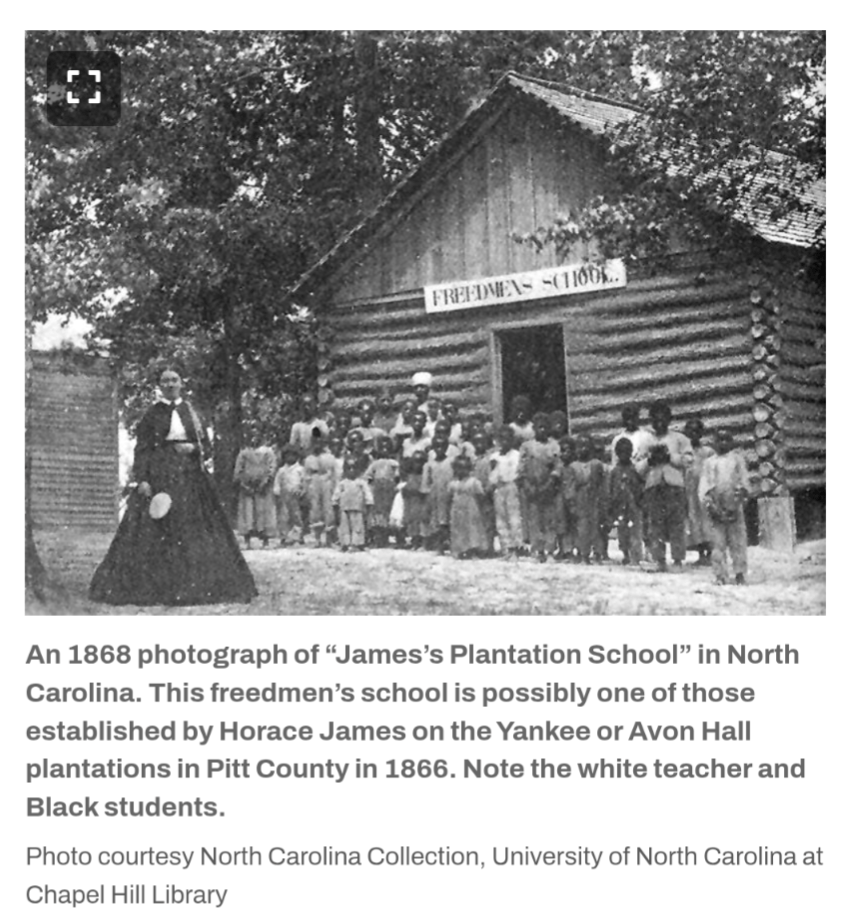
For several months, I debated about the best narrative hook for my novel based on the real family-heirloom diary of my ancestor, Mary Jane Edwards, who with her sister, Lizzie, went South from her Indiana farm to teach freedmen in 1866.
Sure, as a former high-school English teacher, I knew all the basics. A typical narrative-writing mini-lesson in high school creative writing classes advises writers to start with a conflict. Or start with a shocking statement. Or start with some dialogue. Or combine all three: shocking conversation that involves conflict.
That guidance can help novice writers know how to begin. But what about where in the story to begin? That can be a conundrum, too.
What some teachers might omit from their mini-lessons is that writers of fiction are constantly making decisions. Not only about where to begin the story, but how to tell it. Not to mention decisions about who is telling the story– or even which part of the story– and when the action happens. What should be evident from the outset and what is better left developed? How to make sure the reader is able to draw conclusions, instead of the writer filling in all the blanks?
Writing is hard work!
That white page staring up from the top of the desk or device can be intimidating when a writer believes it all has to be planned first. No wonder fanfiction is so popular! It eliminates much of the draining decision-making.
I’ve found that sometimes writers just have to experiment with several hooks to see what works. And that’s an effective way to foil the curse of the blank page. Telling yourself to write it just to see how it comes out removes the blinding flash of the paper with no words on it. Creating a “draft” releases the pressure to make it perfect from the start.
My first approach to telling Mary Jane’s story was to purposefully emphasize the fish-out-of-water theme. I wanted to put her in danger in her new setting as a Northern schoolmarm down South. That would foreshadow the danger she experiences later.
In one scene, she visits the camp of the United States Colored Troops (USCT), where she begins her freedmen teaching experience. Why not begin the novel there, I thought. I would drop my reader right into the middle – in media res.
But that scenario didn’t sound very exciting. How could I inject some conflict? Ideally, I thought, I’d also weave in local color and sprinkle in some historical detail for engaging flavor.
Having actually visited the place in Jackson where the USCT camp could’ve been, I visualized the steep road, so I could include details. Then I began thinking about what the sisters might encounter on their walk down the hill, from the house they shared with other teachers to their schools. Thinking is the most important part of writing, after all.
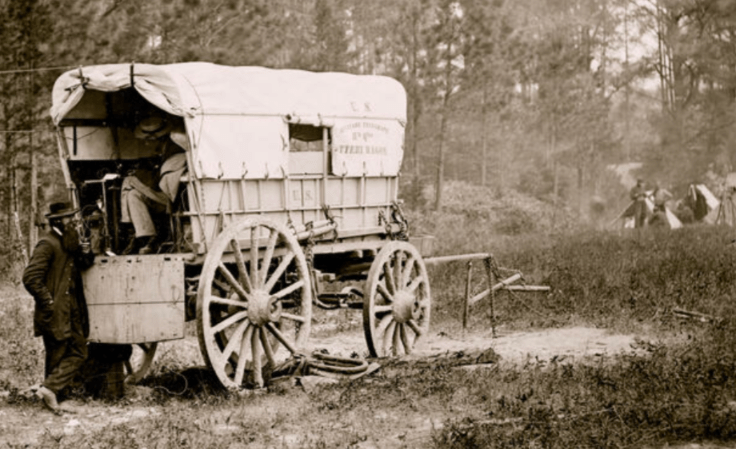
I figured they probably would’ve shared the road with a Union military wagon.
Now, if I could inject some conflict, that could work! Maybe the wagon could be out of control and nearly run them over. That was dramatic and the characters would gain sympathy from readers at the outset.
I imagined a soldier driver perched up high on the seat, tangled in reins and tugging at them to control the runaway horses as they galloped downhill. I saw the startled sisters, who had heard the pounding of the horses behind them, yanking up their skirts and leaping off the road.
Yes, that would tick all the boxes: conflict and dialogue, local color, and the fish-out-of-water theme.
Except I didn’t know anything about Reconstruction-era military wagons. I’d need a visual to pull that off convincingly. I found several on an image search, but I was a little confused. The wagons looked like they didn’t have seats up front. How did that work? Did the driver stand, or were the seats removable so more cargo could be loaded?
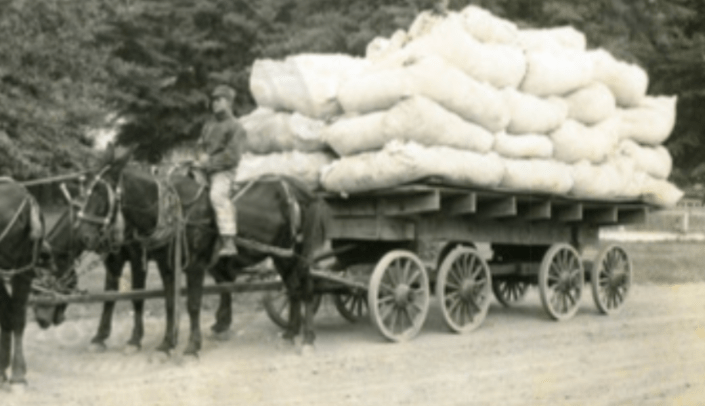
My scene with the frantic driver was blurring.
More research.
Ahhh…. Horses weren’t used to pull supply wagons, I discovered. Mules were. And mule drivers didn’t sit on a seat in supply wagons; they rode one of the mules! How did that work?
This time, YouTube helped give me details and a live action visual. I said a quiet prayer of thanks for being alive to write historical fiction in a time when research into the past is so easy to do!
Anyway. I wrote the scene.
It was dramatic, and likely a situation many readers wouldn’t have experienced. That could be engaging.
But somehow, it wasn’t right. My characters were farm girls, so they wouldn’t have been terribly startled by a wagon lumbering down the hill, even if it were pulled by a mule team and out of control. So that didn’t tick the fish-out-of-water box. And a mule team had no connection to the rest of the story. So… I tried again.
On the third try, I hit the mark. As we often realize we must, I began at the beginning.
I included conflict, plenty of characterization, and internal dialogue. I decided to introduce the fish-out-of-water theme by showing this particular fish in her native waters: by pulling readers into the “regular” day that ended up changing Mary Jane’s life.
So there will be no 19th-century versions of a car chase or explosion for this story. But I’m satisfied nonetheless that the hook will engage readers and set up Mary’s journey.
After all, my 21st-century readers will be fish out of water in Mary Jane’s world of 1866.
All it took was a step back and a few tries. Mary Jane would appreciate that tenacity! After all, her journey has lasted 160 years!

Leave a comment