Reviving my Quaker roots
“What’s all that dead time during your church service?” my soon-to-be-husband wanted to know.
He had managed to slip out after his early morning Methodist service to sit with me during my Quaker meeting for worship.

As a birthright member of The Religious Society of Friends, I knew we had some differences in our religious practices.
I’d made a mental list. I knew that they sometimes kneeled during services. I knew that the songs they sang tended to emphasize Jesus’ blood, and that the sermons were pretty long. I’d noticed that there was never quiet time to pray— the minister prayed for everyone. And I knew enough to avoid attending on Communion Sunday, when I’d feel awkward as I passed on the grape juice and communion wafers and people wondered why I didn’t partake. None of those things was listed in our weekly worship bulletin.
The Methodists’ baptism wasn’t so much a shock, even though Quakers regard baptism as one of the spirit, not one sanctified by water. When I was in college, I’d been a lifeguard at the YWCA and had donned a choir robe over my Speedo a few times when an evangelical church rented the pool for their Sunday afternoon sacrament.

Quakers in all their various iterations indeed have some unique practices. Silent or unprogrammed worship time is one. That was what my husband called “dead time,” a silent time to commune with the Lord and share if one feels very compelled to do so. For me, that’s the best part of a Quaker service. I wish there were a totally unprogrammed Quaker meeting (church) nearer to me.
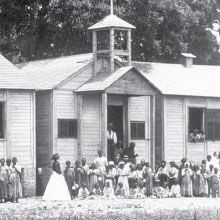
I haven’t been a member of a Friends meeting for about twenty years now. And though my values and beliefs are pretty solidly Quaker, as I’ve been writing this historical novel based on a family diary from 1866, I’ve had to do some research to refresh my Quaker phraseology. Mary Jane Edwards, the diarist and protagonist of the novel, has much to become clear about when she considers leaving her family in Raysville, Indiana, to teach in a Freedmen’s Bureau School in Mississippi. Once there, leadings seemed to be few and far between as she tried to integrate new teaching methods with the freedmen and her fellow teachers.
Below are a few of the wonderful phrases that Mary Jane used and Quakers still use that make me pause:
“To be clear”– to be certain of a course of action, often with the help of others (a Clearness Committee) who help the person discern what God wishes. Imagine what our lives and the world would be today if we proceeded with actions only when we were clear!
”A leading”– a feeling or nudge for a specific action that comes from God. Again, Quakers are big on individuals testing their convictions through the discernment of the meeting/church.
“Speak to one’s condition”- acknowledging that a message from another resonates with you at a deeper, meaningful level and addresses a weighty situation. I wonder if I openly thank others when their words help me greatly. These are the people I surround myself with. Do I honor them enough for their support?
“A weighty Friend”- in Quaker terms, a member of the society who is especially wise and devout. Who doesn’t need a wise friend?
Writing about the decisions my Quaker ancestors wrestled with has made me more conscious of being clear about my nudges. I’m grateful for a reminder to slow down and pray, take counsel with wise friends, and be clear about my actions.
What elements of your upbringing or heritage help you today? What phrases or actions help you discern the best courses to take?

Leave a comment