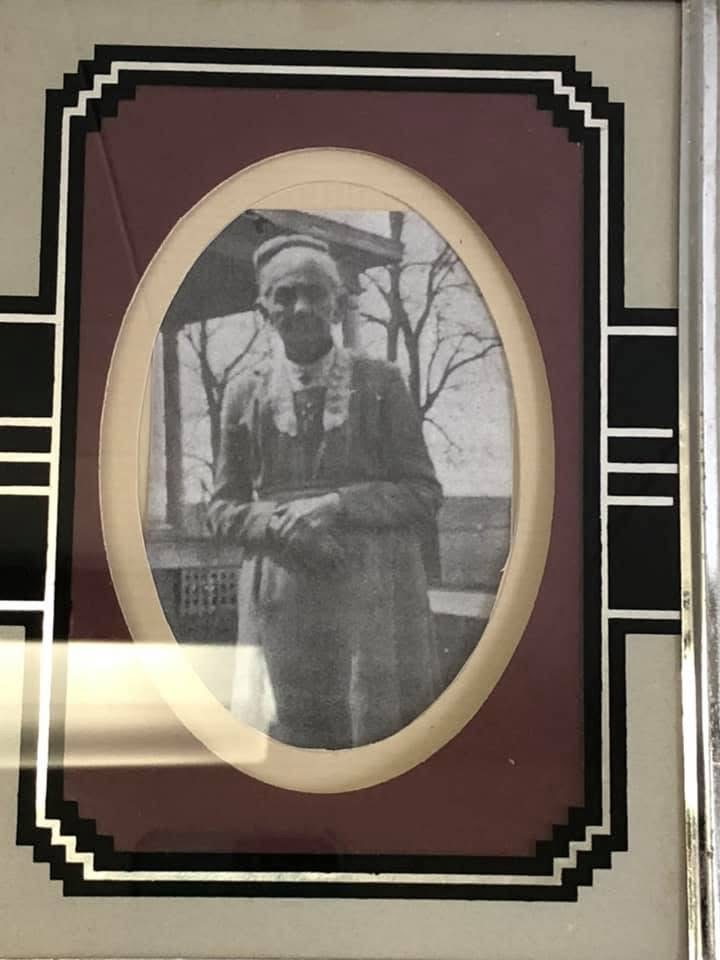
I have an impressive role model.
Seven years ago today, I spent the day in New Castle, Indiana, paging through musty books, peering at microfilm newspaper articles, and digging through gigantic, bound court record books. My son Ted Shideler and I were just starting my second Lilly Teacher Creativity Fellowship Award project.
For the past forty years, the Lilly pharmaceutical company, headquartered in Indianapolis, awards 100 Hoosier educators a grant to explore passion projects that will motivate them to keep working in Indiana schools. The process is quite competitive, and I was thrilled to have been funded $12,000 to support my travel and research.
My project had originally featured my mom, sister, and daughter as my research and travel companions tracing the steps of our Quaker ancestors who went South in 1866 to teach freedmen. But situations outside my control changed their availability.
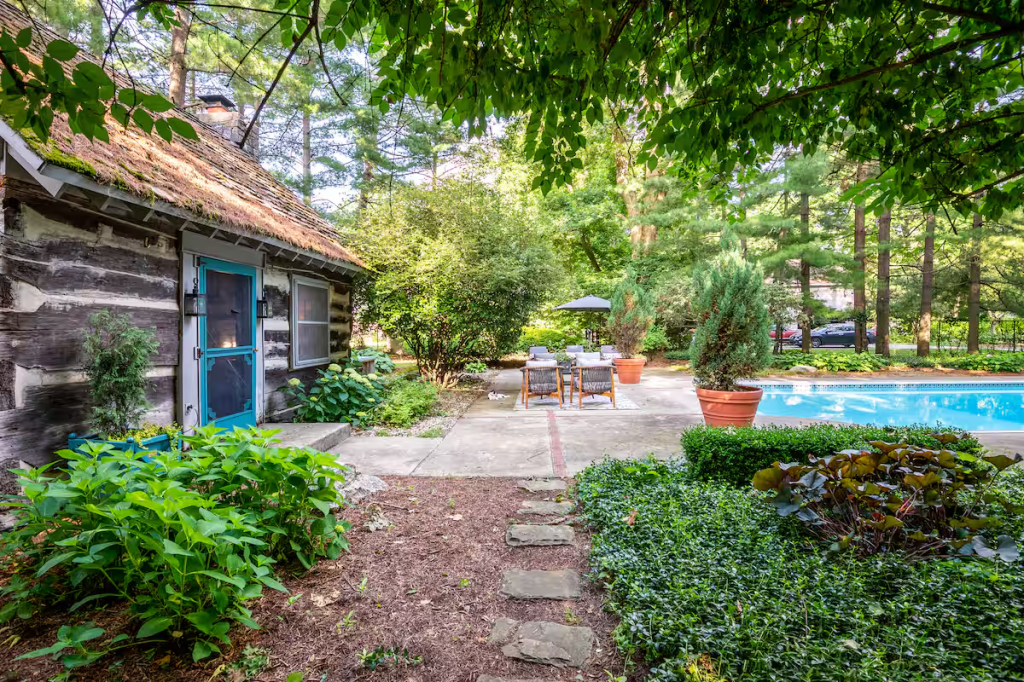
I had booked a lovely restored cabin on Quaker Hill in Richmond, Indiana, to serve as our base camp, and luckily for me, my son was able to get some time off to help kick off my investigations. Ted’s a super researcher and always interested in history. I was blessed to have his help.
We backtracked from Richmond toward home to New Castle, the county seat of Henry County, Indiana. It’s a small town where my Civil War-era ancestors spent time, being close to their tiny towns of Raysville and Spiceland.
Our first research morning was scheduled for the Henry County Historical Museum, a building composed of two old houses, one the former General William Grose home. Filled with exhibits about the area and genealogy resources, the place held a trove of interesting artifacts. Our tour guide, who knew our research interests beforehand, oriented us to the building. Before she allowed us time to browse, she stopped short and pointed to a large, framed document on the wall.
It was a physician’s license.
How odd, I thought. I don’t know any physicians in New Castle.
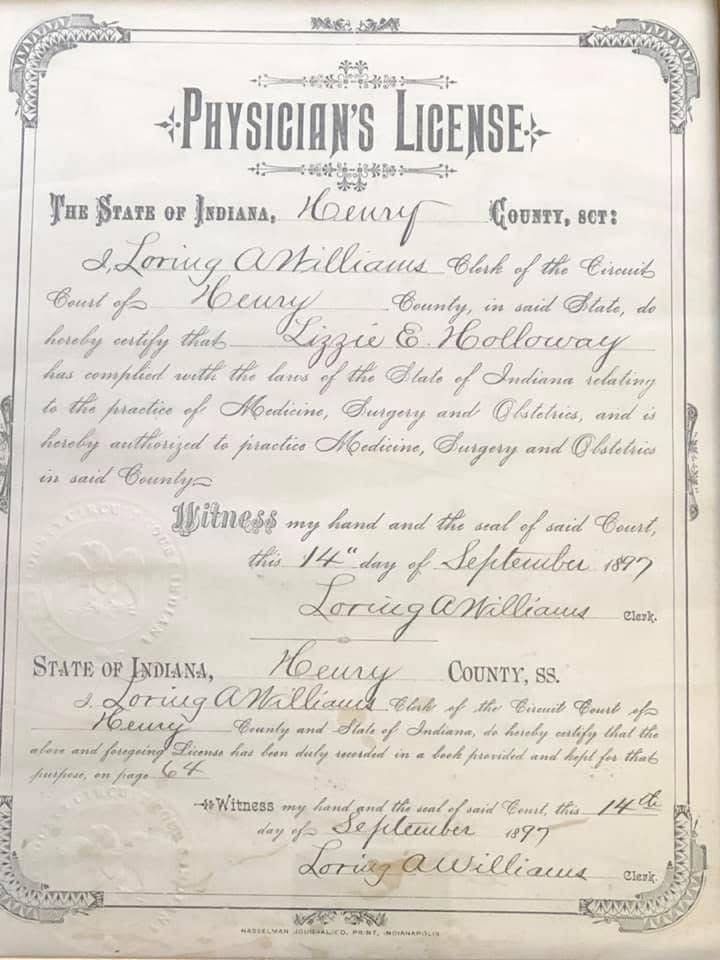
She leaned closer and pointed. “Recognize this name?” she asked.
It was my third great-grandmother’s name! “Lizzie E. Holloway” was Lizzie Edwards Holloway! The same Lizzie who’d gone with her sister, diary writer Mary Jane Edwards, to teach the freedmen.
I looked at Ted in surprise. Years ago, I’d heard someone mention that my grandpa’s grandmother had been a doctor, but the details were sketchy then, and I’d honestly forgotten it.
But here was the evidence, hanging right on the wall at the Henry County Historical Society! Grandma Lizzie was a doctor of medicine, surgery, and obstetrics, licensed in 1897.
That was a lead to follow!
I snapped a photo and made a note to find out more. When we returned to the snug cabin later that evening, I did the math.
Grandma Lizzie was 63 years old when she became a doctor! Sixty-three!
According to Google, life expectancy for women who were born in 1835 and lived past childhood was only 51. But here was my ancestor, who not only went to teach freedmen during Reconstruction, but also became a licensed physician during the years when most women still living were content to rock on their front porches.
Incredible!
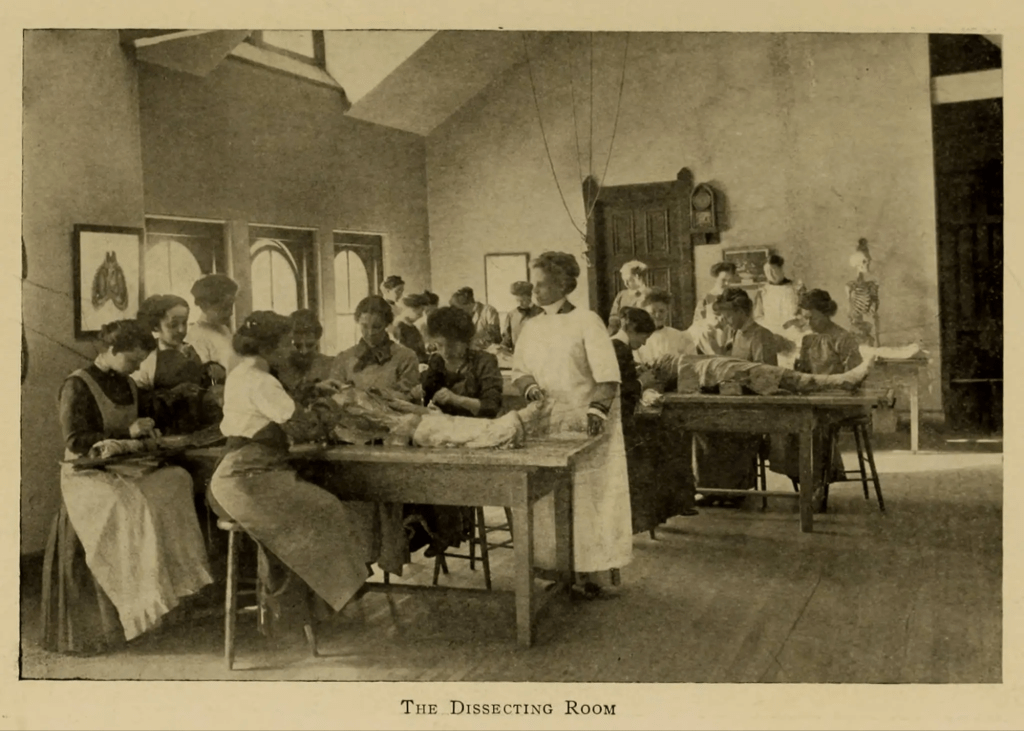
By 1897, Quaker women being trained as doctors was not groundbreaking, as it had been in 1850 at the foundation of the Woman’s Medical College of Pennsylvania (WMCP), pictured above.
But still Lizzie’s achievement was remarkable.
What could her life say about my future, I wondered. I planned that my teaching career would last a few more years, but then what?
Eventually, I learned more about Grandma Lizzie.
The saddest piece of information came from Richard Ratcliff, former Henry County Historian, who attended Spiceland Friends Church where Lizzie had been a member. He told me that he had heard that after Lizzie’s husband Asa died in 1906, she never practiced medicine again.
Her career as a doctor, then, lasted only nine years.
As usual, I had questions. Why was that? Did she attempt to heal him and couldn’t? Was she disillusioned about her calling? Was her grief too profound to go on doctoring others?
Today, seven years later, I still have questions.
I may never know what ended Lizzie’s medical career. But her spirit of helping others and learning still inspires me.
Lizzie shows up often in Mary Jane’s 1866 diary entries; after all, the sisters were only three years apart in age. Because I learned about Lizzie’s medical career late in life, I’ve portrayed her with a keen interest in healing and helping others in the novel I’ve written based on MJ’s diary. It only seems fitting.
I’m proud to have Lizzie Edwards Holloway in my bloodline.
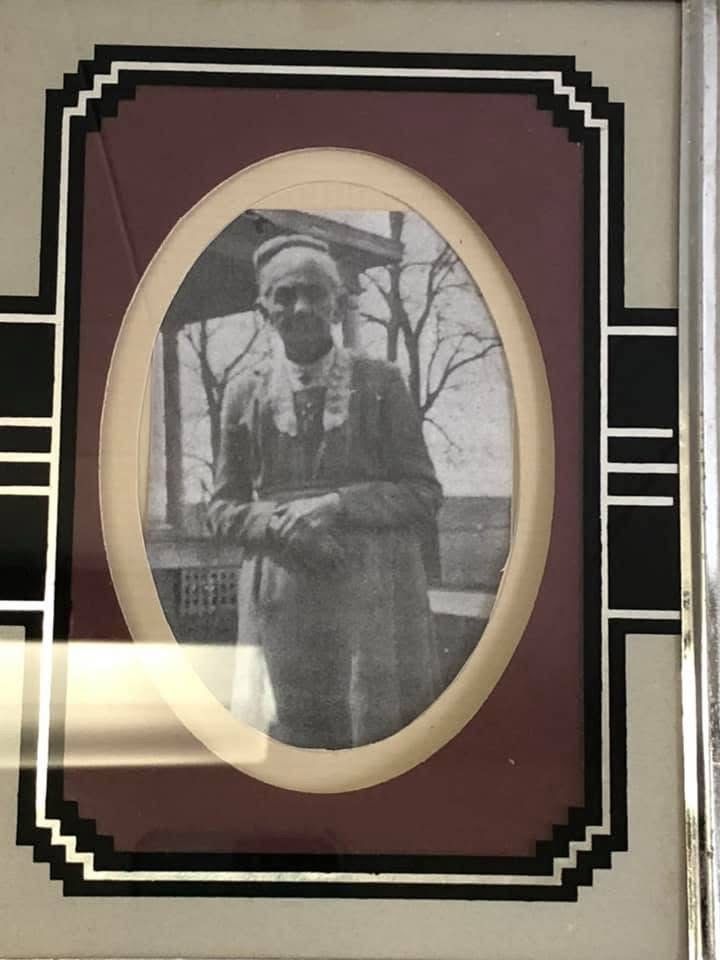
And now, in this new phase of my life—retired and recently widowed, too–I wonder what new directions my life will take.

Leave a comment