Sunday, June 10, 1866
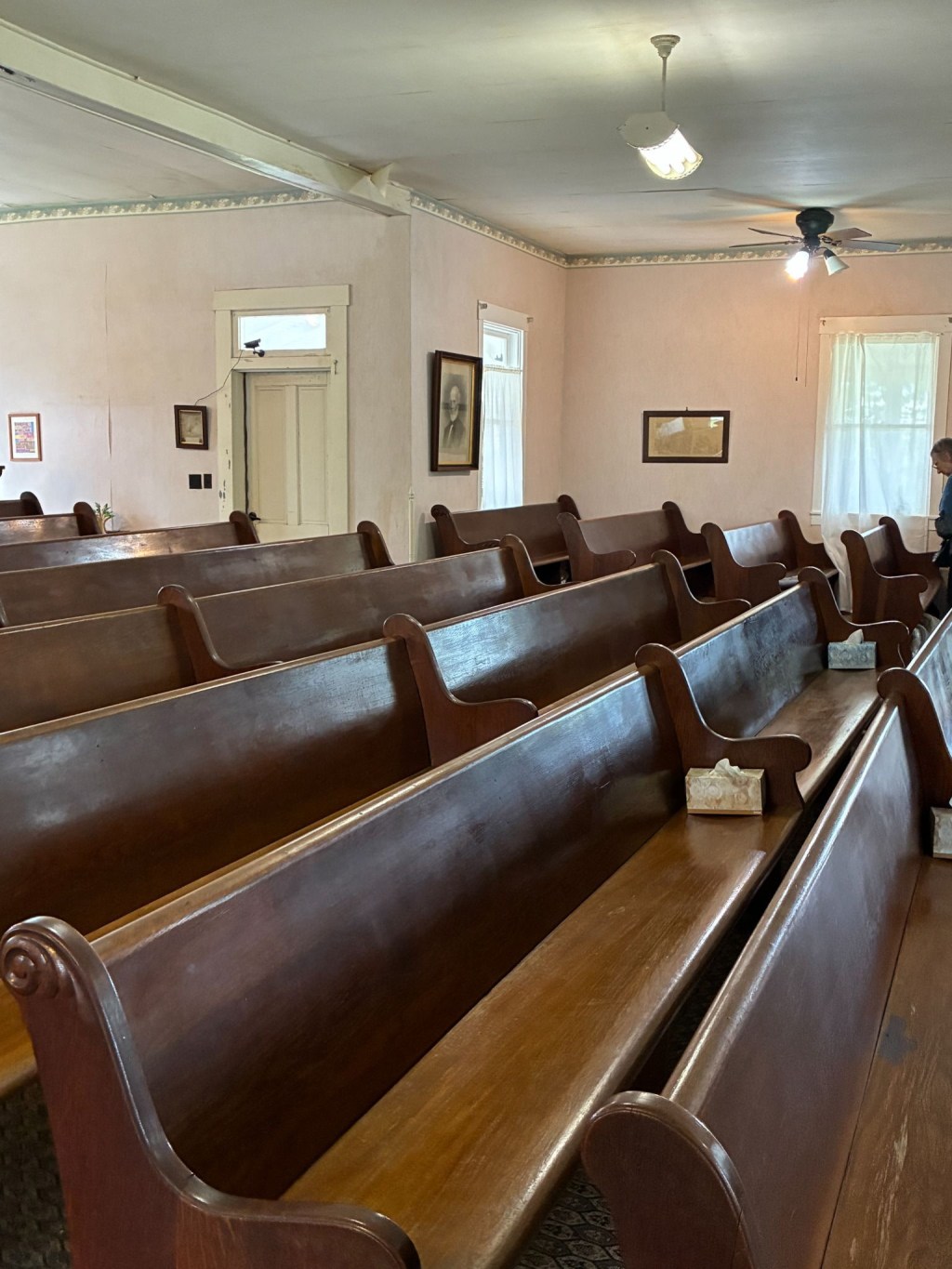
Milton, Lizzie and I went to Walnut Ridge to meeting. Enos Prey was there and preached a pretty extensive sermon. E Osborn also preached. There was preaching outdoors. Also the new meeting house is quite commodious but would not contain more than half the people. Went to Joseph Butler’s for dinner. They are very pleasant people. Eliza seems to be an exception. Meeting was appointed at Spiceland and candlelight for E. Osborn. We were tired and did not go. There was a basket meeting in Jonas Byrket’s grove today. There were many there.
-Mary Jane Edwards
From a surface read, today’s entry appears to be just a record of another First Day recorded in Mary Jane’s tiny, pre-printed diary, given to her by John and Eliza Watson, two of the Friends working for freedmen education in Jackson, Mississippi.
But a couple of topics in her street entry intrigue me! The first is the preaching.
Mary Jane was a member of rural Elm Grove Friends Meeting, established as a preparative meeting under Spiceland in 1836 (Ratcliff 140). By MJ’s time, though, it was mostly comprised of older Friends. Her father, William Edwards, was a founding member of Elm Grove, having come to Henry County, Indiana, via Ohio from Cane Creek Friends Meeting in North Carolina. Elm Grove, located between Raysville and Greensboro, Indiana, was just a short buggy ride from the Edwards’ farm. Meeting for worship there was an hour or so of unprogrammed “silent” worship, occasionally interrupted by the message of an inspired Friend, and often referencing Biblical texts.
In other words, it was a traditional Quaker meeting.
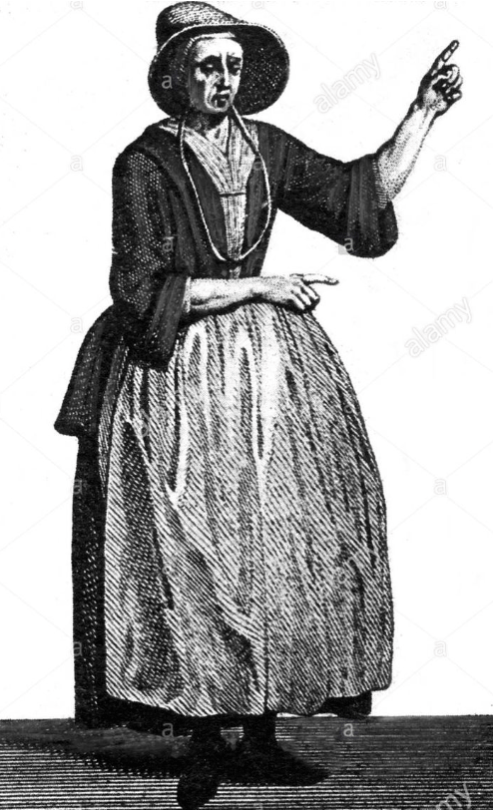
But there are many different varieties of Quakerism! My initial guess about the flavor of faith Mary Jane and her family practiced, based on the emphasis on their silent worship model, was that it was founded with Hicksite leanings. Emerging in the late 1820s and named after Long Island minister Elias Hicks, this branch of Quakerism traditionally placed more emphasis on each Friend’s Inner Light and personal experience than on scripture.
But by this time, Elm Grove might have been considered a Wilburite Orthodox meeting. This branch of Quakerism developed in the 1840s and followed the teachings of Rhode Island pastor John Wilbur. If so, the congregation would have been moving more toward Bible-based beliefs, but still resisting formatting their worship services in a more recognizably Protestant style.
I wanted to pin down what this family believed! In trying to confirm my theory, I ran into some obstacles. First, I haven’t found a list of Indiana meetings identifying their leanings that includes Elm Grove. There are plenty of “Groves” in Willard Heiss’ history, but no Elm Grove.
In Heiss’ A list of all the Friends Meetings that exist or ever have existed in Indiana, 1807-1955, the sole brief entry for “Elm Grove” seems incorrect, or could refer to another meeting: It suggests that Elm Grove was set off from Duck Creek Meeting, began in 1843, and was laid down in 1852, four years before Mary Jane wrote about attending: Clearly, that wasn’t it.
I was discouraged. But I kept on.
Finally, a document created by a Conservative Friend pulled me up short. It stated that “Indiana Yearly Meeting was solidly Gurneyite.” That would indicate a more conservative, evangelical theology modeled on that espoused by contemporary English minister John Joseph Gurney.
And it contradicted my theory completely!
I knew that Elm Grove was part of Indiana Yearly Meeting. I knew that Mary Jane and family attended Indiana Yearly Meeting’s annual gathering in Richmond. I also knew that they went to the former Confederacy to teach under the auspices of IYM.
That, along with the Gurneyite designation, should mean that these Quakers were adopting more Protestant practices and beliefs!
But … were they really?
I realize that I‘ve been working this backward, trying to use Mary Jane’s entries to understand how those doctrinal beliefs played out in her worship practices. So maybe I’m trying to force labels where there were none. And maybe practices shifted in individual meetings, blurring the lines- just as they do today.
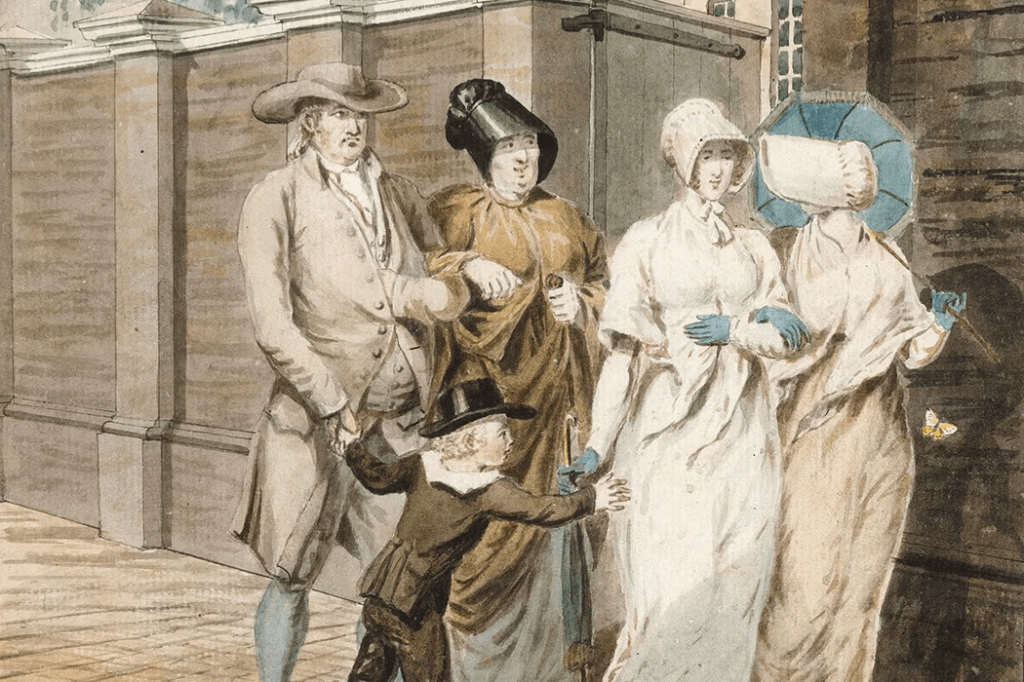
So I revised my theory, applying information more specific to the 1860s from the “Revival Period” in the Snowcamp document. I wonder if perhaps the elders at Elm Grove were happy to hold on to the traditional Friends’ ways (like those of the Wilburites).
Even so, maybe younger members like Mary Jane leaned more toward a “reform” or Gurneyite stance by participating in study meetings, finding spiritual lessons from reading novels, and adhering to a less strict observance of traditional Quaker dress. Her sister Lizzie certainly did, with her passion for music and her curiosity about the Spiritualism group in nearby Greensboro.
From Mary Jane’s other entries, I gather that the Elm Grove meetinghouse was sometimes used for educational purposes during her time there, particularly for African American children living nearby. Maybe that interest in social programs, with its built-in link to evangelism, is indicative of the Gurneyite Friends’ persuasion.
Either way, Elm Grove was a meeting in slow decline in 1866. Maybe those differences played a part in its eventual demise. On May 24, Mary Jane mentions an elder, Nathan Gause, proposing they lay down the meeting, or cease having services there. According to IYM records, eleven years later, Friends were finally in agreement with Friend Gause: Elm Grove Friends Meeting was laid down in 1877 and the property sold (Ratcliff 140).
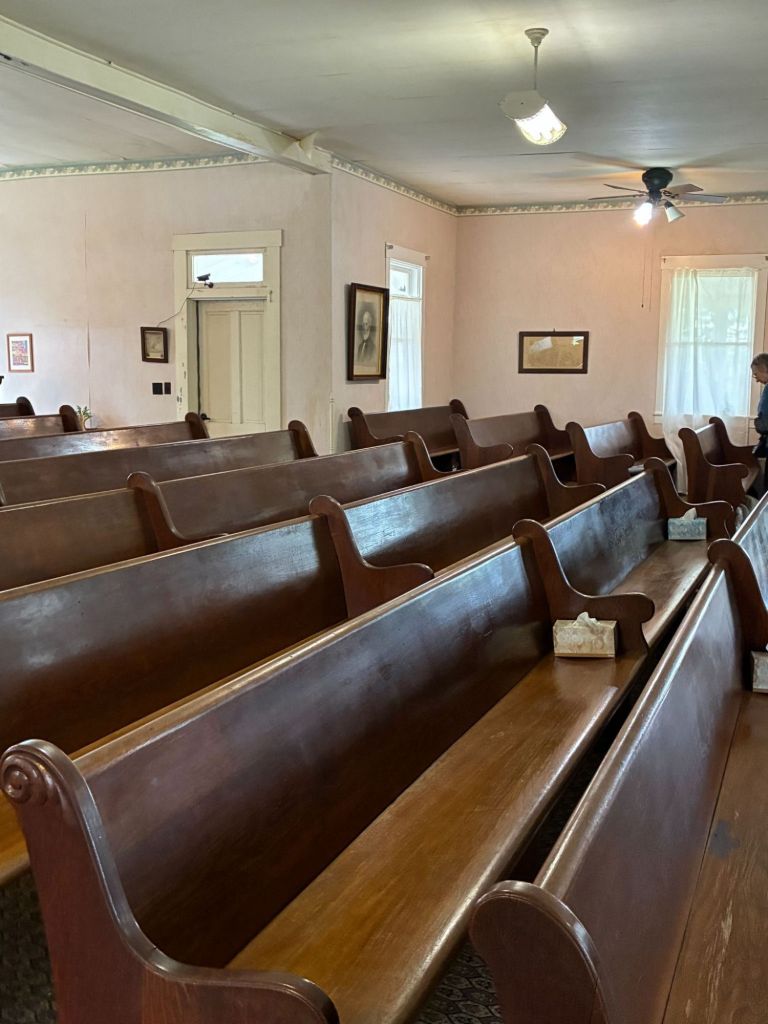
Sadly, soon afterward, the old meetinghouse burned, so no images of it remain.
When Mary Jane attended meeting for worship away from Elm Grove, she gained firsthand experience in the practices of different types of Friends. Listening to preaching, for example, was unfamiliar to her in 1866, although her mother was a recorded Friends minister, a person formally acknowledged to have spiritual speaking gifts.
Also unusual for her was attending First Day meeting for worship in a large, new meetinghouse, although the family gathered with thousands of Friends in Richmond to attend Indiana Yearly Meeting sessions.
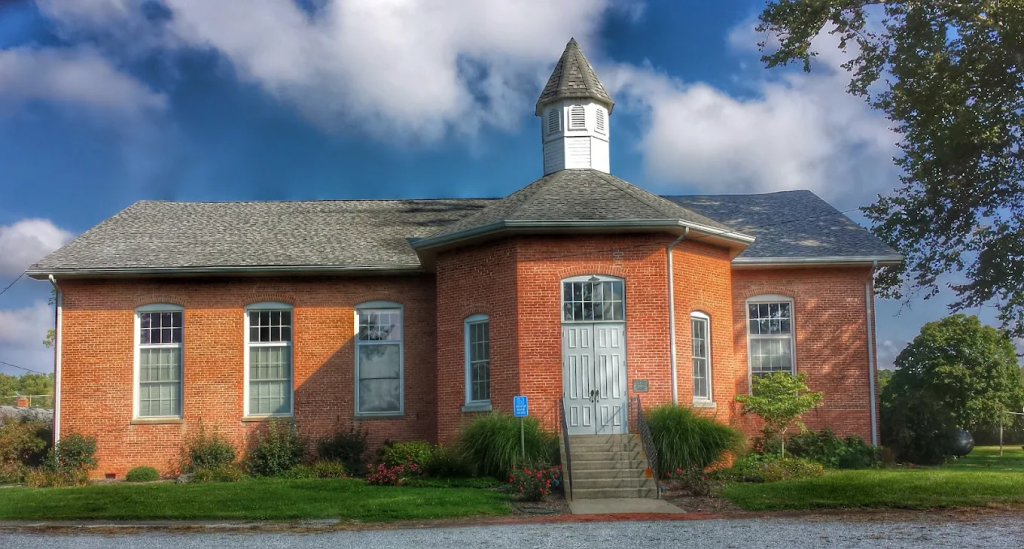
The Walnut Ridge Meeting near Carthage, Indiana, where Mary Jane and her siblings attended meeting on this day, met as early as 1822, according to Indiana Yearly Meeting records, but the beautiful brick meetinghouse– which still stands– was built in 1866 (Ratcliff 131). It was brand, spanking new when MJ and her siblings visited. It’s still a beautiful building!
Other worship staples common in Friends meetings today, like holding Sunday (Sabbath) School and featuring music during meeting for worship, also were not part of Mary Jane’s weekly Quaker experience. She comments several times in her diary about these differing Orthodox/Gurneyite Friends’ practices.
Although Mary does not always seem impressed by the Protestantation of her faith, Sabbath School is an exception both in Jackson and back home in Indiana. Perhaps her indomitable teacher’s calling compelled her to be heavily involved in Sunday School programs.
The second thing that strikes me about her entry is the pithy, cool phrasing of the two sentences about their dinner hosts: “They are very pleasant people. Eliza seems to be an exception.”
Is that understatement? Or just plain Quaker truth?
Mary Jane includes no elaboration about Eliza Butler’s traits or behavior that she deems unpleasant, but readers infer right away that Mary Jane does not approve of her! I wonder about the details of that day. Was having to cope with a grumpy Eliza Butler at dinner what made them all too tired to attend the special meeting later that evening at Spiceland?
Eliza Butler is not mentioned in meeting records for Walnut Ridge, but she has to have a story! What was happening to Eliza that day or week or year that caused her to rate a short entry in Mary Jane’s diary?
Unfortunately, Eliza is not mentioned again. As engaged readers, we have to imagine her back story.
We also might wonder if Mary Jane Edwards was written about in Eliza’s diary that same night! In what other diaries might she show up?
Actually, she and Lizzie are mentioned as being somewhat contrary in a memoir written by another teacher from Jackson! That inspired one of the major conflicts in the novel I wrote based on MJ’s diary.
As with all historical research and writing, when one question is answered, a few more come to mind. Having Mary Jane’s actual diary to read creates a much clearer image of her daily life, as well as her beliefs and behaviors, but it sure leaves me wondering.
Ratcliff, Richard P. Our Special Heritage: The Sesquicentennial Publication of Indiana Yearly Meeting of Friends.
New Castle, Indiana, Community Printing Company, 1970.

Leave a comment