AI is making us lazy… and maybe even stupid.
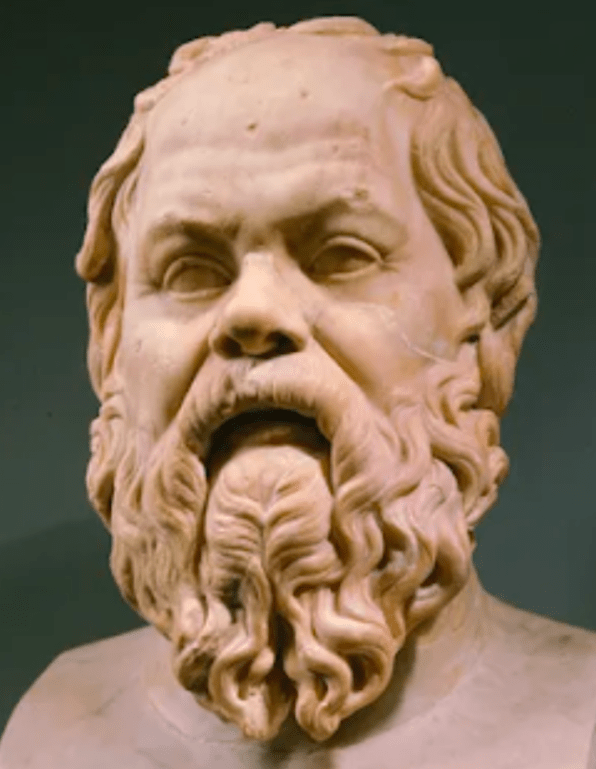
Remember what Socrates is said to have said? To paraphrase, written text makes us lazy because we don’t remember anything, so our minds atrophy… even though we still think we’re smart. Or something like that.
Today, I went online to research “inserting” as a sewing technique. Mary Jane, my third great-aunt, mentioned teaching the skill to a neighbor in her 1866 diary entry on July 9. I had the idea that an insert was a type of ornamental design, similar to the appliqueing and cutout technique I used years ago making decorative flags. Or maybe even a gusset, like the “tuff” ones I sewed into the outside seams of my blue jeans in the ‘70s. But I wanted to be sure.
I typed my first query: “in sewing terms what was ‘inserting’ in 1860s.”
Google’s AI Overview quickly generated this response:
“In 1860s sewing, ‘inserting’ referred to the decorative technique of sewing insertion lace or delicate trim into a solid piece of fabric to add breathability, texture, and ornamentation to undergarments and children’s clothing. [1, 2, 3, 4] with an image (Google query).”
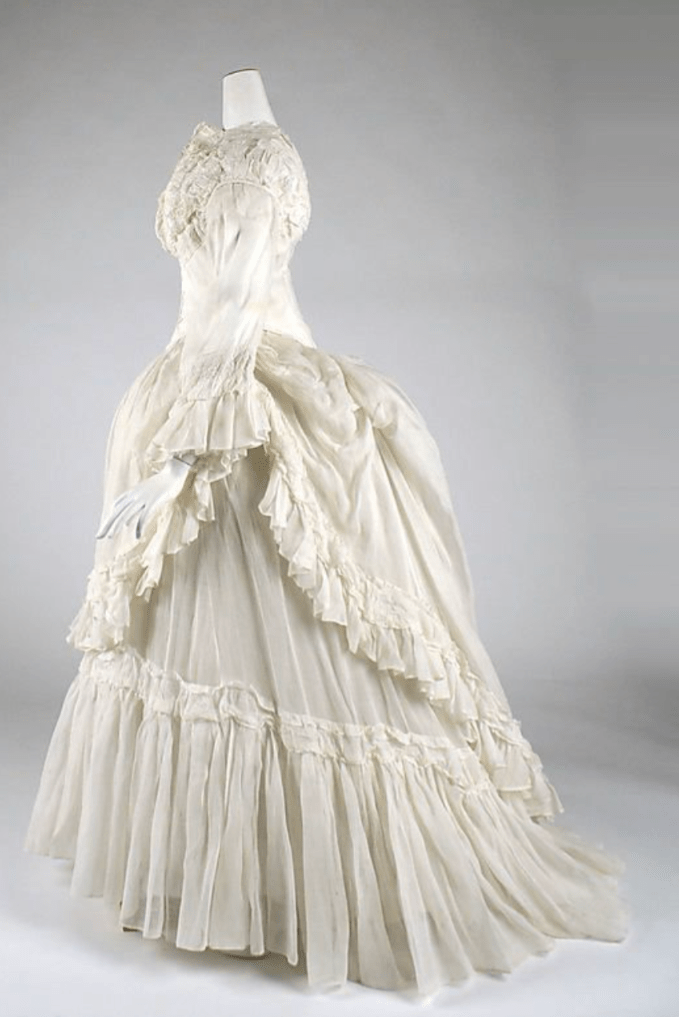
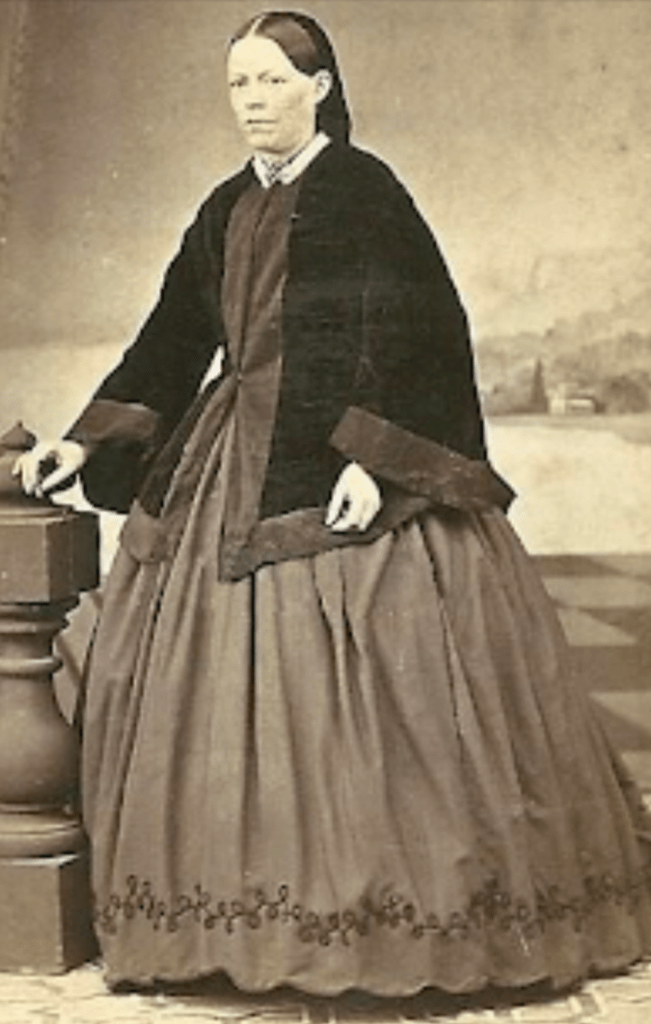
Okay. The dress didn’t look very Quakerly to me, although I know there were some Friends whose clothing choices certainly didn’t match my stereotypes of their day.
So I revised my query, asking for “examples of “inserting” in Quaker garments in 1860s.”
This time, at least at first glance, I had a more specific response that related to my topic:
“In historical sewing terminology, ‘inserting’ (or insertings) refers to decorative bands of lace, tatting, or whitework embroidery that are inset into a larger piece of plain fabric. For Quakers in the 1860s, these details were meticulously crafted to elevate plain, austere garments without violating their strict ‘testimonies’ of simplicity and modesty. [1, 2, 3, 4]”
The answer went on to say the following:
Examples of “inserting” techniques and design elements seen in Quaker women’s and children’s wardrobes of the 1860s include:
Collar & Chemisette Detailing: High, modest necklines were the norm. Women often used narrow, delicate tatting insertings or thread lace insertings near the top edges of their removable, round cotton collars or tucked chemisettes to add a textural, elegant border. [1, 2, 3]
Undersleeves and Engageantes: Under 1860s day dresses with wide pagoda sleeves, women wore full undersleeves. These undergarment sleeves were frequently finished at the wrist with narrow bands of insertion lace to provide a demure, clean white trim that peeked out from the outer dress. [1, 2]
Cap Borders: Traditional plain Quaker caps worn by older women and ministers often featured fine muslin or linen, decorated with subtle rows of insertings and lace framing the face. [1, 2]
Undergarments: In the 1860s, under-bodices, corset covers, and even women’s drawers (pantaloons) often featured strips of broderie anglaise or lace inserting integrated into the fabric, showcasing a hidden modesty and personal craftsmanship. [1, 2] (revised query).”
Bodice Finishes: Rather than flashy trim like ribbon or velvet, plain dressmakers might use small squares or vertical panels of decorative inserting on the solid cotton or silk bodice panels. [1, 2]
WOW! This was exactly what I needed!
Yes, I could believe that some Quaker women would use inserting to embellish their somewhat simple garments. What great information! I copied and pasted the information for my blog post. But I had to know more!
I clicked on the first source. It was a 2020 Facebook post about a cotton mill fire that happened c. 1936. No mention of Friends or inserting in the article or comments. Hmmm.
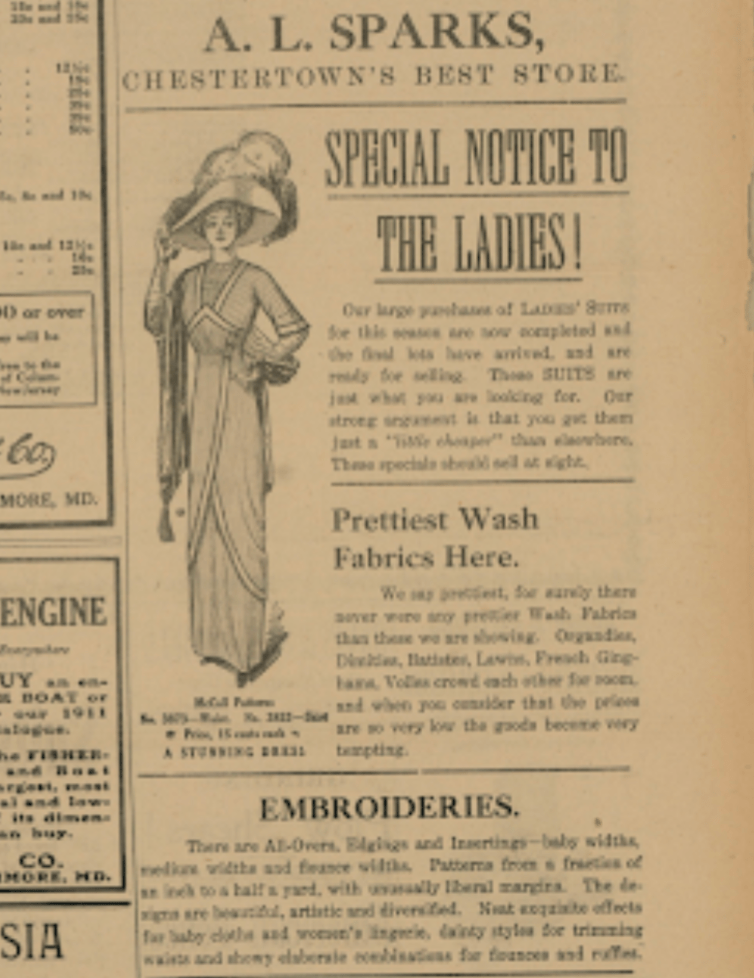
I clicked again. The second reference was a 1911 newspaper clipping that featured an advertisement for lace that could be used as an insert. Okay.
The third source was information about Quaker dress during 1800-1805. The text mentioned why plain dress was common and also gave some colors and specific styles of embellishments that were acceptable. Helpful information but from the wrong era and with no mention of how locations might have influenced Friends’ choices.
The fourth was a modern-day recommendation from Friends General Conference about what to wear to meeting for worship. “Anything clean and reasonably modest is OK.” Not helpful.
The sources gradually were sliding downhill, not only in helpfulness, but also in relevance:
A general Wikipedia article about Western fashion in the 1860s. It had no mention of Friends or inserting.
An Instagram video of a young woman pulling a ruler out of the top of her reproduction undergarment. Uh… what?
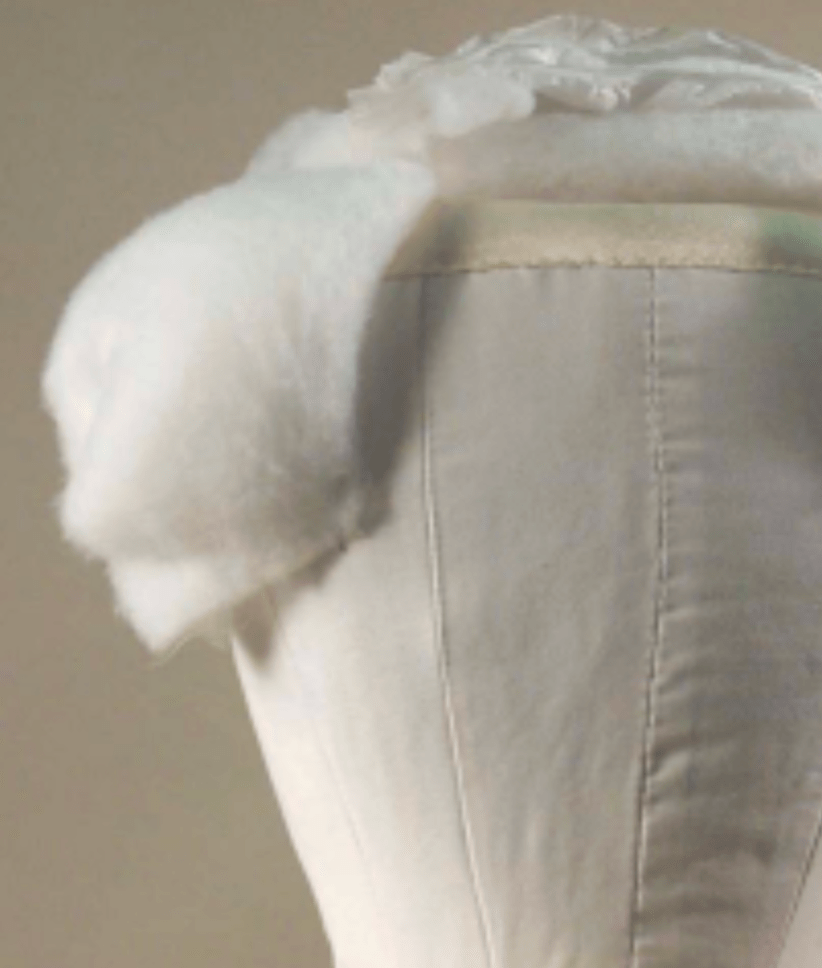
One so-called source was simply a process guide for displaying antique garments. It did mention “insert,” but only as a synonym for “stuffing” polyester into various places to make the dresses fuller on display.
Another showed three different ways to insert lace, and another generally discussed historical textile types, focusing on fabrics from 1700-1812. They were somewhat helpful.
Thankfully, some years ago, I found a strong, academic source for Quaker women’s fashion through the years, based on artifacts donated to the Friends Historical Association Collection at the Atwater Kent Museum of Philadelphia. It’s a resource I trust, so I returned to it. Unfortunately, it also does not discuss inserting as an embellishment of Quaker dress.
Another good source with plain dress images and historical resources is Quaker Jane. But this time, nothing was especially helpful, although the site is always interesting.
So I’m left to imagine, to consider the possibilities. Where was the inserting in Mary Jane’s own clothing that enabled her to teach her neighbor how to do it? In her undergarments? Her underbonnet? Maybe on the new loose-fitting silk sack she worked on in May? Or was the “inserting” actually piping that was inserted in the seams? Emily Constance Cline mentions several Quaker garments with piping embellishments. My imagination is cranking away with likelihoods.
But that’s not all I’m pondering.
An episode like this makes me wonder about a bigger and much more important issue:
How does Google AI get information to provide its Overviews? Who wrote the code to collect and collate such information that, by the way, so cleverly mentions the keywords that I’m researching– “Quakers” and “inserting”– but uses sources that don’t mention them at all?
So what’s a researcher to believe?
Based on my twenty-five years in a secondary language arts classroom, I imagine only a few students would actually open these sources before they used the information from the Google Overview to support their facts.
But then, haven’t we all done that?
I’ve certainly, for instance, read a Google summary and taken it at face value when looking for information about a restaurant or an organization or attraction.
Yikes!
Maybe Socrates was right. Today, it’s not reading, but substituting AI-generated information instead of synthesized thought is making us less intelligent.
Not only in factual ways, either. It’s also making us more gullible, ready to accept whatever AI wants to make us believe. Or its programmers …


Leave a comment