Sunday, August 5, 1866
Milton, Lizzie and I went to Sabbath school at Elmgrove [and] stayed at meeting which was not very large. A meeting was given out for Jessie Williams to be held at 4 o’clock. Josiah White and Lizzie with their two little girls came home with us for dinner. Cyrena Gard was here also. We went to the evening meeting: the minister spoke well but not at great length. Anna Jane Porch was there and engaged in prayer.Mary Jane Edwards, 1866
The name Josiah White brings to mind another Quaker Josiah White, this one born in New Jersey and who migrated to Pennsylvania. This Friend Josiah lost his father at an early age and was widowed within two years of his first marriage; nonetheless, he accumulated a fortune from his ventures and innovations in hardware, coal, ironworks, canals, and railroads.

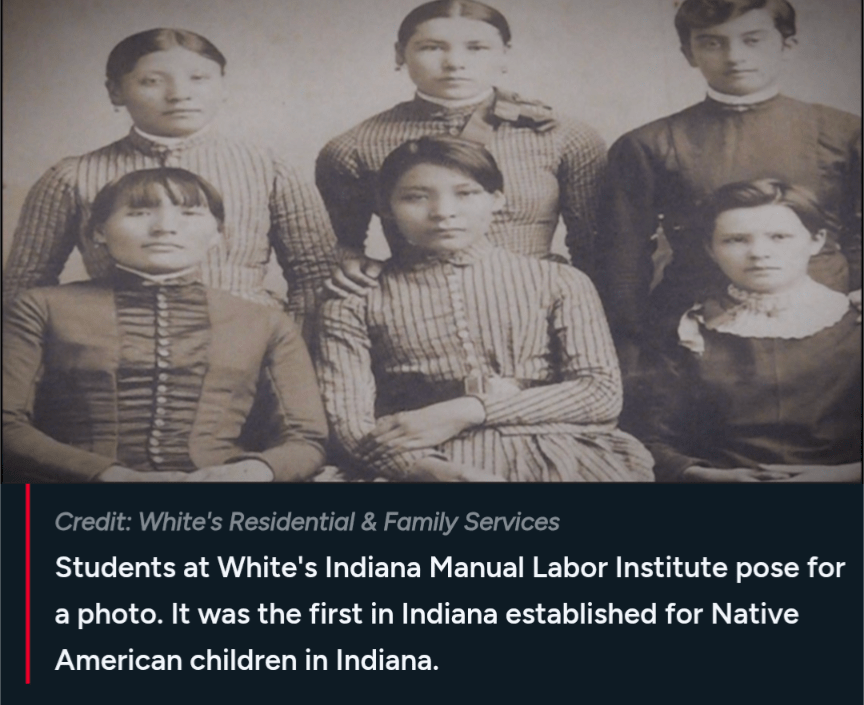
After visiting Indiana Yearly Meeting in Richmond with his daughter in 1850, Josiah White determined to set aside funds to establish two boarding schools in the “West”- which was Indiana, in those days- to be administered by IYM. White’s goal was to provide underprivileged children with an education, a trade, and thereby a future of success. Those children included boys and girls, White, Indian, and Negro. White’s Iowa Manual Labor Institute was located near Salem in Lee County, Iowa. The Indiana Institute of Manual Labor, later referred to as White’s Institute, was located on land purchased from the Miami Indians near Wabash, Indiana, in 1852-53 for $8,200.
Now called Josiah White’s, the organization is still in operation, serving Wabash families in crisis. My Quaker grandmother, Rosemary Holloway, served on its board of trustees in the late 1960s and early 1970s. I wonder whether she was aware of the more distant history of the organization.

Sadly, a darker side of White’s Institute has emerged in the past few years. During the late 1890s, White’s Institute participated in the federal government’s program to assimilate Western Indian children, including children from at least 40 different tribes. Whether well-intentioned or not, the practice created extreme trauma for many Indian children and families. In the early 1920s, Activist writer Zitkála-Šá recounted her life at White’s, including the cruel repression of the Indian students’ native culture, language, and dress, as well as the lifelong damage from the tyrannical living and working conditions imposed on the Indian children residing at White’s.

Even today, articles about the repercussions of these practices appear in tribal newspapers and online. I have picked up several such newspapers while traveling through reservations to share with my Hoosier high school students, who have otherwise never learned about Indian boarding schools.
Thanks to the work of many concerned individuals and groups like the National Native American Boarding School Healing Coalition and the Federal Bureau of Indian Affairs, crucial healing work focused on these generational traumas continues- though tragically, it comes too late for the students who most needed this advocacy.

Leave a comment