Monday, August 13, 1866
This morning was dark and cloudy with some mist in the air, and it continued so during the day. Lizzie has not been very well for several days. She has [a] continued headache. We succeeded in getting the washing in the last rinse. I was very tired when it was done.
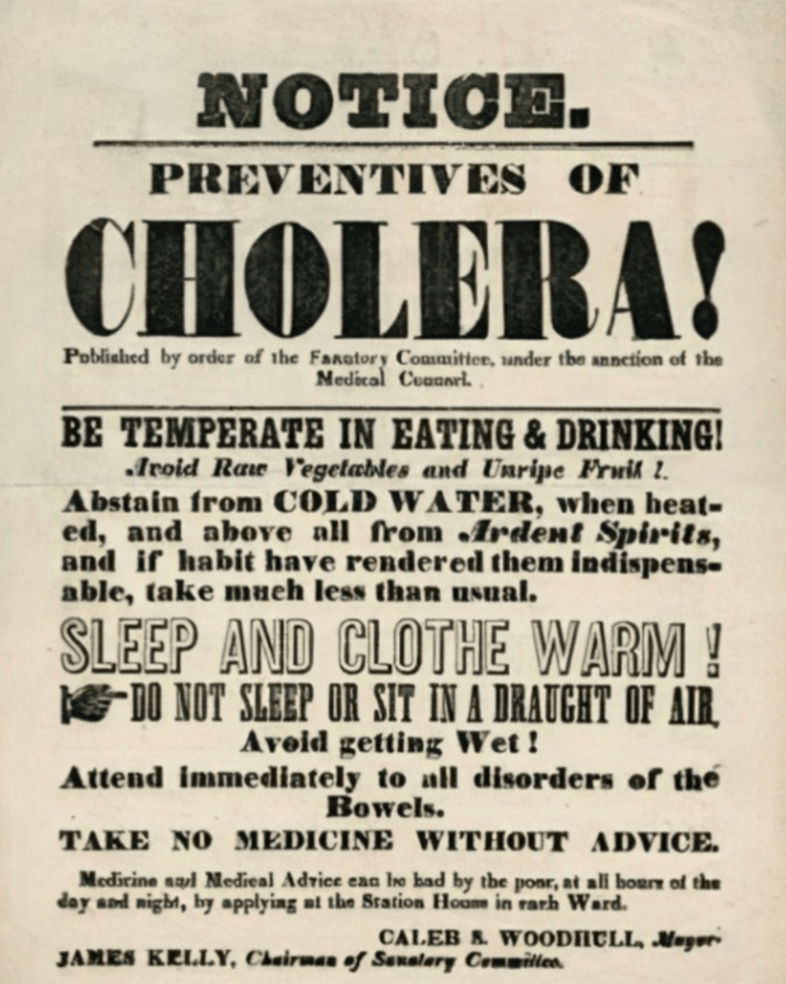
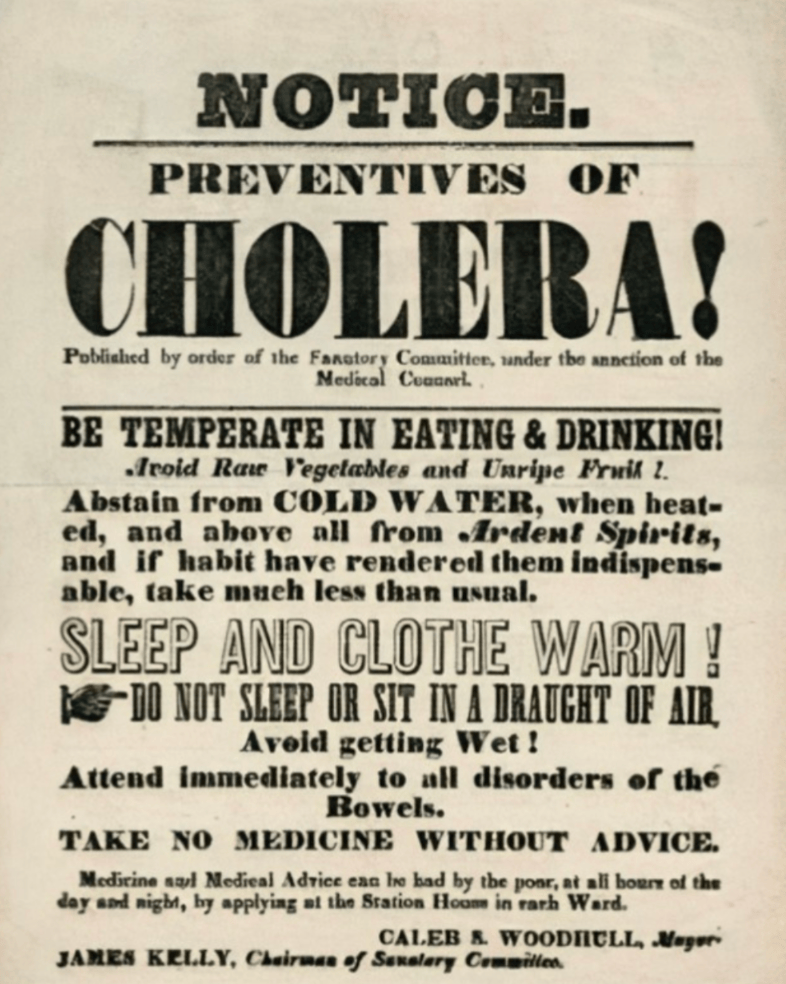
The cholera is sweeping off numbers daily. It is quite bad in Cincinnati. There are also some cases in Richmond, Ind. To be frightened or uneasy on account of the prevalence of this epidemic will do no good. To live at all time in readiness for the pale messenger is much the safest plan at all times.
–Mary Jane Edwards
Do you remember a time several years ago when a single cough could have meant spring allergies- or the worrisome new disease, COVID-19? Well, imagine every headache making you wonder which of a whole array of dreaded diseases might be setting in!
During 1866, the cholera epidemic caused by contaminated water which struck many river and port cities wasn’t the only disease that “swept off” people in large numbers. Yellow Fever was still rampant in southern ports due to the summer trade ships, and Typhoid Fever, spread by contaminated food and water, was a threat in growing cities and towns.
In addition, smallpox, Scarlet Fever, and Diphtheria threatened the lives of many adults and children, as returning soldiers brought home these pestilences, and vaccination production and delivery systems were poorly developed. Compounding the problem was the notion that smallpox had already been eradicated, so many people had not sought out prior vaccinations.
In fact, during their time teaching in Jackson, Mississippi, Mary Jane and Lizzie Edwards wrestled with how to have their freedmen students vaccinated against smallpox during a local outbreak.
As a positive result, though, these epidemics fostered the development of local and state sanitation boards, aimed at eliminating filth and poor hygiene practices to extinguish the diseases at their sources.
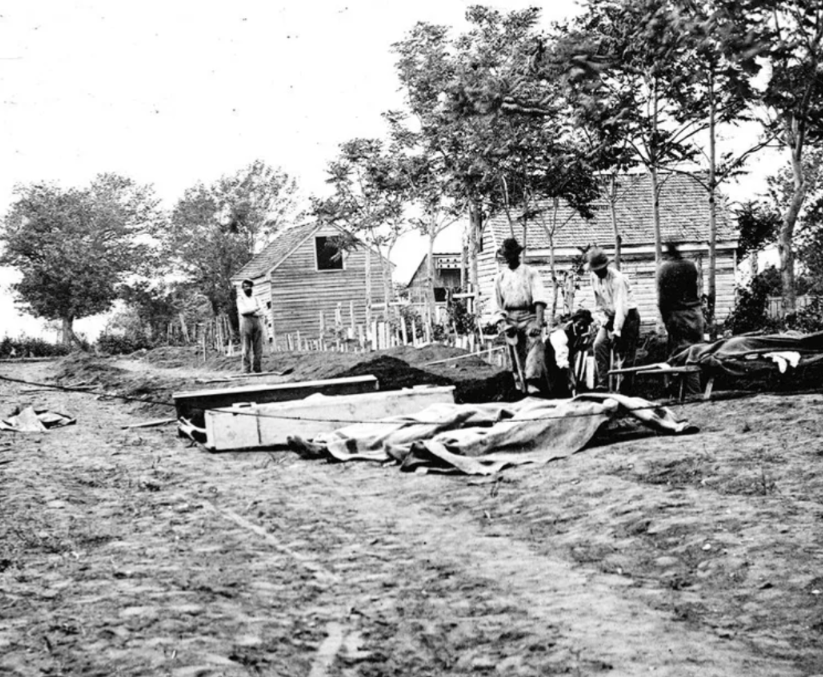
I wonder whether Mary Jane would be surprised by or all too familiar with today’s growing trend of looking at life-saving vaccines with distrust.

Leave a comment