October 21-22, 1866
This day has been a very cool one. We suffered considerably in the school house: there is but one stove in using order and that furnished all the heat for a large school, but not all that is necessary.
Mary Stuart is better: she has not been able to be in school this week yet.
Mr. Webster went out in the country this evening with Mr. Thorpe[/Sharp?] to spend the night, I fear in an unprofitable manner.
The following lines I have addressed to him to be left enveloped on his writing desk:
We are lonely at night dear without thee.
And we feel too, as sad alone.
For our spirits are anxious about thee.
The cheer from our fireside is gone
May some kind guardian angel attend thee.
Preserve thee from every snare
In the hour of temptation befriend thee
And guard thee from sin is my prayer.
Oh may heaven, kind heaven bestow thee
The blessing of friends pure and true
Whose power shall lure this to virtue
And lead thee right to pursue.
-Mary Jane Edwards
After reading Mary Jane’s diary entry, as usual, I have many questions.
A poem is such an atypical entry for her to write! Mary Jane certainly enjoyed reading poetry, but writing poems for others wanders far from her typical report on daily events. And she didn’t just write a poem- she also wrapped it up in an envelope and left it for this man on his desk!
So my first question is just who were these men?
Clearly, they were boarders at the same place where the Edwards sisters were staying. The lines in her poem also suggest that they spent ample time together.
Were they dashing charmers? Were they rogues? Carpetbaggers? Womanizers, even?
Surely, with her referencing the poem’s recipient as “Mr. Webster,” he was not a fellow Quaker. And I don’t think he was a teacher there with some other organization- he wasn’t listed in the Freedmen’s Bureau list of teachers in Arkansas. Neither man she mentioned was listed as a civilian working for the Bureau: Some civilians were involved in the administration of the Freedmen’s Bureau.
But all of this only intrigued me more! I put on my researcher hat.
There is a Freedmen’s Bureau agent J.L. Thorpe, listed as a civilian working in Camden, Arkansas, but that’s over 170 miles from Helena. Google suggests it would take 6-10 days by river or almost two weeks overland to travel between the two places. Could this be the same man? If so, why was he in Helena?
Based on her poem’s tender language, I have to wonder if the thirty-four-year-old Mary Jane had developed a romantic interest in this man.
Or was she merely concerned about his spiritual welfare, as she well might be for one of her students?
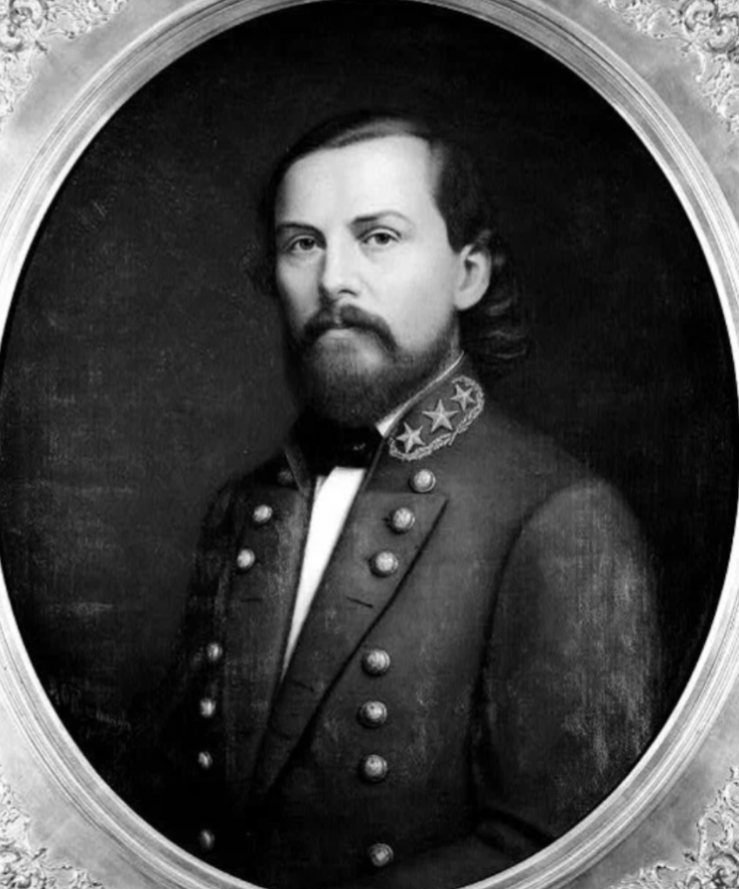
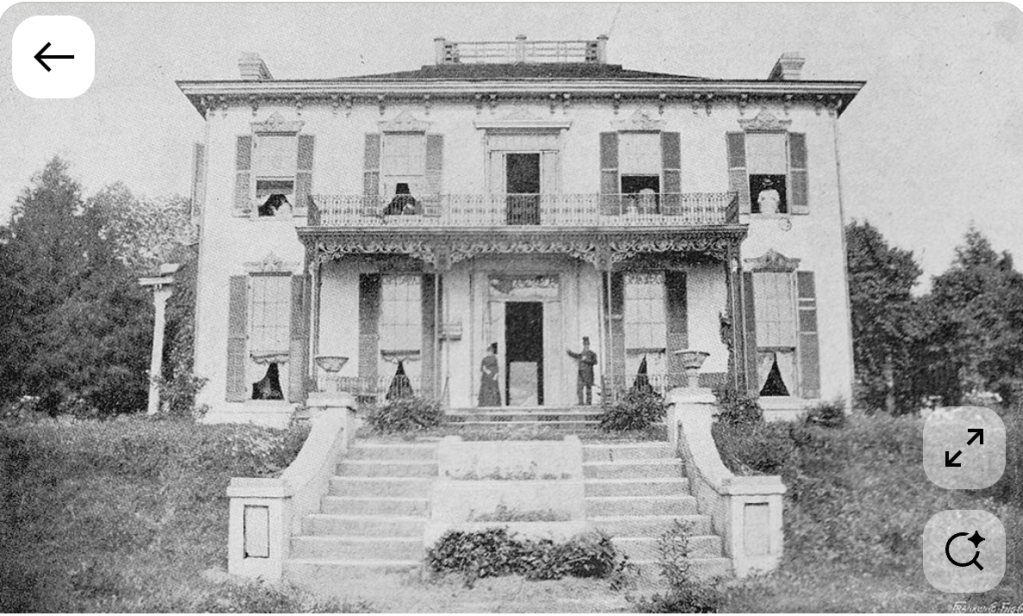
To provide some context, at this time, the sisters were living in the Hindman House in Helena, Arkansas, the residence of an infamous Southern brigadier general, Thomas Hindman.
A former U.S. Representative from Mississippi, Hindman was an attorney/politician who rose from lower ranks in the Mexican-American War to great rank and ultimate infamy during the Civil War. Hindman created many enemies when he pressed young men into service under martial law, ordered troops to burn Southern cotton, established price controls, and imposed harsh penalties for those who disobeyed his regulations. Militarily and economically, he was successful, but he was hated by many locals.
After the war, when Hindman did not receive a presidential pardon, he fled with his family to Mexico to escape prosecution. While there, he became a personal friend of Mexican President Maximilian. His daughter Blanch Carlotta, born in the “City of Mexico,” was named after her godmother, the Empress.
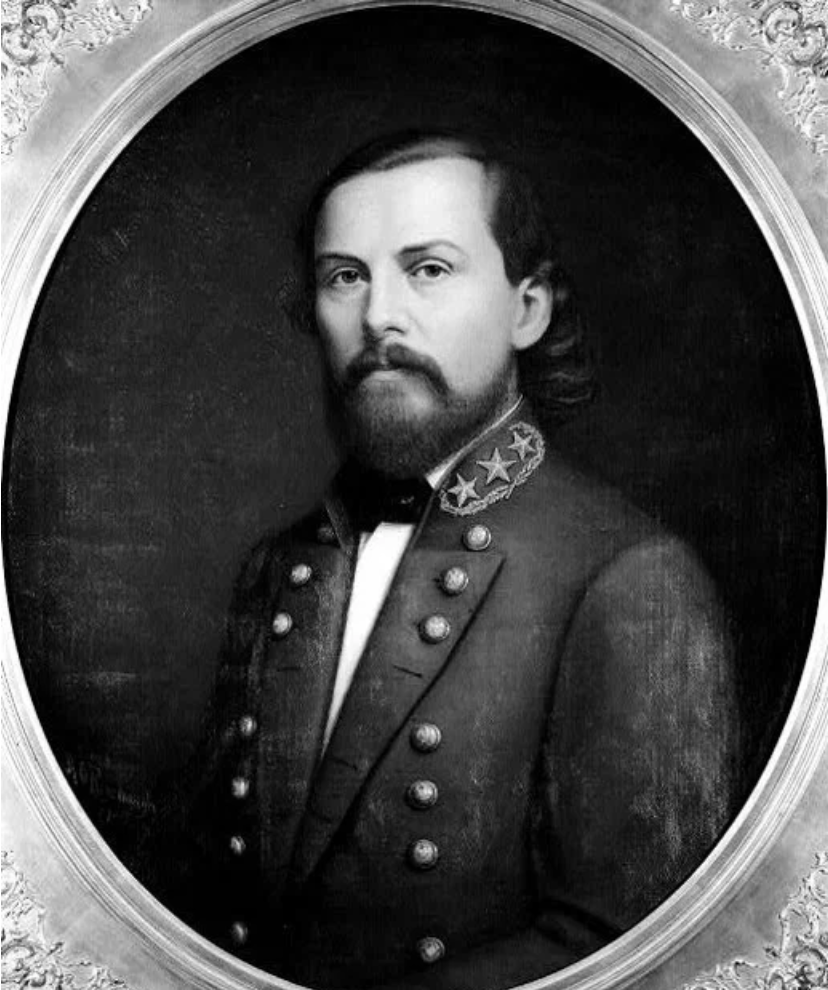
Returning to Arkansas, Hindman became active in Reconstruction politics. But in 1868, as he was sitting in a downstairs room and reading, he was assassinated by an unknown marksman who shot him through an open window. No one was ever charged with the crime.
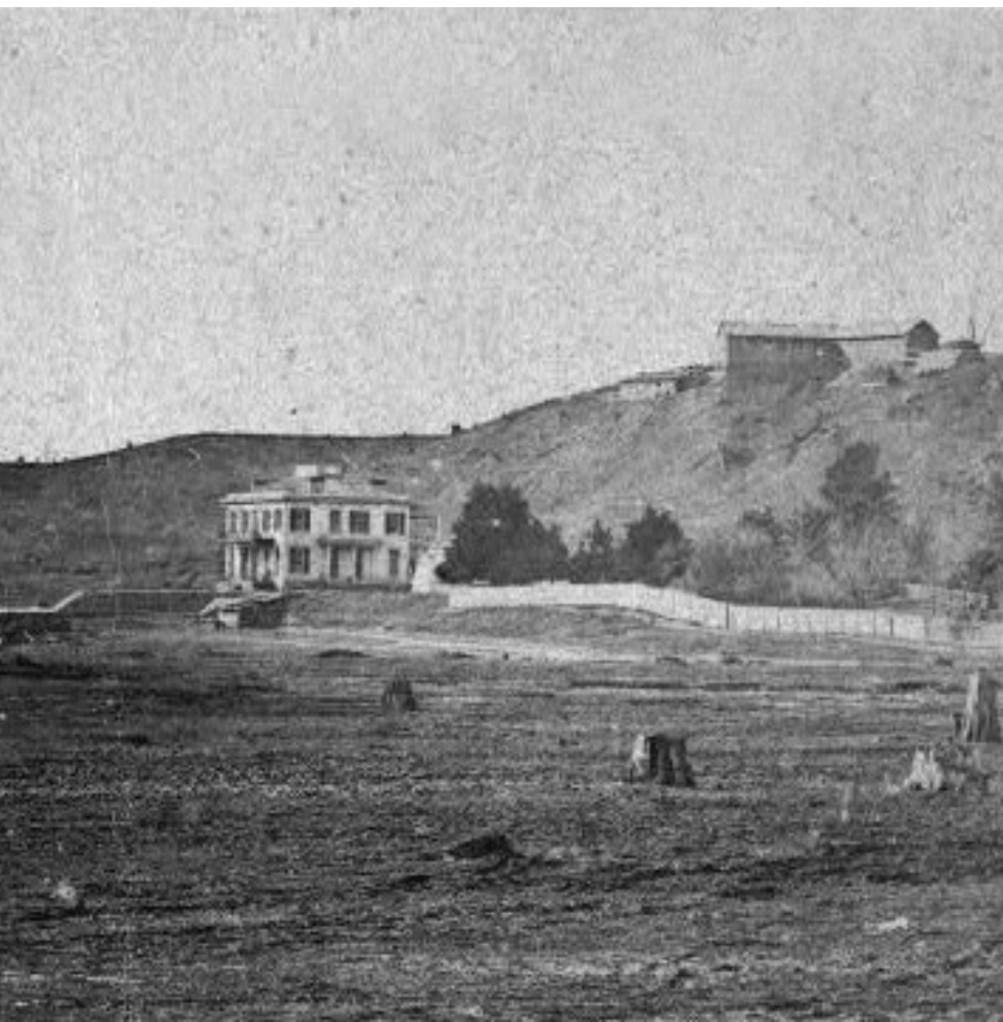
After the Battle of Helena, Hindman’s home was confiscated by the Union army for its use, likely due to its proximity to the nearby federal military encampment. Subsequent entries in Mary Jane’s diary suggest that in 1867, the home had several boarders, apparently including the Mr. Webster about whom she was so worried.
I may never know who the recipient of this poem was or what Mary Jane felt toward him. But there’s one part of this story I am familiar with! When my sister and I visited Helena, Arkansas, we hoped to locate the Hindman House: I could only find vague descriptions of its location “outside of Helena, facing the Mississippi River.”
Oddly, though, we found ourselves boarding at a bed and breakfast on the very same hill, directly next door to where the Hindman House had stood! Across the road, we found historical markers about the residence. A former “contraband” camp was situated only four blocks north of the home. These freedmen were likely Mary Jane and Lizzie’s pupils.
As always, Mary Jane’s entries prompt so many questions. And there’s always so much more to research!

Leave a Reply