Maybe more than you think!
It happened again. And what a powerful lesson our personalities hold!
Every year when introducing my students to the elements of rhetoric, I use the Myers-Briggs Personality Test to make a much larger point, one I hope stays with them for the rest of their lives.
About ten years ago in Indiana Writing Project’s Summer Institute, I was asked to take the M-B Personality Indicator. Afterward, we teachers created posters based on the middle two initials of our types to share with the group. Seeing how the posters themselves reflected the personality traits was fascinating. The facilitators then put the teacher participants into writing cohorts based on their types. After a few writing feedback sessions, it became clear to me that I would have preferred to be in a writing group with people of different personality types. The kind of feedback that I was getting from those who were more like me was not helping me become a better writer.
But the experience did impact the way I taught writing.

The first year I used this in my classroom, something amazing happened.
It was the day after My AP Lit students had taken the M-B indicator test, and they happened to be seated in their personality type groups. We were about to read a Holocaust narrative, so for their writing warmup, I asked them if given the number of genocides over history, we tend to overteach the Holocaust. I asked students to make a claim and support it with rhetorical devices.
Each student quietly dug into the task. After a few minutes of writing, I asked the students to share their positions with others at their tables. As I walked around listening, I began to notice a pattern: all of the students with the same personality types had made the same claim.
Intrigued, I asked them to identify the devices they had used to support their claims. When they shared that information with their groups, we all were amazed. Except for one student, every student in the same group used the same devices to support their claims.
What followed was an incredibly rich conversation, as we discussed those implications for our writing.
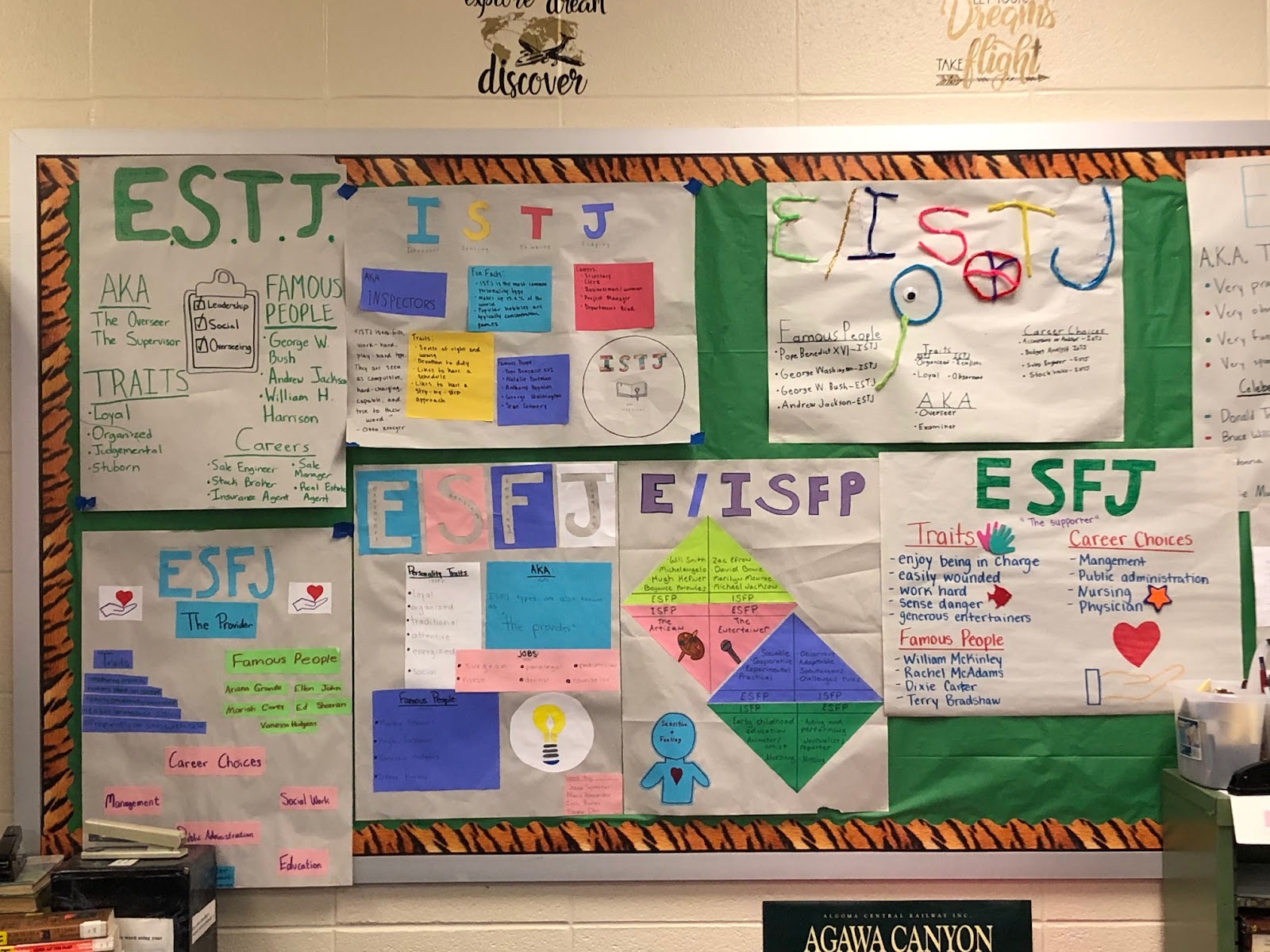
For the past twelve years, I’ve used the poster exercise with my high school students. Here’s how it works: I grouped my English 9 Honors classes by their two middle M-B letters and provided newsprint, paper, stickers, glitter, and other poster supplies. The students were required to include the M-B type, traits, famous people with this type, the nickname, and other elements. After students made and explained their posters and their construction processes, I grouped all of the personality-type posters from the different classes.
This is where the magic always happens. In random groups, the students then analyzed the similarities of one set of M-B posters, comparing their design, color, images, materials used, etc., and reported to the class.
It never fails: The SF posters always include more emotional elements with hearts and often with glitter. The ST posters look a little wild and off-the-cuff. The NT posters always look very purposeful and analytical, and if they have glitter or fancy elements, it is because a student felt pressured to make it look more appealing. The NF posters look like elementary teachers made them. And students see this … literally… and report their conclusions back to the class.
What does this have to do with their writing, I will ask.
The students always figure out this, too.
The personality types with the F’s tend to include more emotion/pathos in their posters. Students see it in their color choices, logos, decorations, and designs. Once they’re aware of it, they see it in their writing, too. They tend to use more emotionally charged words and anecdotes.
The types with the T’s tend to have more logic/logos in their writing, no matter what genre they’re creating. And that’s fine… if they’re writing for an audience with the same personality type. But what about appealing to people with other personality types?
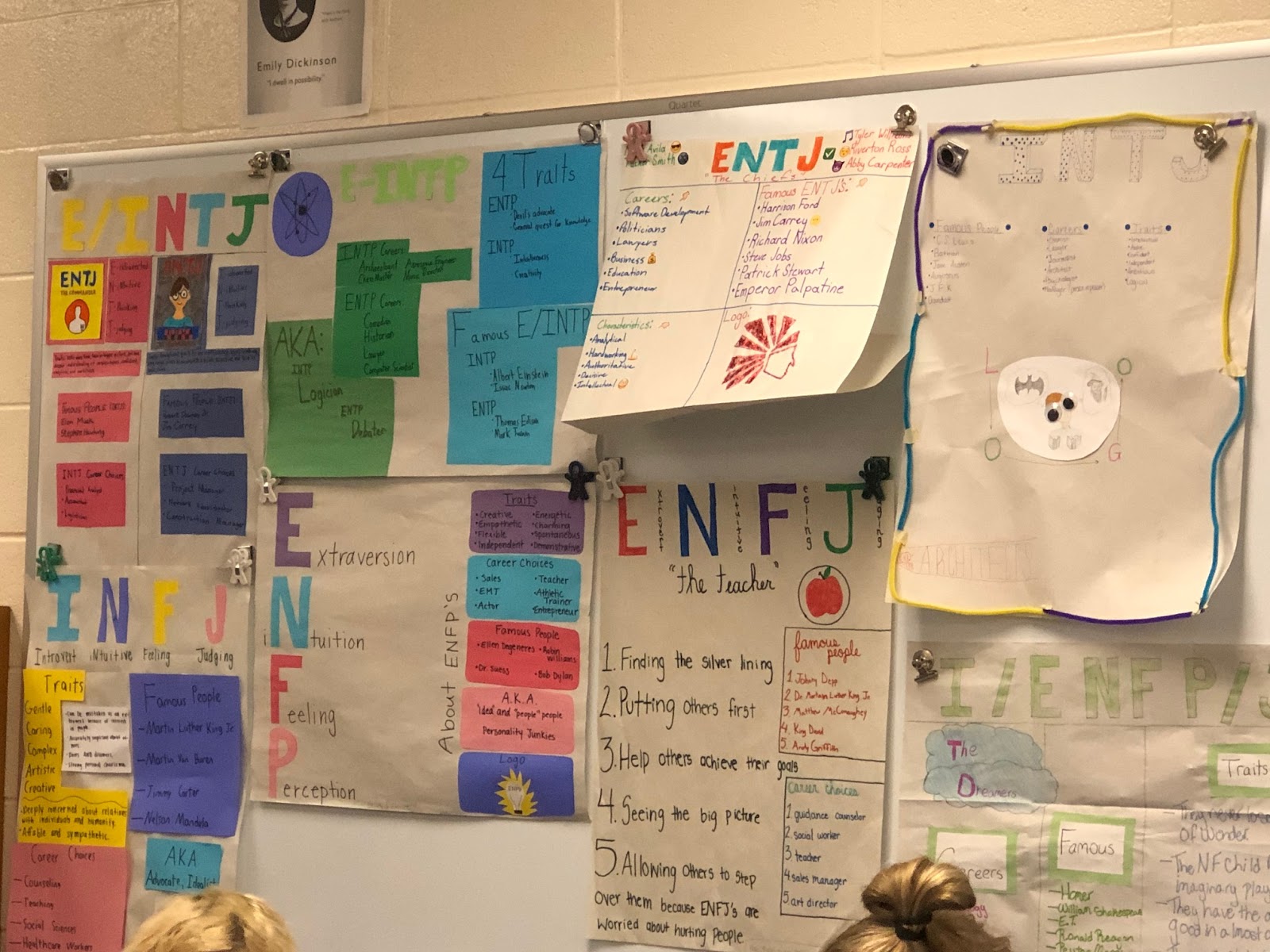
This exercise not only helps students learn a little about themselves but also creates a visual reminder as to how and why they need to be purposeful writers. They understand that to truly be effective writers, they can use the natural proclivities they have for writing, but they must also consider all The Appeals, the audience, and the context. And that’s exactly what rhetoric is all about.
Now, I’m using the same process with teachers. After all, we writing teachers need to be writers ourselves. We need to understand the struggles writers experience as we make claims and compose stories. We need to be purposeful as we write, too. And knowing how you tend to write, makes your writing all the more powerful.
What have you learned about your writing? Does it follow the M-B model, as I’ve found? How does being a writer make your teaching more effective?

Leave a comment